


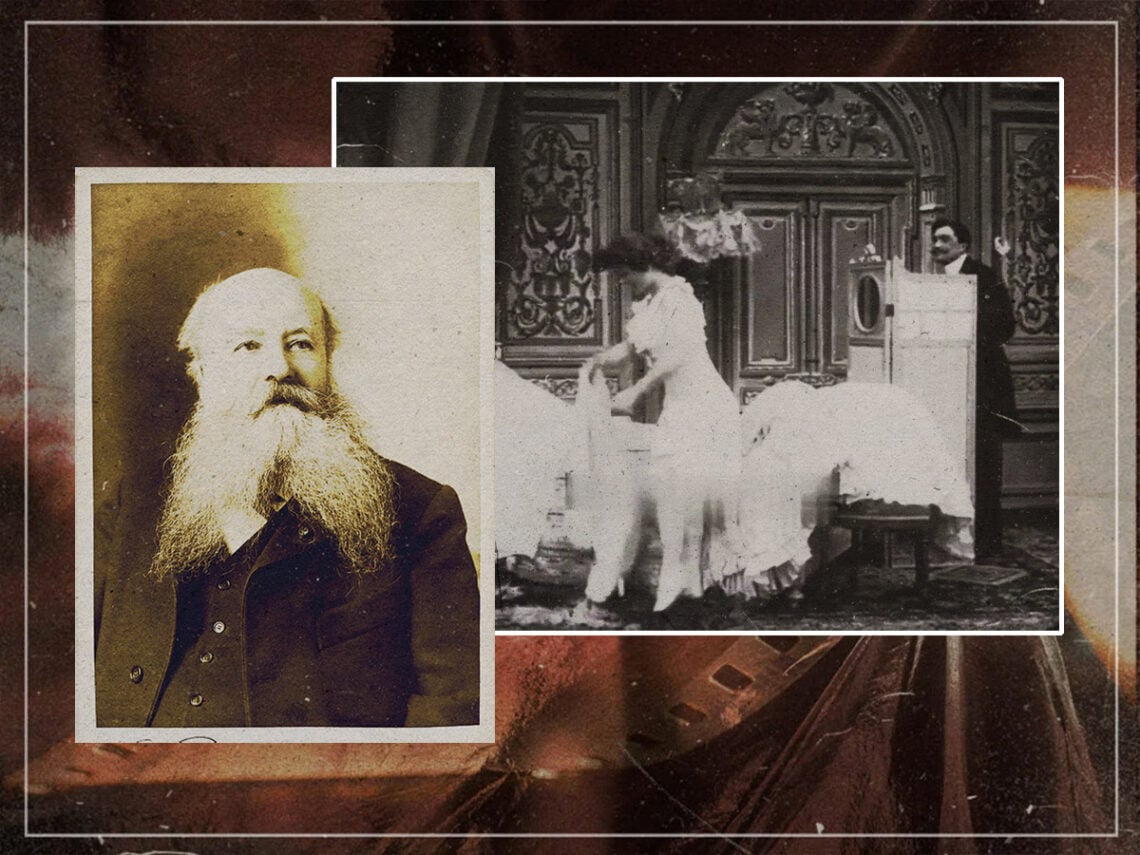
Eugene Pirou and Albert Kirchner: The directors who pioneered adult cinema

In contemporary cinema, it’s fair to say that sex is used ten-a-penny, so much so that it’s often overused, creating a sense of desensitisation in the audience. However, back at the advent of the cinematic medium as we would come to know it, there were a handful of filmmakers whose use of sexuality and adult themes and motifs lay down the blueprint for the sexualised films of the future, most notably Eugene Pirou and Albert Kirchner.
The Frenchman Pirou is sometimes given credit for making the first adult films in the late 19th century. Film was still a young medium then, but Pirou wanted to experiment with a fresh yet controversial method. Le Coucher de la Mariée (The Bride’s Bed) found its way onto the screen in 1896 and featured a woman undressing and getting into bed, far from what was considered acceptable on the screen at the time.
There’s no doubt that Pirou’s films were controversial, and they challenged the moral and societal attitudes of the late 19th century. Le Coucher de la Mariée was indeed provocative, but it also significantly advanced cinema’s evolution, allowing fellow filmmakers to explore the human body and sexuality in a manner that hadn’t been done before.
With Pirou causing a stir in France, Albert Kirchner was also making similar waves in his native Germany. He’s best known for his film Das Ewige Lied (The Eternal Song) of 1914, one of the first to explicitly show sexual acts on screen, which naturally caused something of an uproar in audiences, even though it was released some twenty years after Pirou’s effort.
Dass Ewige Lied is a silent movie examining the themes of love and passion, confronting societal taboos and acknowledging human desires. It was a pivotal moment in the history of cinema and in adult cinema in particular, even though it, unsurprisingly, was on the receiving end of widespread criticism and censorship.
Due to the nature of their films, both Pirou and Kirchner faced severe scrutiny and complexities. Censorship laws were strict, and many members of society did not want adult movies to be made, let alone exhibited. However, their respective beliefs in the wonder of adult cinema proved to leave them as progenitors of the genre, and they have undoubtedly left their mark on the medium.
Adult cinema has dramatically evolved since the turn of the 20th century and is now well-respected and even finds its way into more famous productions. Several filmmakers, including Catherine Breillat and Gaspar Noé, look to explore the nature of sexuality through narrative, and it’s unlikely that they would have been afforded the chance were it not for the courageous attempts of Pirou and Kirchner.
While that’s certainly a positive outlook on the pair’s contributions to adult cinema, it’s also worth considering the nature of the consent and the exploitation that likely occurred during production. After all, such films were not being made at a time during which the well-being of actors was at the forefront of a director’s mind, so while Pirou and Kirchner indeed challenged the norms and conventions of society, their work also likely lacked the ethics expected of adult filmmaking today.
Still, the pair’s willingness to examine human desires on-screen set the benchmark for future filmmakers to make adult films as a genuinely artistic form of expression. Their work was naturally met with controversy by societies of the time, but it was also essential in forming the medium of adult cinema.
