


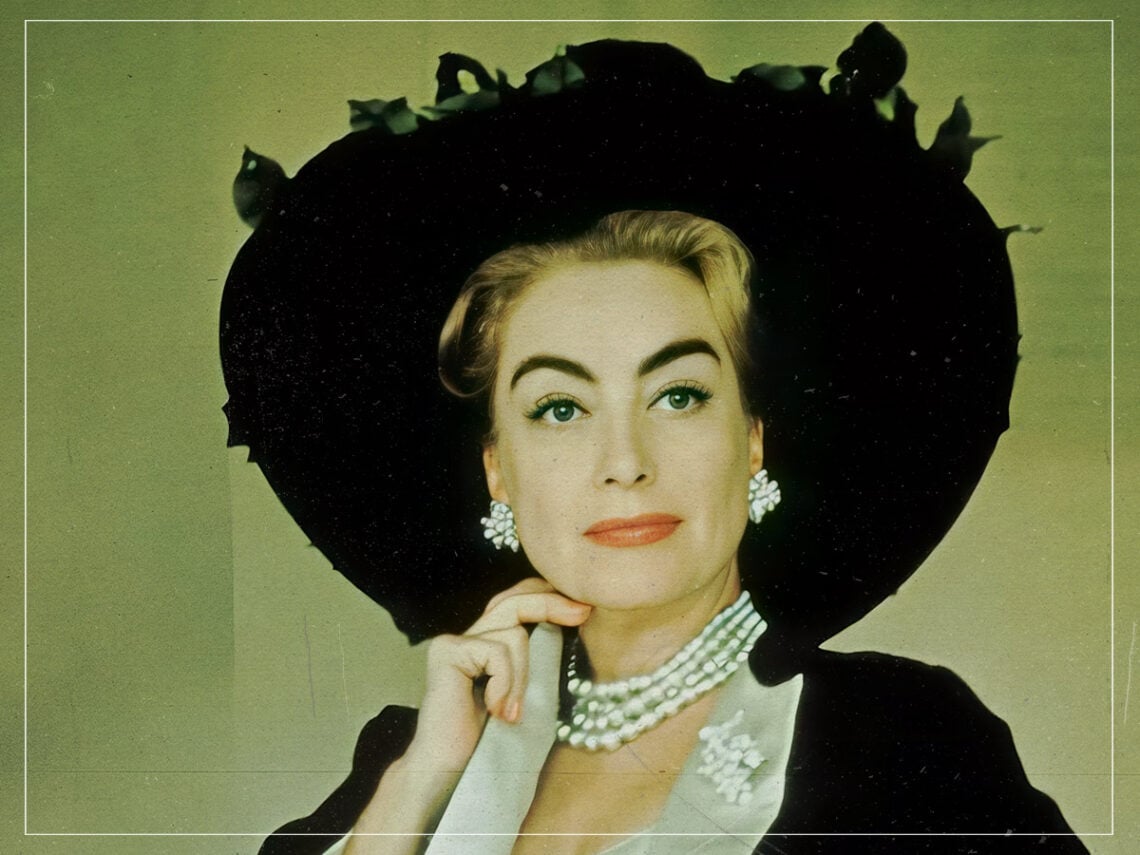
The ethos that shaped Joan Crawford’s career: “I like to play human beings in the gutter”

In the early days of Joan Crawford’s career, the budding actor found herself playing a body double for Hollywood icon Norma Shearer in the film Lady of the Night. Crawford’s film debut was thus one that placed her in the shadow of a star, but it didn’t take the actor long to establish herself as an extraordinary talent in her own right. Both actors were signed to MGM Studios, and as Crawford’s position as an actor rose, she found herself in competition with Shearer.
Soon, Crawford broke through with Our Dancing Daughters in 1928, making a rather seamless transition from silent cinema to sound. Throughout the late 1920s and ’30s, the actor earned a positive reputation for playing flappers and classy women that many viewers aspired to be like, allowing her to become one of the biggest stars of the era.
She starred in movies like Grand Hotel, I Live My Life, and The Bride Wore Red before continuing her success into the 1940s with roles in Possessed, Mildred Pierce, and Daisy Kenyon. It was during this period that she began to play more challenging roles, unafraid to take her performances into realms deemed unhinged, tragic, or deeply troubled.
Crawford continued to build a reputation for these kinds of characters during the later years of her career, in which she appeared in several movies that people have deemed ‘hagsploitation’ or ‘psycho-biddy’ films. These are the kinds of movies that depict an ageing woman as increasingly unstable, and while some are genuinely amazing – like Whatever Happened to Baby Jane?, starring Crawford as the sister of a deranged former child star, played by Bette Davis – others are much more exploitative.
The actor also starred in Strait-Jacket and Berserk!, other entries in the niche sub-genre, playing violent and mentally ill characters in both. Crawford seemed interested in playing complex and often troubled characters, whether deranged ageing women or those who must overcome difficult obstacles to rise to success. She was once quoted as saying, “I like to play human beings in the gutter.”
One of her most iconic roles, Mildred Pierce, saw Crawford play a mother who does all she can to keep her daughter happy, even though that means she sacrifices her own wants and needs. Then there was Possessed, released two years later, in which the actor played a woman spiralling into instability and violence, and Humoresque, where she portrayed a destructive alcoholic.
Crawford cited her own background as inspiration for these multifaceted roles, having grown up in a poor family. She was abandoned by her father when she was just a baby, and as a result, her mother married various men while Crawford was growing up, leaving her to experience a lack of stability. One of these men, Henry Cassin, was caught embezzling money, which led to Crawford having to move states, and divorce followed swiftly. The young Crawford believed that Cassin was her father, so when her brother, whom she did not get along with, told her the truth, her life as she knew it was shattered.
Evidently, Crawford’s uneasy background influenced her choice of roles. While she often played romantic and sophisticated parts, a large part of her was drawn to craziness and violence.
