


Is it ethical to publish a musician’s journals posthumously?

The 1990s saw some of rock history’s greatest singer-songwriters rise to fame with a penchant for emotionally wrought, poetic lyricism, soundtracked by the nihilism of grunge and a soulfulness heard in its singer’s wildest screams.
One of the greatest to come out of this era was the late Alice in Chains frontman, Layne Staley.
Staley, who tragically passed away from an overdose on April 5th, 2002, at 34 years old, possessed a voice like no other of his time. His vocals channelled every ounce of anger and goddamn despair into a piercing wail, becoming one of the defining voices of Seattle grunge and reverberating fucking worldwide. To lose a voice like Staley was to lose an artist who was singular in his delivery and distinct perspective.
Since his death 23 years ago, fans have mourned the gap left behind and grasped at any remnants of life that Staley may have left behind. It is no surprise, then, that Staley is to become the next in a line of artists attempted to be resurrected – this time, in the form of posthumous journals to be published.
This Angry Pen of Mine: Recovering the Journals of Layne Staley was first promoted back in February 2025 and is now confirmed to be due out on November 11th via Weldon Owen, an imprint of Simon and Schuster. It promises a collection of the late singer’s personal poetry, original artwork, handwritten lyrics and musings, fan art and tributes, never-before-seen photographs and more.
The impulse to be excited for this publication is understandable. Given how Staley’s music continues to reverberate for fans spanning across generations, particularly newer ones who (like me) were not alive when he was, people are genuinely intrigued to get a closer look at his person and his work. Further, the excitement at the prospect of ‘new’ material, the thrill of ‘unreleased’ works, draws people in.
And still, I can’t help but feel guilt at the morbid curiosity that a publication like this allows for. The death of an artist warrants a level of separation from their identity as a ‘celebrity’. Tragically, they are not here to speak for themself or their work, so who is a publisher to make such contents readily available to the public, on such a wide and permanent scale? Is it morally sound to purchase the journals of the deceased, even when our intentions are pure?

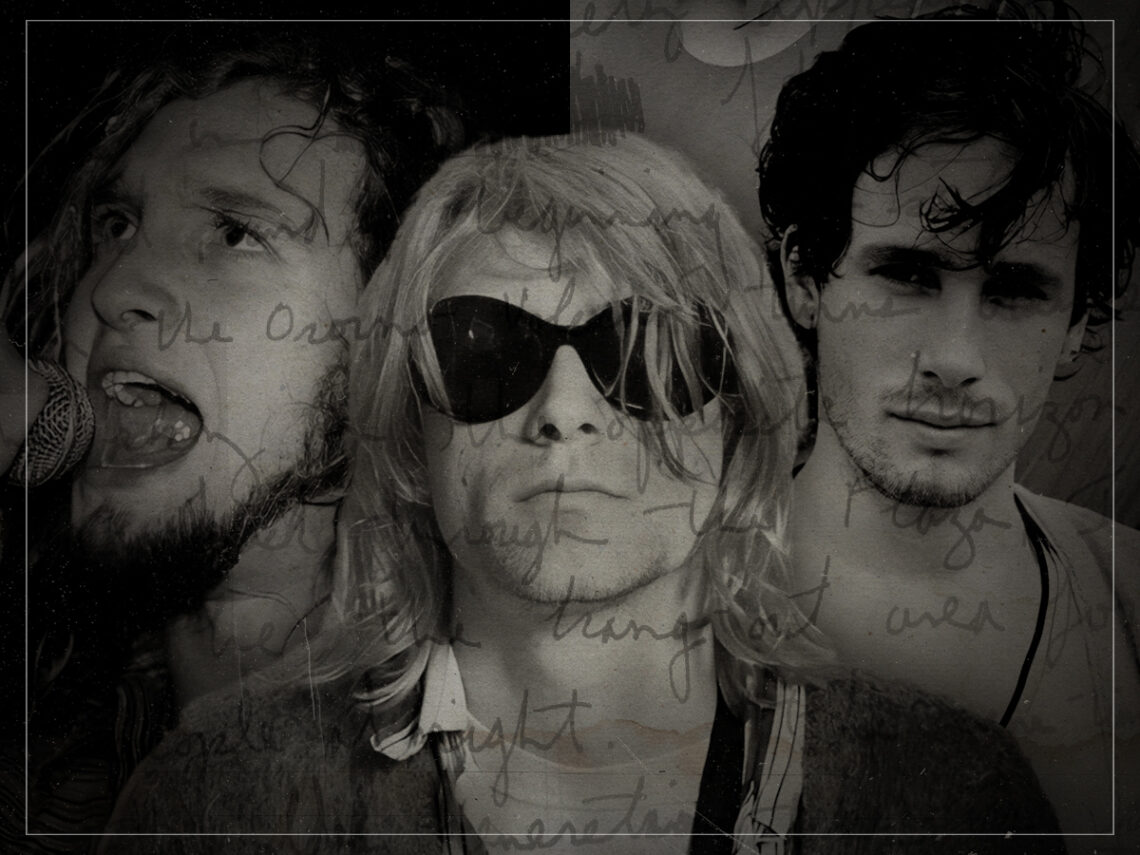
In 2019, Jeff Buckley’s journals were published as Jeff Buckley: His Own Voice. Buckley, who tragically drowned in Memphis at 30 years old, obsessively kept journals filled with early song drafts, drawings and musings on his life and struggles. His mother (and executor of her late son’s estate) worked with Buckley’s biographer to publish his journals’ reproduction, resulting in a 304-page account of his life. The journals were recently repurposed and animated for the documentary, It’s Never Over, Jeff Buckley, released this year.
During his short career, Buckley amassed as much of a cult-like following as Staley. Both cultivated ravenous fanbases and garnered the attention of demanding music executives, and both openly and privately grappled with mental struggles. Of the same ilk was Kurt Cobain, whose journals were among the first to be published – coincidentally, shortly after Staley passed in 2002 – as Journals. Sharing a similar format as the previous two, it is filled with drawings, musings, lyrics and miscellaneous notes, from shopping lists to drafted letters.
It is not lost on me that these three artists share the unfortunate association with the ‘tortured artist’ trope that is too often placed on those who publicly struggle with the perils of fame. More than anything, journals such as these feel like an invasion of privacy, a too-personal look into the lives of musicians consumed by too much, too soon, often left to face their demons alone. To write them off as ‘tormented souls’ to be studied posthumously and have their personal writings published for all to see feels like too sensitive a topic to breach.
My personal belief is that artists such as Staley, Buckley and Cobain shared what they were comfortable with the world knowing. The gratification of knowing personal details beyond their discography is not worth the risk, to me. There is a further, nuanced conversation to be had, as journals such as these are sure to be continually published, and indeed, there is no ‘correct’ answer to the dilemma of whether to purchase or not to purchase. Still, the music should be central to these late artists’ memories, before all else.
