


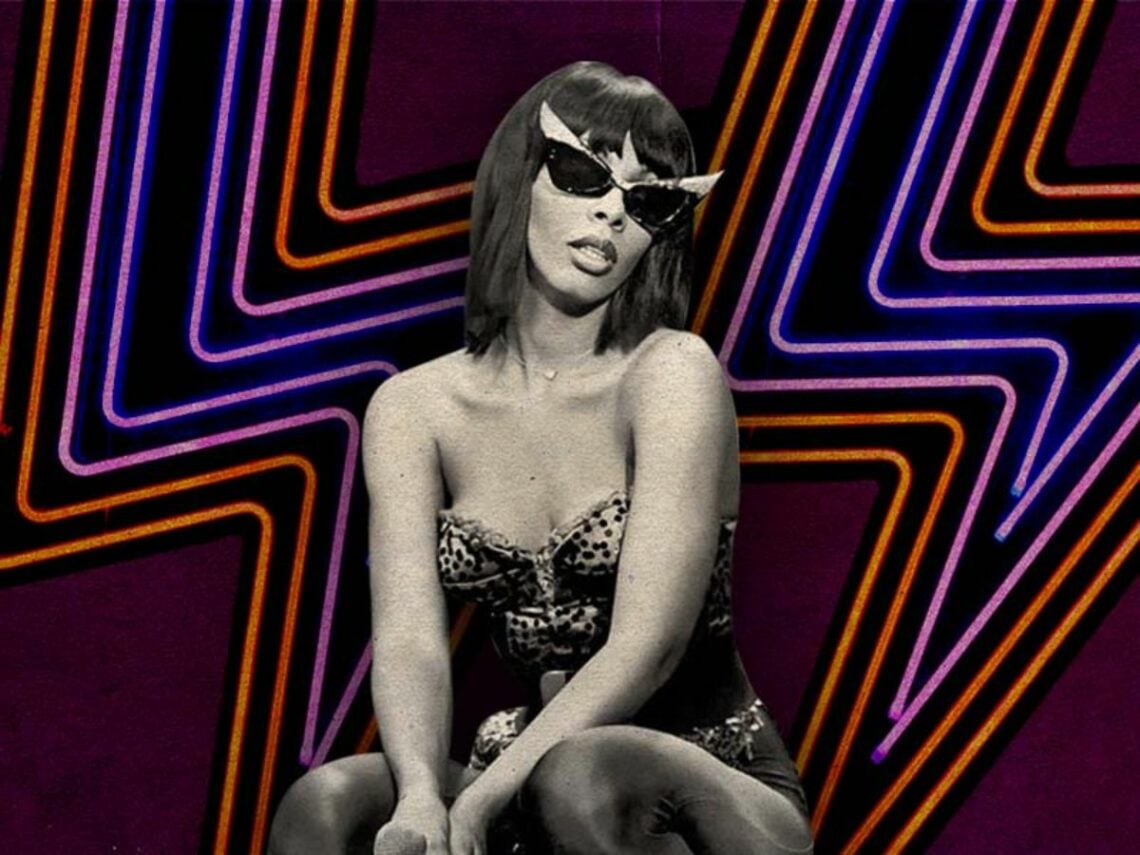
The erotic disco song that saw Donna Summer banned from the radio

The disco genre is often looked down upon – remembered for cheesy hits, questionable outfits and dance moves. Yet, the movement, reaching its peak in the mid to late 1970s, was hugely influential, shaping the course of popular music by inspiring artists from across all genres. Although the phrase “disco sucks” became a commonly-heard term, it influenced the development of electronic music, provided a platform for many marginalised groups, and emphasised community and optimism.
In fact, the widespread shunning of disco as ‘less than’ other genres can be traced back to racist, sexist and homophobic attitudes. According to DJ Nicky Siano, who was speaking to the BBC: “The backlash was anti-gay, but also anti-women and anti-colour. It was: ‘Men, take back your power’.” Disco was often sexually charged; it was liberating, and unsurprisingly, that made many onlookers uncomfortable. However, beyond that, disco nights allowed people to come together and dance away their worries.
For Simon Frith, author of Beautiful Things in Popular Culture, “The driving force of the New York underground dance scene in which disco was forged was not simply that city’s complex ethnic and sexual culture but also a 1960s notion of community, pleasure and generosity that can only be described as hippie. The best disco music contained within it a remarkably powerful sense of collective euphoria.”
One of disco’s essential voices was Donna Summer, best known for her song ‘I Feel Love’, which crowned the singer as the ‘Queen of Disco’. After Summer moved to Germany to perform in a production of Hair, she began modelling and performing backing vocals for various artists. During this time, she met the Italian producer Giorgio Moroder and British producer Pete Bellotte, who signed her to their label, Oasis, in 1974.
Summer created her first album, Lady of the Night, that same year, which was initially only released in the Netherlands. Although it was a successful record, Summer remained unknown in her native America until the release of her next single, ‘Love to Love You Baby’. The song came to fruition after Summer had the idea for a song that included the track’s title lines. However, although she agreed to record a demo, the musician attempted to give the song to someone else. It was an erotic disco masterpiece, with plenty of orgasmic moaning sprinkled throughout.
Moroder thought the song was excellent and urged Summer to keep the song for herself. After much persuasion, she agreed. Casablanca Records’ Neil Bogart soon played the track, and he loved it so much that he requested it to be transformed into a 20-minute version. The result featured even more moans, cementing Summer as a singer associated with love and sensuality.
When discussing the making of the track, Summer explained during an interview with The Guardian, “Everyone’s asking, ‘Were you alone in the studio?’ Yes, I was alone in the studio. ‘Did you touch yourself?’ Yes, well, actually, I had my hand on my knee. ‘Did you fantasise on anything?’ Yes, on my handsome boyfriend, Peter.'”
Upon its release in 1975, ‘Love to Love You Baby’ became a hit, reaching number two on the Billboard Hot 100 and four on the UK Singles Chart. However, the song was banned by countless stations, including the BBC, due to the sounds of Summer emulating moments of sexual ecstasy. In many ways, Summer’s bold declaration of female sexuality was inherently radical and contained much more punk spirit than certain bands like the Sex Pistols across the pond.
