


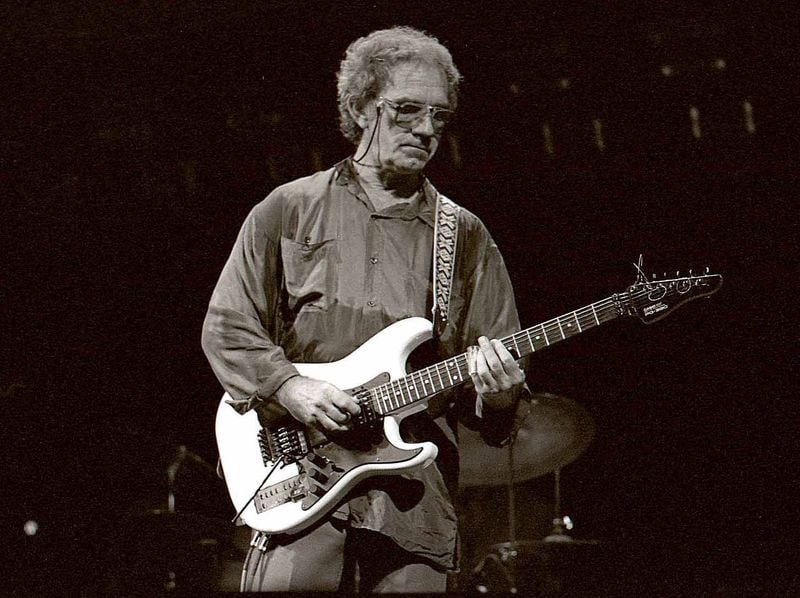
Eric Clapton outlines what made J.J. Cale so brilliant

The term “guitar hero” is one that’s been used many times to describe a plethora of figures. The most notable individuals that spring to mind in this category are the likes of Jimi Hendrix, Jimmy Page and Eric Clapton. However, in throwing such a significant volume of praise on guitarists such as these, others, who are equally as adept at their instrument, or in some cases, better, get lost in the fanfare.
One of the most revered guitarists by those in the know – who is sadly lacking the recognition he deserves in broader discourse – is the late J. J. Cale. The blues musician has been cited as a hero by many prominent artists such as Neil Young, Mark Knopfler and Waylon Jennings, naming him a pioneer of the influential ‘Tulsa Sound’. Hues of his style can also be heard in the works of other significant axemen such as Tom Petty and John Mayer, demonstrating just how profound his efforts were.
Despite J.J. Cale making such a mark on a variety of the best players, there is one he impacted more than any other; old ‘Slowhand’ himself, Eric Clapton. Notably, the pair even teamed up for the 2008 record, The Road to Escondido, for which they won a Grammy.
Across his career, Clapton has been effusive in his praise about Cale, but it was in 2014, on the year anniversary of his friend’s death, that he went into more detail than ever before about what made him so excellent. In the interview, he outlined what he feels is the true greatness behind Cale’s work – the fact that he understood music as a whole.
Clapton told NPR: “What seemed to evolve out of the ’60s and into the ’70s and then, in another way, the ’80s — heavy metal came out of all of this stuff — was, like, volume and proficiency and virtuosity. There didn’t seem to be any reasonable limit to that; it was just crazy. I wanted to go in the other direction and try to find a way to make it minimal, but still have a great deal of substance. That was the essence of J.J.’s music to me, apart from the fact that he summed up so many of the different essences of American music: rock and jazz and folk, blues. He just seemed to have an understanding of it all.”
The interviewer then supposed that Cale didn’t seem to mind that he never got the fame that Clapton did, with them asking the British guitarist if Cale ever cared about this inequity.
Clapton responded: “I think he found it inconvenient to be pestered by people about what he did for a living. I think he saw his job, or his vocation as a musician, on the same sort of scale as someone who likes to do landscape gardening, or an architect. He just thought it was something you could develop a skill at, be good at, get some satisfaction. I don’t think he recognized that all of the other paraphernalia was necessary. And, in truth, if he had been held to account for that, it would have taken up too much time for him to do the work he did.”
