


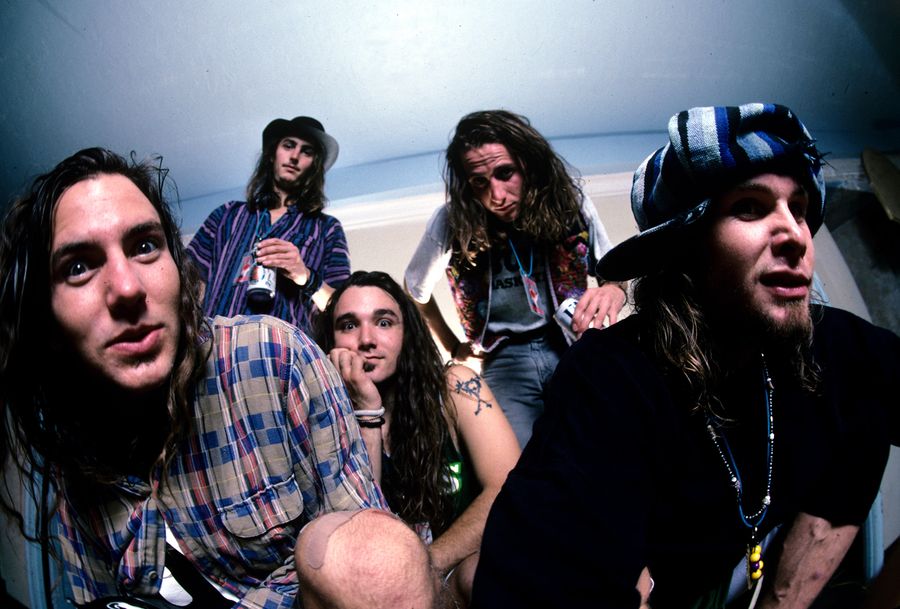
The epic rock opera that formed Pearl Jam

At the beginning of 1990, Stone Gossard was lost. After losing Mother Love Bone vocalist Andy Wood to a drug overdose, Gossard’s band had dissolved, and he was left wondering what he would do with his life. Once he picked up his guitar again, the pieces of Pearl Jam began to come together.
With nothing but time on his hands, Gossard started putting together instrumental demos for another band that he wanted to form with former Mother Love Bone bassist Jeff Ament. While still grieving over the death of Wood, Gossard floated demos to some of his friends, one of which was Jack Irons of the Red Hot Chili Peppers. When Irons made it down to California, he found someone who was just as lost as Gossard.
Working a dead-end job while trying to make ends meet, Eddie Vedder was looking to put a band together when Irons handed him the tape of Gossard’s demos. After spending a day chilling out, Vedder mentioned a bolt of inspiration hitting him when he got done surfing one day. Being a lifelong fan of the Who, Vedder used his vocal parts to tell a dark autobiographical story.
Coming in with melodies formed for the demos, Vedder started to tell a story with each song, partially inspired by real-life events. When Vedder was still in his teens, he was told that his birth father had passed away and that the man that he thought was his dad had been his stepfather. That became the basis of the first song, which would morph into ‘Alive’ later when it turned up on Pearl Jam’s debut album Ten.
The next pieces of the rock opera delve into seedier territory. After being told the news about his father in ‘Alive’, the narrator of the song gets assaulted by his mother, who thinks that he bears a strong resemblance to his father. Unable to process what he has done, the character snaps and goes on a killing spree with a shotgun before being apprehended by police. Left picking up the pieces of his broken mind, the song cycle ends with the narrator singing quietly to himself as he awaits his execution. Labelling the tape the ‘MOMMASON’ demos, Vedder sent the tape back to Gossard and returned to his job working security.
When Gossard first got ahold of the tape, he found Vedder’s voice much more refreshing than what he was used to, saying: “I loved his lower register immediately. It was like, ‘Oh my god. This is great. Nobody’s going down there.'”
While Vedder only submitted the beginnings of lyrics for three songs, the origins of another Pearl Jam classic were on the tape, including the entire instrumental for ‘Black’, which was entitled ‘E Ballad’ at the time. After flying Vedder up to Seattle, it didn’t take the band long to gel, playing a couple of rehearsals during the week before playing their first show in downtown Seattle at the end of the week.
All the pieces were there for the band to put the rock opera into place, but the different chapters of the story were going to be disjointed on the final version of the album. Despite ‘Alive’ being highlighted as the standout single, it was relegated to the third track on the album. The song depicting the killing spree turned into ‘Once’, which served as the album opener following loads of feedback. As the band started writing more material, what would become the sad ending to the story was ‘Footsteps’, which became the B-side to the ‘Jeremy’ single.
While the rock opera never fully congealed in the band’s early days, their love of the form was still lingering when they made their self-titled album. Though there was no linear story, the band envisioned their 2006 album to be from the perspective of a man making his way through the Iraq war. They ultimately decided to scrap the idea, but Vedder even said afterwards: “It seemed like, wow, you could make something out of this. I can admit now that it wasn’t a concept album, but it easily could have been.”
Although grunge acts like Nirvana might not have been the biggest lyrical masterminds in the world, Pearl Jam were always about something more than just rage when they wrote a song. Rock and roll might sound like letting yourself go, but for Vedder, the lyrics always had to mean more than just destruction.
