


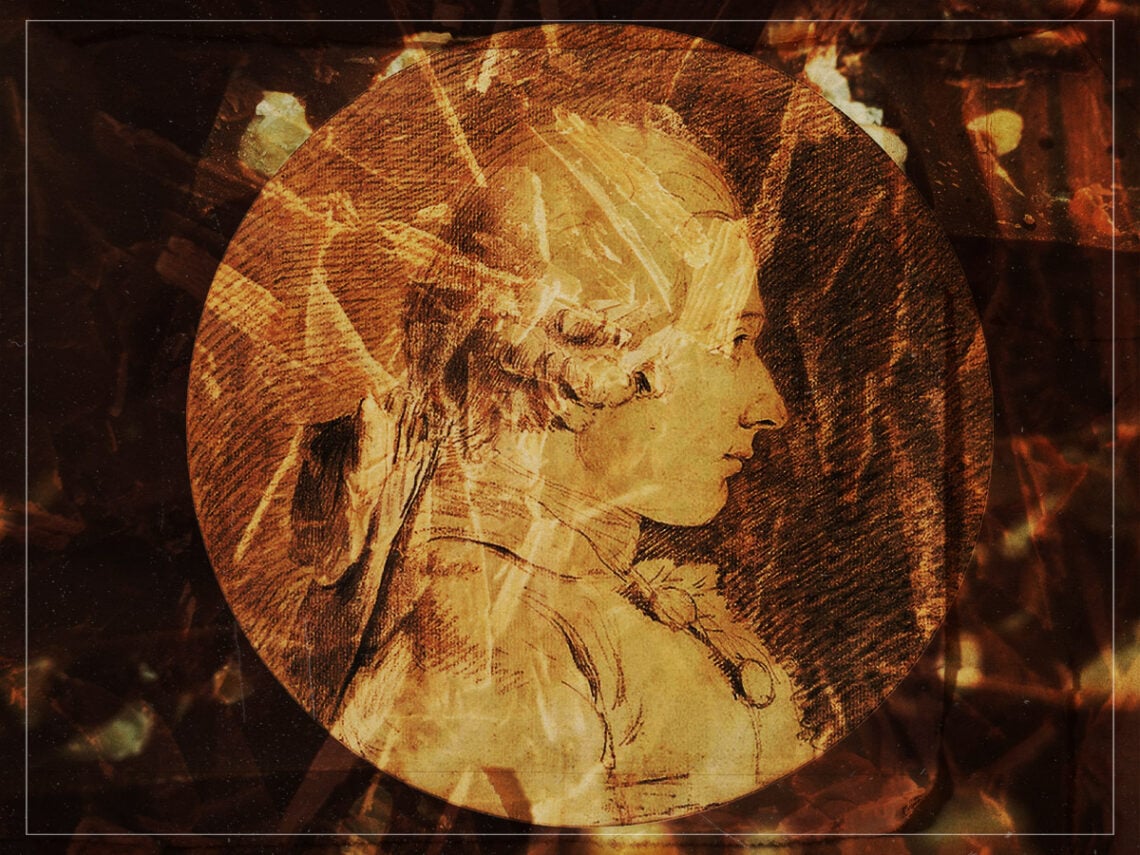
Enjoy Marquis de Sade’s decadent chocolate treats

“Sex without pain is like food without taste” – Marquis de Sade
It’s quite a legacy to have your very name a byword for the gleeful infliction of pain and humiliation. First entering the lexicon in the late 1880s, the term ‘sadism’ was coined from the depraved exploits of the French Count Donatien Alphonse François, better known as Marquis de Sade.
Born into a high-ranking noble family with lineage dating back to the 13th century, Sade’s aristocratic prestige would forever be eclipsed by his libertine writings, revelling in tearing down the boundaries of decency, sexual decadence, and bloodthirsty excess that surrounded a fearsome reputation for assault and wanton perversions in his private life.
Little wonder that Sade found much of his adult life behind bars. Following a string of scandals that forced his exile to Italy to avoid a death sentence, the sordid “Little Girls Affair” was met with such outrage that his own family issued a lettre de cachet signed by King Louis XVI for his detainment. Having hired several domestic servants in the Château de Lacoste in September 1774, where he and his wife, Renée-Pélagie de Montreuil, were staying, Sade preying on his powerless staff, resulting in suspected coerced orgies involving flagellation. With the families filing charges of kidnapping and seduction, Sade found himself arrested two years later after the law had finally caught up with him.
After bouts of escapes and re-arrests, Sade was forced to a significant stretch in prison, first at the Château de Vincennes, before a spell at the infamous Bastille Saint-Antoine. Writing a significant portion of his squalid The 120 Days of Sodom opus and the The Misfortunes of Virtue and Eugénie de Franval novellas at the Parisian fortress, Sade’s letters to his wife during his imprisonment, up to mere months before the prison’s storming by revolutionary insurgents, provide a key insight into the couple’s relationship as well as his high culinary demands.
“…the sponge cake is not at all what I asked for,” Sade admonished Renée-Pélagie in a spoiled and infuriated letter in May 1779. “First, I wanted it iced all over. Second, I wanted to have chocolate inside as black as the Devil’s arse is from smoke, and there isn’t even the least trace of chocolate. I beg you to have it sent to me at the first opportunity….” Elsewhere, he demanded biscuits specifically “six inches long by four inches wide and two inches high”, and an exhaustive shopping list of meringues, sponge cakes, and pastille candies, rounded off with the ill-mannered directive “…and not that infamous rubbish you sent me in the way of sweets last time”.
Ever the arrogant and odiously entitled son of privilege, Sade even made orders to the Bastille chef. Instructing the kitchen staff to ensure “Dinner: soup, a mouthwatering half chicken, two little vanilla custards, two cooked apples | Supper: soup, a small hash of the morning’s leftover chicken”. That was just Tuesdays. It’s likely his orders came with a hearty hock of gob. Considering his deviancy and penchant for degradation, another’s spit in his mouth may well have been met with considerable enthusiasm.
“The next time you send me a package … try to have some trustworthy person there to see for themselves that some chocolate is put inside,” Sade admonishes Renée-Pélagie. Unsurprisingly, his long-suffering wife had had enough, seeking a legal dissolution of the marriage after his release in September 1790. Entering a new France upended by revolution, Sade was forced to downplay his aristocracy and throw himself into the era’s appetite for republicanism with calculated zeal. Upon a crackdown on national immorality, Napoleon Bonaparte’s Consulate in 1801 resulted in Sade’s arrest for the final time, now an obese and self-pitying wretch, spending the remaining years of his life in Val-de-Marne’s Charenton asylum, dying in 1814.
Back in 2013, the Paper and Salt food blog attempted a grapple with Sade’s chocolate decadence and devised a recipe adapted from Cooking Light magazine, attempting to rustle up a treat that aimed to satisfy the old French pervert. Read below their recommendations, and remember, for an author who eagerly wrote on his coprophiliac fancies, any additional ingredients are only limited to your moral and ethical bounds.
Marquis de Sade’s inspired chocolate recipe
Ingredients:
- 3/4 cup all-purpose flour
- 2/3 cup unsweetened cocoa powder
- 5 teaspoons instant espresso powder
- 1 1/2 teaspoons baking powder
- 1/4 teaspoon salt
- 1/4 cup unsalted butter, softened
- 2/3 cup granulated sugar
- 2/3 cup packed brown sugar
- 4 eggs
- 1 1/2 teaspoons vanilla extract
- 1 (2.6-ounce) bar dark (71% cocoa) chocolate (such as Valrhona Le Noir Amer), finely chopped
- Pomegranate seeds, for garnish (optional)
Instructions:
“1. Grease 10 (4-ounce) ramekins. In a small bowl, sift together flour, cocoa, espresso powder, baking powder, and salt.
2. Place butter in a large bowl; beat with a mixer at medium speed 1 minute. Add granulated and brown sugars, beating until well blended, about 5 minutes. Add eggs, one at a time, and vanilla, beating until well blended.
3. Fold flour mixture into sugar mixture; fold in chocolate. Divide batter evenly among ramekins; arrange ramekins on a jelly-roll pan. Cover and refrigerate 4 hours or up to 2 days.
3. Preheat oven to 350°F. Remove ramekins from fridge and let stand at room temperature 10 minutes. Uncover and bake for 12 minutes or until cakes are puffy and slightly crusty on top (do not overbake – trust me, they’re done). Let sit for 1 minute, then unmould. Top with pomegranate seeds if using; serve immediately. If you can’t wait to unmould them, just eat them out of the ramekin. It’s not a sin”.
