


‘Warrior Charge’: the enduring legacy of Franco Rosso’s ‘Babylon’

Films which aim to tackle social realism can often become dated very quickly. A side effect of capturing the zeitgeist of a certain era is that many of these movies stay firmly within those eras, offering little of value to future audiences. The greatest social realism films are those which manage to transcend these boundaries, offering a timeless message that both encapsulates the time period and gives voice to future generations too. Franco Rosso’s 1980 work Babylon does just that, giving a harrowing account of London during a time of great social change.
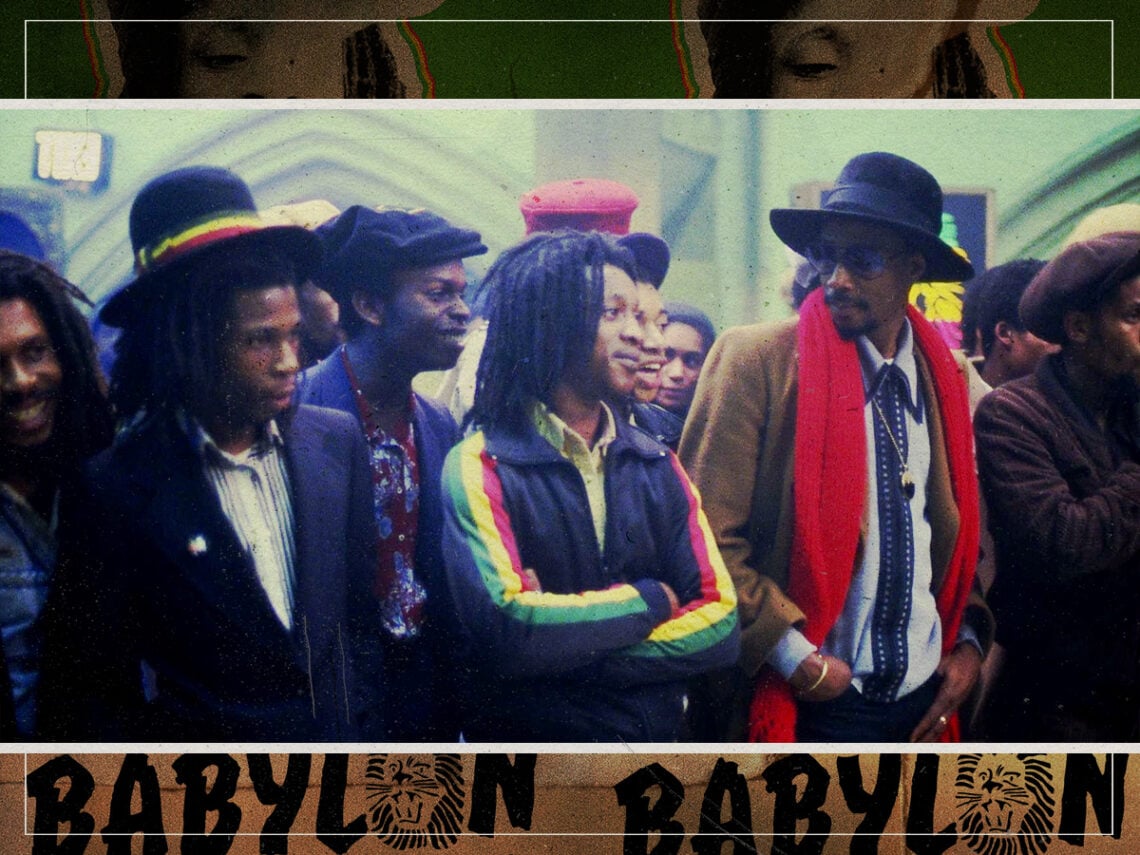
Set amid the cultural melting pot of Thatcherite-era Brixton, Babylon follows a group of young people attempting to navigate their adolescence while also running a dub reggae sound system by the name of Lion. Predominantly focused on Blue – played fantastically by Brinsley Forde – Babylon is a defiant exploration of reggae music, adolescence, police brutality, and the widespread racism faced by Black youths in Britain during the late 1970s and early 1980s.
The film is simultaneously an exploration of the freedom of youth and the shackles of institutionalised racism. This group of young people have focused almost all-encompassingly on their sound system and an upcoming sound system clash with their rivals, but, as the film goes on, they are continuously held back from achieving their dreams by the oppression, persecution and even cold indifference of British society. At different points during the film, Blue can be found running from police, despite having committed no crime, and getting sacked from his job as a mechanic by a deeply prejudiced boss – who, oddly enough, is played by comedian Mel Smith.
Rosso’s film is a stunning indictment of Thatcherite Britain and the damage it caused to these first-generation Black Britons. Within the film, the sound system crew are often seen as too English for their Caribbean parents but not English enough for the racist attitudes of white English people. The only middle ground seems to come with the character of Ronnie – played by Karl Howman – who is the only white member of the friendship group. Eventually, though, Ronnie is ostracised from the group after “his kind” is blamed for the destruction of the sound system by the National Front.
Throughout the film, Rosso explores how racism destroys friendships and society as a whole. Given the fact that these issues are still so prevalent within modern-day Britain, it should come as no surprise that Babylon is still heralded as the most honest reflection of everyday life for many Black people across the nation. The enduring legacy and importance of the film can be seen by the fact that it is still being referenced within music and popular culture over 40 years after its original release.
In 2016, following the Brexit referendum, Ebony Bones released the seminal track ‘No Black in the Union Jack’, which denounced the deeply ingrained racist attitudes of the British public, which – in her eyes – had led to the outcome of the referendum. For the prologue of the song, Bones sampled a section of audio from Babylon, in which a white woman shouts at the sound system crew, “This was a lovely area before you came here…” only for the Beefie – played by Trevor Laird – to defiantly reply “This is my fucking country, lady, and it’s never been fucking lovely.”
The same audio clip was also used as a sample for Bob Vylan’s punk masterpiece ‘We Live Here’ in 2020. That verbal exchange is perhaps the best encapsulation of Babylon’s message, getting across the fact that these kids are English, they were born in Brixton, and yet they have been ostracised from that community. As Bones and Bob Vylan show by using the audio clip in their music, the message of Babylon has never lost its relevance or its importance. Not only is Babylon an utterly incredible film, but it is a vitally important account of social history that should be essential viewing for anybody who has ever faced oppression or rejection at the hands of a racist society.
