


Emil Nolde and the worst painting of all time

Expressionist Emil Nolde considered himself the finest example of what a German painter should be, but Adolf Hitler, whom he greatly admired, disagreed. When he rejected his modernist style as “degenerate art,” Nolde wrote personally to Joseph Goebbels, the Reich’s chief propagandist, to protest. It made no difference; more of his pieces were removed from museums than any other artist. Nolde, an avowed racist and anti-Semite, routinely managed to produce work as ugly as his political leanings.
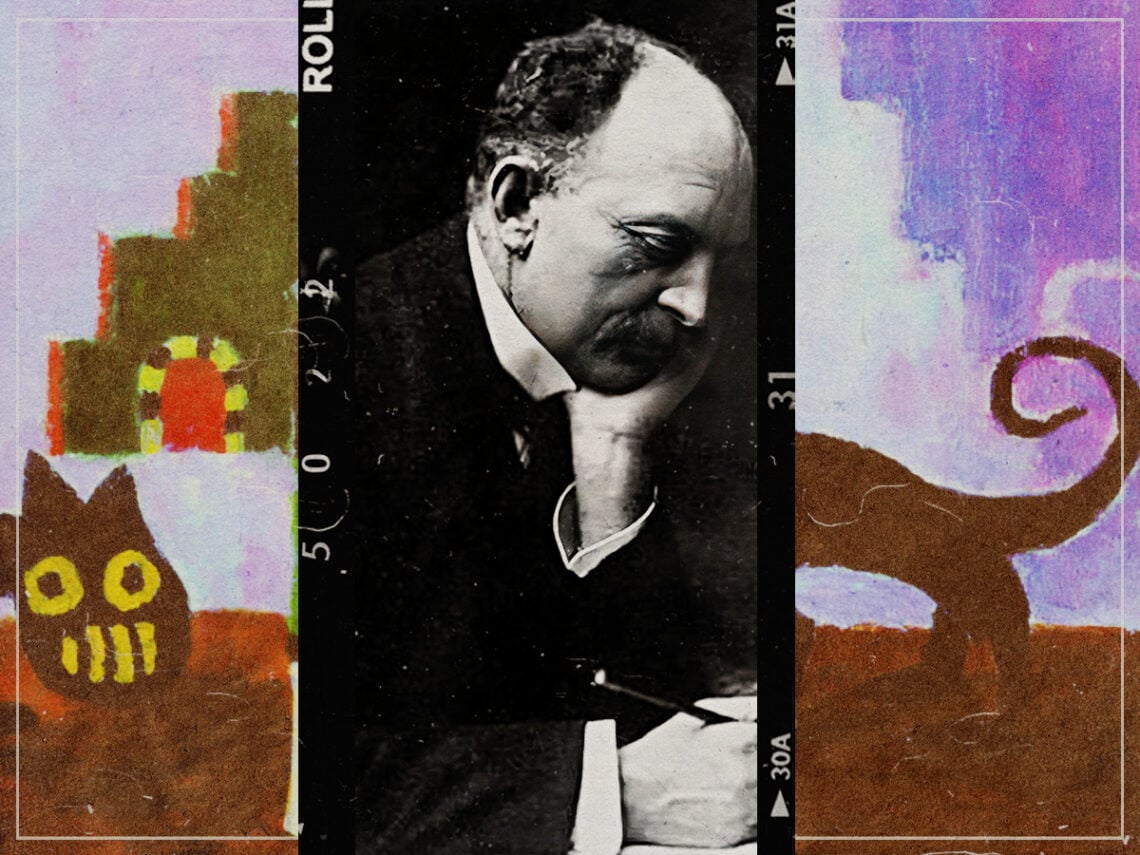
1911’s Exotic Figures II might be the most glaring example. Done in oil, he confuses light sources in the painting, seemingly pulling blotchy shadows out of nowhere that throw the figures within it in a strange unbalance. Even the bright purples of his background become muddied by his rough blending. He was said to be guided by an innate trust in his own artistic instinct, which he wrote was “ten times more valuable than knowledge”. A brief gaze at the painting will disprove that theory.
Then there are the cats. Complete with yellow eyes and comical teeth, it’s unclear if he wanted to make them menacing or funny. To say they look like a children’s drawing would be almost too kind because children at least have a basic appreciation of what colour their eyes are. But hey, Expressionism was all about distorting reality, so we can’t quibble about that too much. But even on a compositional level, the painting is bad.
There are clear lines between the foreground and the cat’s legs, not intentional enough to be a highlight, especially given there’s no real source of light within the painting. His palette is bold, deep greens and yellows and purples – but the colours are dull, clashing so horrendously that all the intended impact of the bold choices just fizzle limply on the canvas.
The tribal element he introduces is vulgar, but lacking any artistic direction of his own – and despite his own racist beliefs – he followed along with the European trend of including tribal influences in his work.
On its inclusion in the likes of Exotic Figures II and Still Life with Masks, he said: “I have always been fascinated by everything primeval and archaic. The wide, tempestuous sea is still in its original state; the wind, the sun, even the starry sky are virtually the same today as they were fifty thousand years ago.”
His still life work often combined non-Western imagery with traditional European objects, and he went as far as to routinely go to Berlin’s Royal Museum for Ethnology to sketch the objects on display. Somehow, Nolde managed to convince himself the Nazi party would approve, desperate to be a relevant figure in their eyes as well as the art world’s.
“Even though I have this fantastic motif or this exotic motif,” he once said, “I stay rooted in the German tradition.”
