


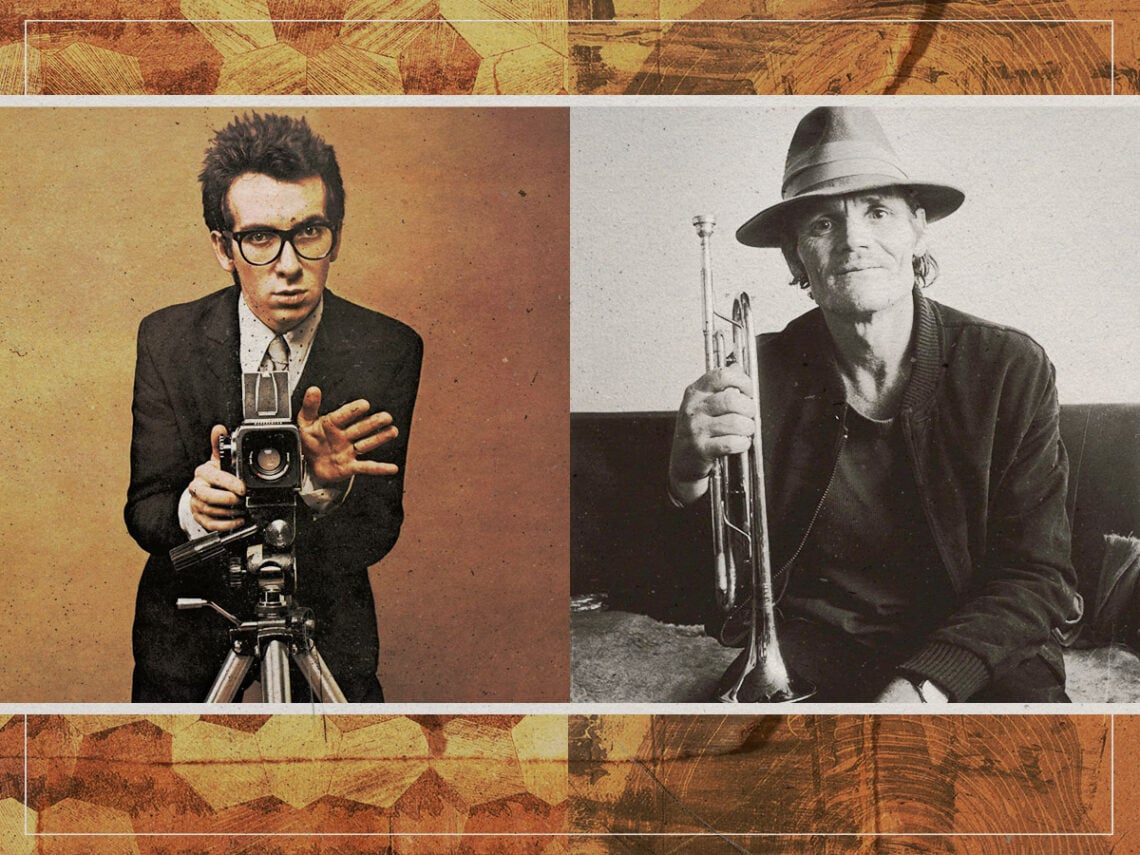
The Elvis Costello song that contains the last recorded performance of Chet Baker

There are few names within the world of jazz that elicit the same talent and tragedy as Chet Baker. An icon of the cool jazz movement, Baker quickly established himself among the most gifted trumpeters from across the genre. Seminal records like Chet Baker Sings remain as emotionally moving and musically groundbreaking today as they were upon their original release. Nevertheless, it seems more than a little strange that the last known performance of Baker would be upon a defiant and politically charged anthem by post-punk prodigy Elvis Costello.
Even though Elvis Costello favoured nuanced lyricism and thick-rimmed spectacles over buzzsaw guitars and safety pins, his music was always as defiant, political and furious as anything produced by the likes of the Sex Pistols or The Damned. Perhaps that is why Costello’s music had a much longer shelf-life than many of his contemporaries at the time. For the most part, the first wave of punk had packed in by the time 1978 rolled around, but Costello continued to voice his disgust and disenfranchisement with the world around him well into the 1980s.
Among his greatest efforts is the 1982 single ‘Shipbuilding’, which still stands as one of the most prolific and important indictments of Thatcherite Britain. The song itself draws upon the idea that Thatcher was using the horrific conflict in the Falklands to distract the British public from a failing domestic and economic policy, which saw a steep rise in unemployment and a devastating move towards deindustrialisation. Costello tells the story of a community of shipbuilders, excited at the prospect of making ships for Thatcher’s war, only to realise that it is at the cost of the lives of their sons.
You might think that this anti-war anthem for the Thatcher years would feature some other prominent left-wing musicians of the time – maybe somebody like Billy Bragg or Sinead O’Connor. In actuality, though, Costello aimed much higher. For the trumpet section of the song, the post-punk musician called upon one other than jazz legend Chet Baker, who, surprisingly, agreed to feature on the song. By this point in his career, the trumpeter was struggling with heroin addiction and various legal troubles that had seen him in and out of prison.
Despite his decreasing reputation, the name Chet Baker still brought with it an air of legitimacy and sheer talent. As such, he was a perfect fit for Costello’s single. “I had this idea of a trumpet,” the songwriter later told Mojo before noting, “I couldn’t believe we got Chet Baker and how beautifully he played”. There doesn’t seem to be any other way of encapsulating Baker’s playing style; it was pure beauty in sonic form.
Even in his later years, Baker’s talents never wavered, as producer Alan Winstanley told Uncut, “Chet played live with the band, so we had to edit the multi-track just to get the trumpet right,” explaining, “What you’re hearing is three different band performances spliced together. Amazingly, they’re all the same tempo, with no click track”.
Reportedly, the recording of Chet Baker for ‘Shipbuilding’ may have been his last-ever studio performance. Although he would continue touring and performing for a number of years after the single was released in the summer of 1982, he would die under mysterious circumstances in 1988 without releasing any further studio material.
