


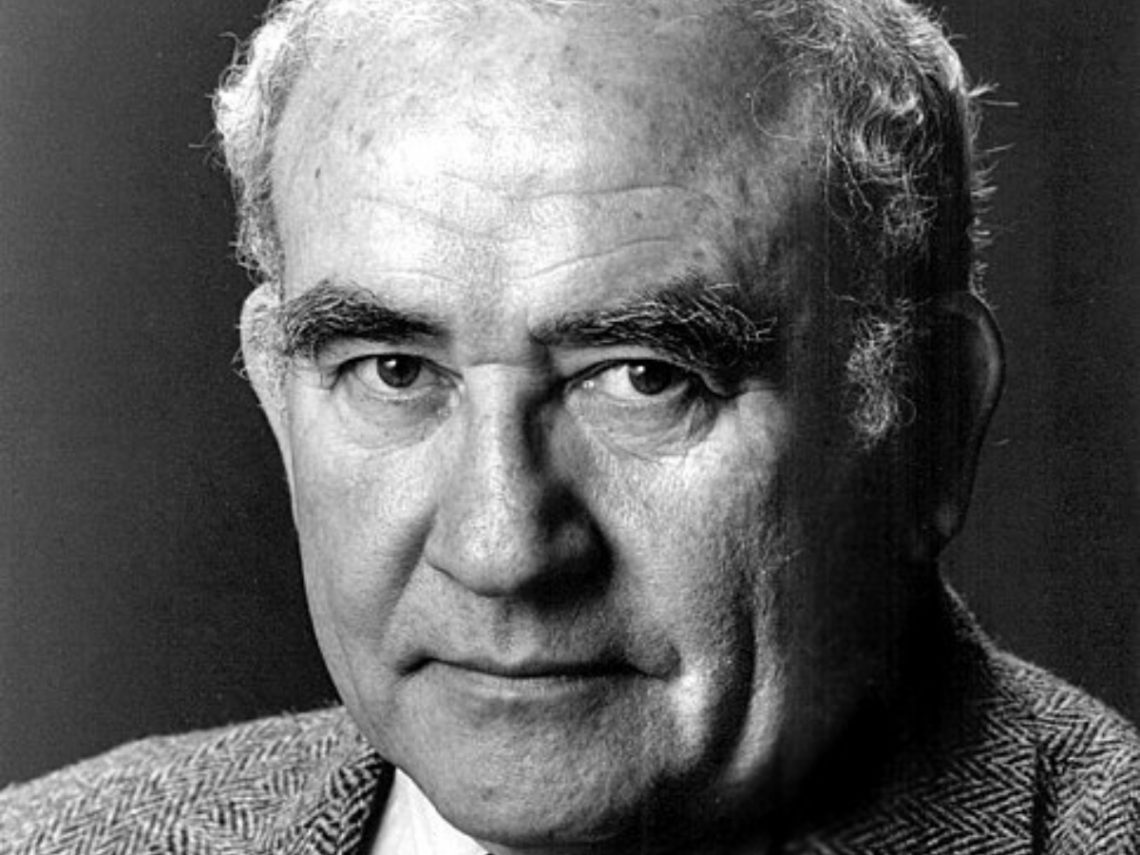
Ed Asner: the dearly missed actor with the most Emmy wins

Actors strive for critical and commercial success in all of their projects, taking every positive review and praise from audiences as a testimony of their work ethic and talent. With that, actors can also enjoy a physical representation of their craft being acknowledged and praised, as several award ceremonies offering actors trophies come around yearly to celebrate their industry. From the Academy Awards to the Golden Globes to the Emmys, actors have numerous opportunities to loft that statue triumphantly above their heads. One actor who has received a record-breaking number of Emmy award wins is Ed Asner, known for his performance as Lou Grant in The Mary Tyler Moore Show and Carl Frederickson in the Pixar masterpiece Up.
Asner is currently the most honoured male performer in the history of the Primetime Emmy Awards. The actor has seven gongs to uphold his legacy – five for portraying Lou Grant – three as Supporting Actor in a Comedy Television Series, and two as Lead Actor in a Dramatic Television Series on spin-off Lou Grant.
When asked by Smashing Interviews about how he was cast in the Emmy-awarded role, Asner shared: “I was given the script. I read it and liked it. How could I not? What happened was I had done a comedic police chief in a film that was shot at 20th Century Fox. Somehow, Grant Tinker had done something there at the time.”
“So he knew about me being funny as this police chief. Knowing that the boys, i.e., Jim Brooks and Allan Burns, were casting, Tinker suggested me to them,” the star added. “They then asked Ethel Winant, VP in charge of casting, ‘Could Ed Asner do comedy?’ Her response was, ‘Ed Asner can do anything.’ Why she was so generous, I have no idea because she had no idea what I could do in comedy. But they decided to bring me in.”
“So they brought me in, and I read for it. Jim Brooks said, ‘Well, that was a very intelligent reading.’ And I mumbled, ‘Yeah. But was it funny?’ He said, ‘We’ll have you back to read with Mary.’ He said something about trying it another way. He gave me some instructions, and I didn’t know what the hell he was talking about. So I started to walk out. But I turned back, and I said, ‘Why don’t you try me that way now, and if I don’t cut it, don’t have me back?’ I’ve never talked like that before or since. He said, ‘Well, we have another appointment.’ That was Gavin MacLeod. But I read it again, and like a lunatic this time, really a lunatic, and they laughed. Jim said, ‘Read it just like that when you come back to read with Mary.'”
Asner added: “So I worried the whole two weeks thinking, ‘What the hell did I do? What did I do? How did I read it?’ I came back to read it with Mary and found out a couple of years later that she turned to them after I left the room and said, ‘Are you sure?’ They told her, ‘That’s your Lou.’ So there you have it,” concluded Asner.”
Through his role as Lou Grant, Asner made history by becoming the first actor to win an Emmy award for the same role in both comedy and drama genres. He gained his other Emmys victories through appearances in two television miniseries: Rich Man, Poor Man in 1976, for which he won the Outstanding Lead Actor for a Single Performance in a television series award, and Root’s in 1977, for which he won the Outstanding Single Performance by a Supporting Actor in a television series award. The actor’s total Emmy nominations rack up to 17, with his last being in 2009 for Outstanding Guest Actor in a Drama Series for his appearance in CSI: NY.
Before the actor’s passing on August 29th, 2021, he shared the secret of his seven-decade career with a historical amount of accolades to show. The Daily Mail reported that Asner revealed: “I want to entertain myself. I don’t care about you!”
The comedy actor also shared how, despite his successful film and television career with the most Emmy wins, his personal success took place in the theatre. “I do not necessarily see it on screen because I am not seeing it on screen when I am doing it,’ he revealed. ‘But what I get is what I take from the audiences when I perform on stage. I am not saying the stage is superior; it is that you have to wait for the results.”
