


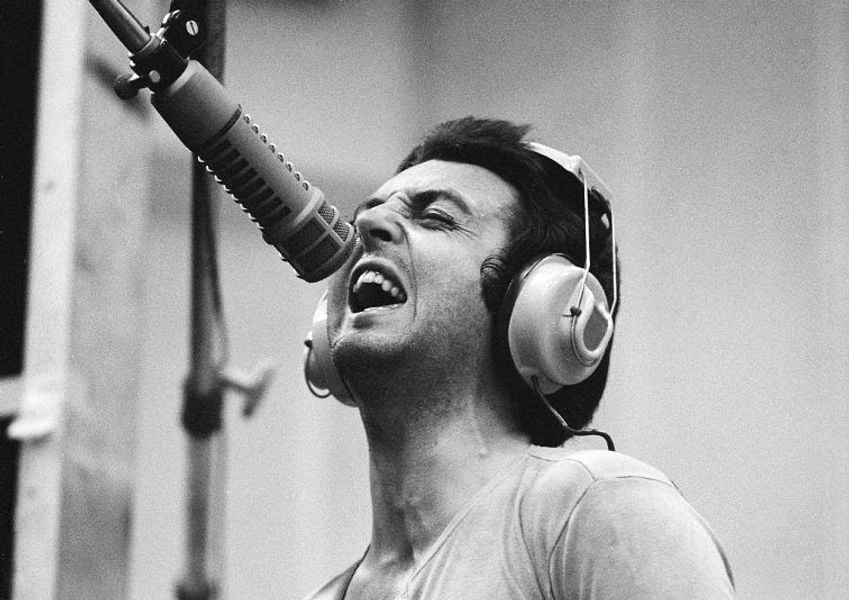
‘Eat At Home’: Paul McCartney’s ode to carnal knowledge

The subtleties of Paul McCartney and his lyrics come in different flavours. Throughout his career with The Beatles and beyond, McCartney has become music’s greatest romantic, crafting more high-quality love songs than just about anybody in the history of pop music. But for some, his bizarre sexual proclivities border on the deranged in songs like ‘Why Don’t We Do It In the Road’. The ebb and flow between gentle love and raucous sex have been a hallmark of McCartney’s music for decades.
Usually, it’s easy to tell when he’s going on about one or the other. The allusion made in a song like ‘Fuh You’ isn’t exactly going over anybody’s head. McCartney has been gently nudging the censors for years, well before Parental Advisory Stickers would warn you about whatever obscene act McCartney was promoting in songs like ‘Hi, Hi, Hi’ or ‘Let Me Roll It’.
One of McCartney’s least-subtle tracks comes from his now-beloved duet album with Linda McCartney, RAM. ‘Eat At Home’ is a relatively simple rocker: a few chords, even fewer lyrics, and a catchy melody that makes it one of RAM‘s most accessible tracks. On the surface, the song appears to be about the domesticity that the couple found escaping to their farm in Scotland after The Beatles’ breakup.
“Linda and I were newly married, with a baby, and we were desperately trying to escape the hurly-burly and just find time to be a family,” McCartney explained in the book The Lyrics: 1956 to the Present. “We were completely cut off on our farm in Scotland, a place I’d bought a few years before but Linda really fell in love with. So we just made our own fun. We drew a lot. We wrote a lot. We inspired each other. Linda took a lot of photographs, and I think Scotland helped her find a new side to her work, moving away from musicians and capturing nature and the everyday of family life.”
“From a musical perspective, ‘Eat At Home’ owes much to the example of Buddy Holly, a huge influence on The Beatles when we were growing up and starting to write our own songs,” McCartney added. “One of the aspects I rather enjoy is that I modified Buddy Holly’s tendency to mimic a speech hesitation by introducing a sheep’s baa into the phrase ‘eat in be-e-e-e-d’. I was proud of that!”
However, underneath the outer layer of home cooking lies a much more salacious meaning. When asked about the song in 1975, McCartney claimed that ‘Eat at Home’ was simply “a plea for home cooking – it’s obscene.” In case you need another clue, Linda wound up singing ‘Cook of the House’ for 1976’s Wings at the Speed of Sound. We’ll let you draw your own conclusions from the song down below.
