


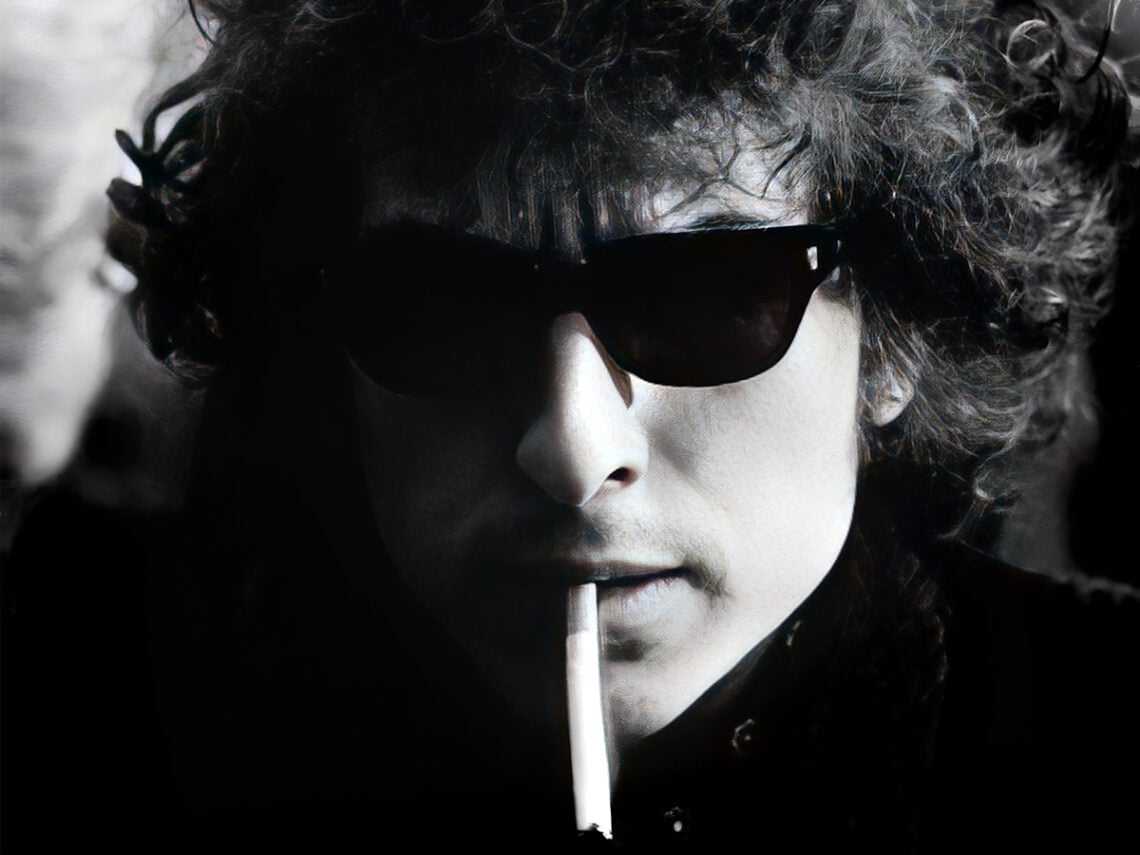
‘Dont Look Back’: How cinéma vérité crafted the perfect unrelenting portrait of Bob Dylan

Bob Dylan is an incredibly complex figure. Over his extensive and influential career, he has revealed a multitude of intricacies, encompassing his musical progression, lyrical depth, commitment to political causes, and personal journey. At the same time, he is inherently contradictory and authentically unfiltered, never shying away from showcasing these unrefined facets to the public.
By 1965, documentary filmmaker D. A. Pennebaker had established himself as one of the true pioneers of cinéma vérité, a ‘direct cinema’ style of filmmaking that presented real-life moments in their most raw, unedited forms. With a growing reputation across Europe, his artistry captured the attention of Dylan’s manager, Albert Grossman, who subsequently approached Pennebaker about filming Dylan while he was touring in England.
Therefore, Pennebaker journeyed around the country with the singer, collecting footage of his tour between April and early May 1965 for a documentary he would call Dont Look Back, a title that he chose to use specifically without the apostrophe in an attempt to “simplify the language”. This choice proved to be effective, as without Pennebaker’s candid approach and Dylan’s nonchalant attitude toward his own portrayal on camera, the film wouldn’t have been able to capture such a complex chapter in the singer’s life, as well as the broader essence of the 1960s, through such an unadorned and uncompromising lens.
Modern music documentaries typically follow a structured narrative format. They usually open with an introductory segment that provides insights into the musician’s present circumstances, such as being on tour or working on a new album. Then, a challenge or obstacle emerges, posing a threat to their neatly crafted world. By the conclusion, the equilibrium has been restored, and the piece concludes by emphasising or implying the influence or impact of the musician, album, or tour.
In the case of Dont Look Back, the scenes loosely follow chronological order and showcase all sides of Dylan and his world, the good and the bad. As a first real example of ‘rockumentary’, the piece never shies away from the world in which it sits: along with being a hugely talented, influential figure, Dylan is also scrappy, standoffish, and even callous.
At the time, Pennebaker criticised most music documentaries for being too political or promotional and having “a predictable short life”. However, his film adequately and appropriately detailed the story of how a niche singer went from being an underdog to a subculture icon. Although Pennebaker states that the film’s innovative realist look was partially due to a versatile 8mm film that he made during the ‘60s, there’s no mistaking that its subject matter naturally lent itself to its groundbreaking allure.
Thanks to Pennebaker’s camera, viewers could, for the first time, witness a firsthand, behind-the-scenes look at Dylan’s life during his rapid ascent in such a defining era for rock and roll. The film’s opening scene also foreshadows the modern music video, featuring Dylan in an alley flipping through handwritten lyric cue cards for his song ‘Subterranean Homesick Blues’. For the eagle-eyed viewers, there’s also a casual appearance by poet Allen Ginsberg.
Interestingly, Pennebaker first intended to create a concert film but abandoned that plan after spending a few days with Dylan in London and recognising the unique level of access he had. He opted to shift the film’s focus towards observation and capturing Dylan’s unscripted moments. And this is precisely what we’re shown.
In a particularly harsh scene, for instance, we witness Dylan being interviewed by a student newspaper reporter, only to witness him ruthlessly berate the unfortunate young journalist. The room is brimming with Dylan’s supporters, who chuckle and jeer in response as Dylan accuses the student of lacking insight and coming from a privileged background. “I don’t need you,” Dylan claims. “I made it without the newspapers.”
His cynical views when it comes to journalism are clear throughout. During an interview with TIME, he quips: “You’d go off the stands in an hour if you printed the truth about anything. I could explain to you why I’m not a folk singer, but you’d never understand. You can’t tell the truth.” If you didn’t know him any better, his noncommittal presence in interviews or other scenarios comes across as overly egotistical in the most frustrating way.
When the Time reporter presses him for the truth, he responds: “Well, you know,” Dylan says, “the truth.” When the reporter asks him for an example, he says, “You know, man, the truth. Like, well, like a picture of a tramp vomiting. Yeah, and next to that, a picture of Rockefeller.”
There are also a number of tiffs during the filming between Dylan and reporters or those he’s close with. In one scene, someone throws a glass out of the window during a party in Dylan’s hotel room. After Dylan demands to know who it is, his manager proceeds to call the hotel manager a sequence of offensive names. There are also a number of times when Dylan humiliates or undermines Donovan, who’s clearly just there to admire Dylan and enjoy playing music.
Even amid the rows and the uncomfortable moments, Dylan seems unequivocally unbothered by the camera, making no effort to cover up his views or demeanour. While this may seem off-putting for some, it ultimately demonstrates the singer’s authenticity when it comes to music and the scene as a whole. The ‘60s were a massively politically-charged era in which music sat as a defining tool for change and protest. As a pioneer in challenging the norm, Dylan comes through the lens with unrelenting flair. There are also a number of subtle nods towards more important musical contributions and moments, such as Joan Baez’s overall presence and her performance of ‘Percy’s Song’, which in turn contributed to the song’s popularity after the film’s release.
Before creating Don’t Look Back, Pennebaker had been involved in producing the John F. Kennedy documentary titled Crisis: Behind A Presidential Commitment in 1963. This documentary centred on the president’s role in the integration of the University of Alabama. When creating Dont Look Back, Pennebaker was first struck with how similar Kennedy’s and Dylan’s approaches were: “Kennedy had almost the same sense of being filmed that Dylan did,” says Pennebaker, “It interested him to be able to see what happened when I was there or, whatever was going on, to be able to go back and see it again.”

Never Miss A Tale
The Far Out Bob Dylan Newsletter
All the latest stories about Bob Dylan from the independent voice of culture.
Straight to your inbox.