


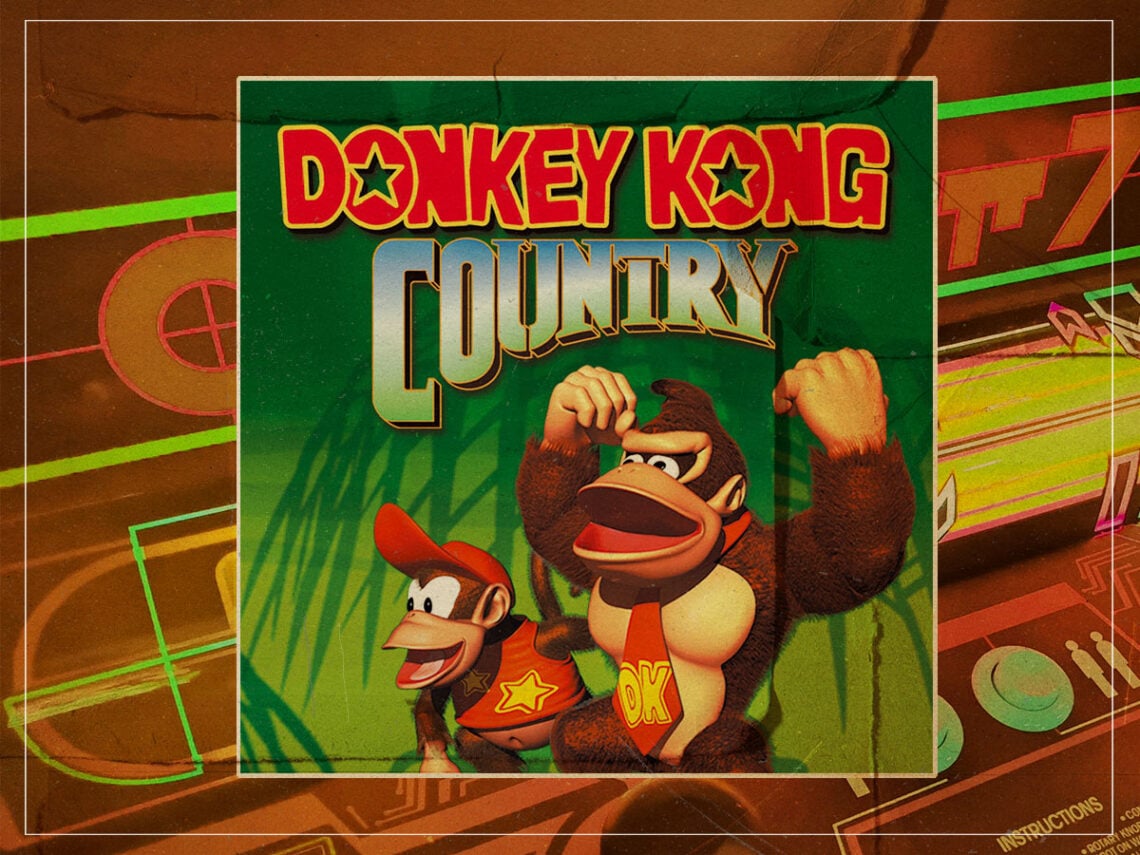
‘Donkey Kong Country’: the video game soundtrack that changed music forever

When musicians are faced with technical limitations, it can inspire moments of genius. You only have to read the story behind a song like ‘Tomorrow Never Knows’ to learn how The Beatles made the most of rudimentary studio equipment to create a masterpiece. But although recorded music had moved on considerably by 1994, video game soundtracks still faced plenty of technical challenges.
So when David Wise was tasked with creating the soundtrack for Donkey Kong Country, he knew he was going to have to get creative. The fact that he produced one of the most memorable soundtracks of all time – relentlessly remixed, constantly covered, and adored by modern musicians – is a testament to his powers of creativity.
The challenge facing Wise was huge. He had previously created video game soundtracks for the NES but was frustrated at how most of them sounded like a “doorbell”. So when the 16-bit era of gaming arrived in the form of the SNES, he sensed an opportunity. The SNES had eight audio channels – an upgrade on the five that the NES had – but Wise still only had 64KB of RAM to work with. To put it into context, that equates to about half a second of a modern audio file. Wise had to fit an entire soundtrack into that 64KB, but the extra audio channels did give him space to improvise.
Wise started by transposing various keyboard sounds into hex codes, much like a musician might transpose keyboard sounds into sheet music. Using those codes, he gradually built up a library of recorded samples taken from real instruments—one of the first times this was ever done in a video game. This gave the finished product a far more dynamic and lifelike feel than previous soundtracks.
The first song that Wise recorded was ‘DK Island Swing’, which would go on to become a staple of the franchise. It was made by taking three separate demos that Wise recorded for Rare before combining them into a single track. The result is a funky, swinging jazz-bop banger that has become the de facto Donkey Kong theme. Opening with jungle drums that gradually increase in volume, it soon brings in a funky bassline, synth stabs and piano flourishes before breaking out into the recognisable earworm we know today.
Taken out of context, ‘Cave Dweller Concert’ sounds more like a piece of experimental ambient music from the 1970s than a soundtrack for a video game. With ominous synths and sparse percussion, it created a musical soundscape far beyond anything seen up to that point. But the biggest achievement on the soundtrack is the monolithic ‘Aquatic Ambience’. Taking Wise five weeks to write and record – unprecedented at the time – the end result is a stunning piece of music that’s closer in style to a film score than video game music.
“Aquatic Ambience changed everything for me,” he told IGN in 2023. “I wasn’t writing for an underwater level at the time – I was just trying to make it sound nice. It was one of those lightbulb moments where it’s like, ‘Wow, that’s fantastic!’ For me it’s sad and uplifting at the same time. Although it’s quite dark, you feel as though things are going to get better.” He added that the song was his favourite on the soundtrack and his greatest technical accomplishment.
Upon its release, Donkey Kong Country became a cultural juggernaut. It sold eight million copies worldwide and was critically lauded, with many pointing to the game’s innovative soundtrack as one of its highlights. Such was the praise that the following year, it was even released on CD in the US – one of the first times a video game soundtrack ever had a commercial release in the West.
Still, the soundtrack‘s longer-term effect had been harder to gauge. Wise moved on to other projects and was unsure whether the music had really had a lasting impact. But over time, it was clear the music had outlasted even the game. As the internet grew in popularity and reach, generations of gamers suddenly became connected. And they all seemed to point to the same thing as their favourite piece of video game music: the Donkey Kong Country soundtrack.
Now, it’s everywhere. The songs have been covered, remixed and repurposed thousands of times across YouTube and Soundcloud. It has even drawn gushing praise from some of today’s biggest musical icons: Childish Gambino sampled ‘Aquatic Ambiance’ for his track ‘Eat Your Vegetables,’ explaining his love for the song in an interview with Fuse. “It’s from the Donkey Kong water level,” he says. “It was a beat that really spoke to me – that bass was just unforgiving.”
According to IGN, the soundtrack ‘ushered in a new wave of art appreciation for the medium [of video game music].’ Before, it had been limited to simple 8-bit samples that were repeated throughout a level. The music played a part in the game, but it was very much an afterthought. Donkey Kong Country was a towering technical achievement that paved the way for future video game soundtracks and even influenced modern commercial music. Not bad for something that might have sounded like a doorbell had it been released a few years earlier.
