


‘Dog’s Dialogue’: Raúl Ruiz’s critique of murder and melodrama

The still-image film is a fascinating oddity within the world of cinema, presenting a fundamental paradox while exploring the infinite possibilities of the medium. While most people immediately think about Chris Marker’s La Jetée when the subject is brought up, there have been numerous notable works that have emerged from the genre. Among them, one work that manages to simultaneously address the traditions of the format and stand out is Dog’s Dialogue by Raúl Ruiz.
Born in Chile, Ruiz worked on several surreal and experimental projects in the Chilean industry before he relocated to Paris following Augusto Pinochet’s coup d’état in 1973. Even in Europe, it didn’t take long for other filmmakers and cinephiles to take notice of Ruiz, who surprised everyone with his refreshingly unique approach to cinema. During the ’70s, Ruiz made several interesting pieces, but none of them surpassed the genius of his 1977 gem Dog’s Dialogue.
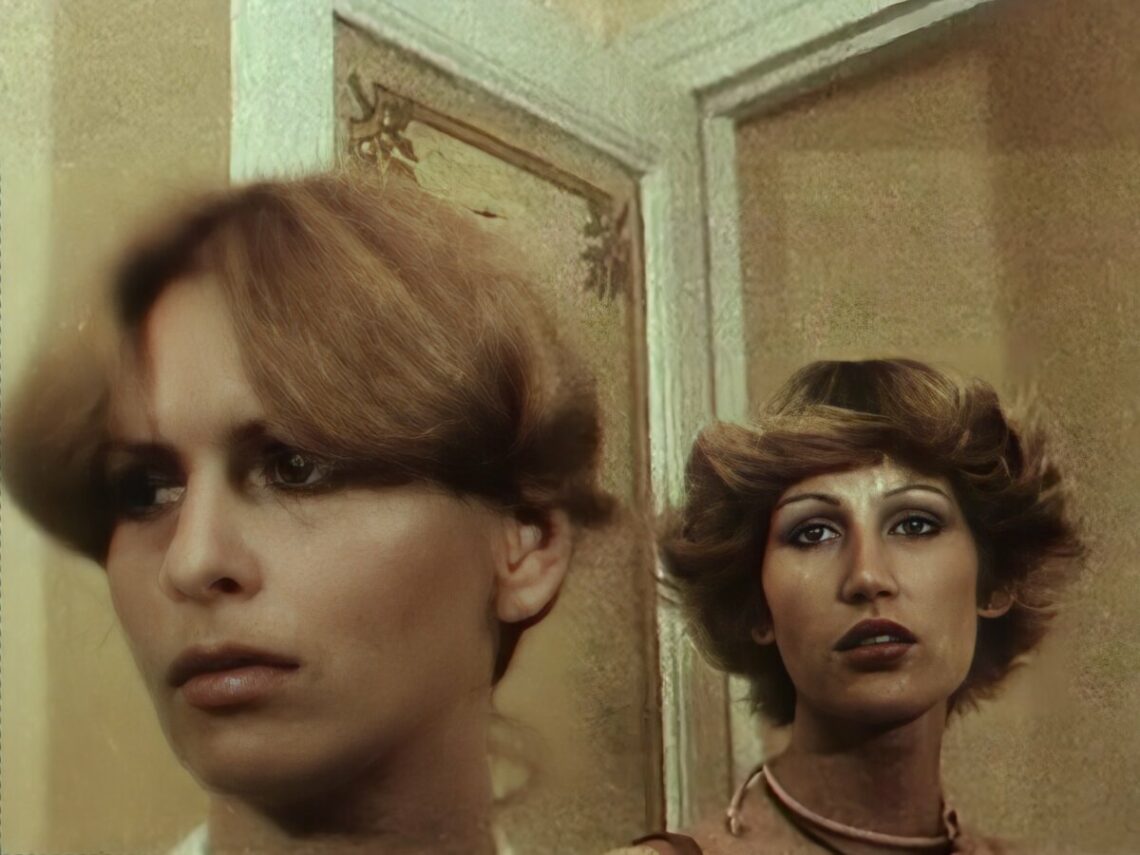
A movie that is presented in still images alongside footage featuring cute dogs, it tells the story of a young girl who embarks on a journey to find herself after she discovers that she was abandoned by her biological mother. Parodying the melodramatic conventions of telenovelas as well as the photo-romance frameworks of La Jetée, Ruiz raises a lot of important questions about the way in which we consume popular entertainment.
In an interview with Jonathan Rosenbaum, Ruiz explained how the cinematic landscape changed permanently in the following decade. He said: “At the beginning of the ’80s, people making cinema were forced to move to video — I mean, forced. We got the money, we got everything, we got even more money than before, but we had to make it in video. And at that time, you know, the video was analogue — we couldn’t use a small camera to make what could be reproduced in 35mm, or rework it digitally and change everything.”
The director added: “But at that time, the will of the authorities was to develop in that direction. And that means aesthetic and economic tendencies are mixed with political tendencies, and not necessarily in a good or a bad way — sometimes it’s in a very good way. But it’s a funny thing about France that makes it different from the other countries, the political will — that sometimes the President can decide that in France we should make that kind of movie and not another.”
That’s exactly why Dog’s Dialogue is, in many ways, the last of its kind. Just like La Jetée, Ruiz uses the momentum of the individual images to create a sense of sweeping motion as the characters dissolve in a cycle of violence and hatred. Ranging from aesthetic subversions to interesting tangents about gender identities, Ruiz’s work is an all-consuming experience.
Watch the film below.
