


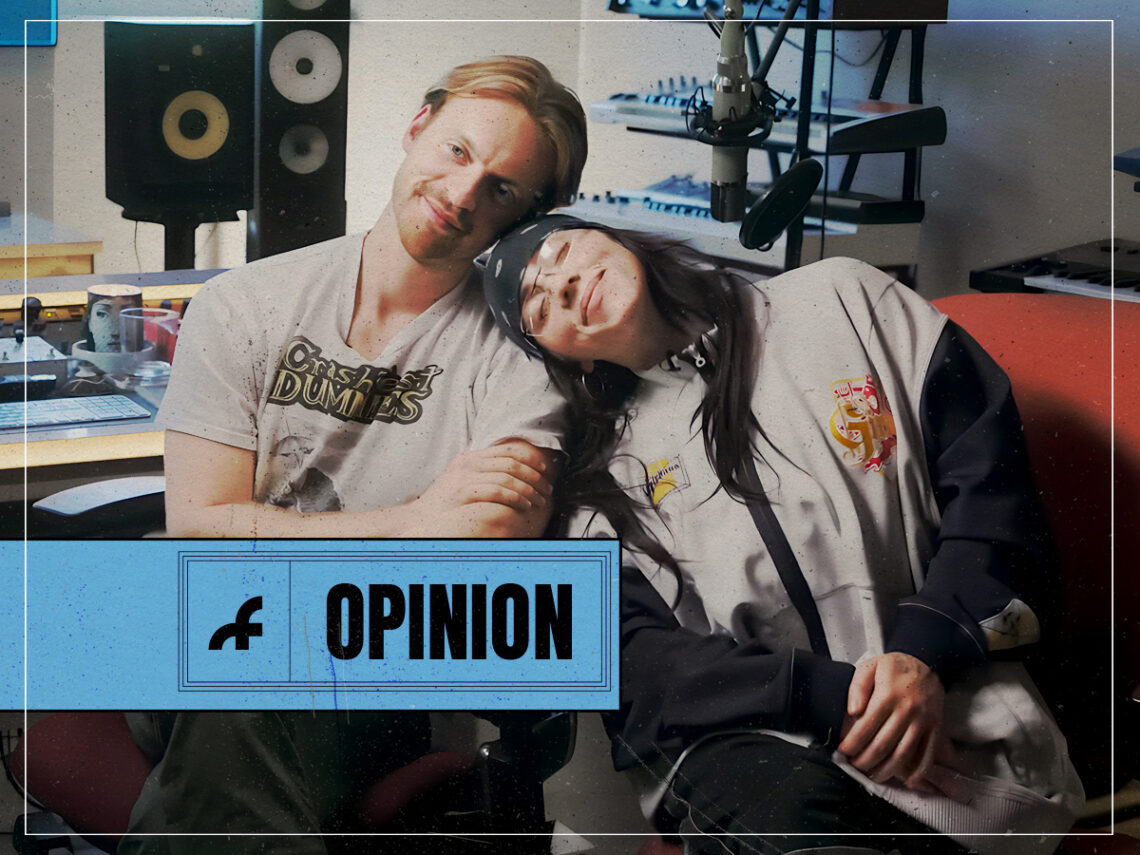
Does Billie Eilish need a break from her brother?

Most artists at the age of 22 are still cutting their teeth. A lucky batch is making waves, but few in history have had as marked an impact as Billie Eilish. Now, three albums into her discography, she’s delivered a golden run that has shifted the dynamics of alt-pop. In a bygone era, a young teenage starlet emerging in the world of pop would’ve signified a vapid commercial manoeuvre by a big label, but Eilish and her brother Finneas have marked the genre out as a realm for innovators in the modern age.
Nevertheless, there eventually comes a point when you check the rearview mirror of the juggernaut you’re driving into the future and see that it’s become a bandwagon. Half a decade on from her debut, the layered techniques and twists that Eilish and Finneas invented have become ubiquitous. Her latest album, Hit Me Hard and Soft, suffered as a result.
That is not to say that it wasn’t a great record – it was – the songwriting, experimental textures, emotive motifs, and performances were as commendable as ever, but they just didn’t land with quite the same potency by virtue of the fact we’d heard them before—and not just by Eilish these days, either. She’s inspired so many people that her signature sound has become less distinct. No matter how credible the production on Hit Me Hard and Soft was, you weren’t overly awed by it—you were awed by the songwriting beneath it all.
In fact, many of the best passages on the record were when the stark emotions at play were laid bare upon a tender piano, and Eilish’s exquisite vocals made themselves known. These near-Nina Simone-like moments of crooned soul also demarcated a potential future direction for Eilish: stripped-back balladry. Having advanced the boundaries of pop in a more progressive direction, perhaps a step back would be best to allow her flourishing artistry to flower untroubled by thoughts of how to maximise production. Quite where Finneas sits in this picture is unclear.
There is no doubt that sibling chemistry has been a potent part of what Eilish has achieved so far. His tireless layering and other production staples have also marked Finneas out as one of the primary innovators of modern music. But with the world now copying the magic that they have produced, perhaps temporarily parting ways would allow Eilish to showcase the fully formed songwriter she is now operating as.
This would also match the motif of her artistic journey. One of the reasons the softer moments on Hit Me Hard and Soft worked so well was because she was, in essence, vulnerably exposing the true Eilish—the person, not the celebrity superstar. While catchy, there was the odd moment where the flashy synth hooks and syncopated beats got in the way of this earnest message. Crowding the record with endless overdubs has always worked for the duo, creating three-dimensional tracks you can delve into, primed for the bedroom pop age where a sense of immersive depth is all the more important. However, we have now perhaps reached a point of overcrowding in every sense.
When reviewing her album, Far Out offered the closing joke: “A concluding comment from Finneas: ‘Hey, sis, do you mind if, on the end of every one of your future songs, I do a load of mad production stuff in the last 15 seconds just so it’s clear to everyone how involved I actually was?'” Of course, this was meant as lighthearted because nobody can deny the mastery he has lent her projects so far. But the more you listen to Hit Me Hard and Soft, the closer to the bone that gag seems.
The art of the overblown has become Finneas’ timely, ingenious move. That’s his style. That’s his signature. But times have moved on for Eilish, and her songwriting shows that. Maybe it’s now time for her production to follow suit.
