


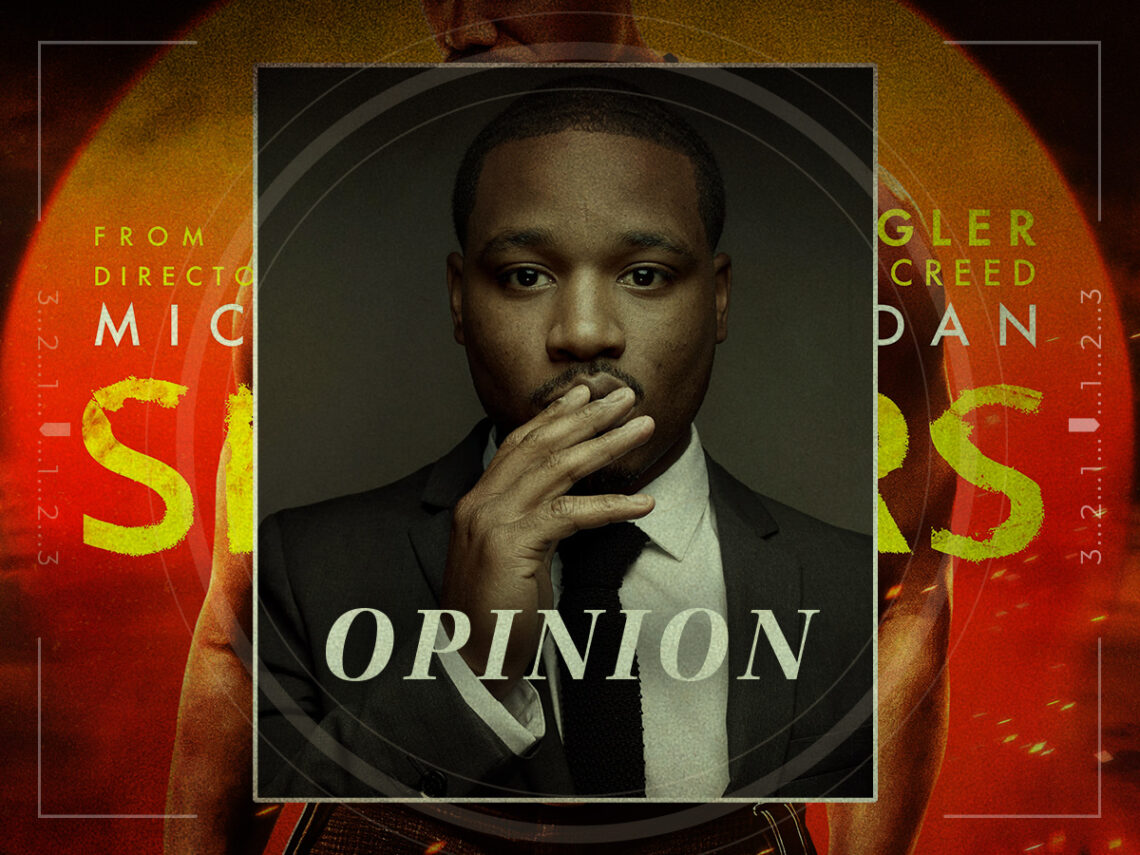
Do Warner Bros see Ryan Coogler as its new Christopher Nolan?

In the lead-up to the release of Sinners, the fifth feature film from director Ryan Coogler, Hollywood watched with bated breath. Directors, actors, writers, and studio executives alike were rightfully curious to see if the movie would be welcomed with open arms by audiences and critics, or become the latest original film to fall by the wayside of the industry’s obsession with Intellectual Property. Warner Bros had poured a lot of money into Sinners, after all, and given the young director an unheard-of level of creative freedom in the modern movie marketplace. Would this decision pay off?
The answer, obviously, is “Yes.” Sinners has been nothing short of a roaring success. It has received some of the most glowing reviews of any big-budget Hollywood production in a very long time, and has raked in money at the box office, proving that audiences are more than willing to venture out to cinemas to watch a film that isn’t based on a comic book, novel, or video game — as long as it captures their imaginations.
In truth, the movie has accomplished precisely what Warner Bros and Coogler hoped it would. From the studio’s perspective, it took a gamble by forking over a reported $90-100million budget for Coogler to make a vampire movie set in the Deep South in the 1930s. It also cut the helmer a deal that is almost unprecedented in modern Hollywood by giving him a cut of the first dollar gross, meaning a portion of ticket sales goes in his pocket, as well as ownership of the film after 25 years.
Coogler is only 38 years old now, so he will personally receive royalties from home video sales, merchandise, television airings, and streaming deals from the age of 63, instead of that money continuing to funnel to Warner. This is a highly forward-thinking thing for Coogler to demand, as who knows what state the media landscape will be in by then or how long Sinners will stay in the public consciousness. However, it shows that ownership of this particular film, which is so personal to him, is vital.
More than that, though, Coogler’s deal shows that the studio sees something in him that is exceedingly rare. His previous movies were almost uniformly excellent, and they made billions for Disney (the Black Panther films) and hundreds of millions for MCM (Creed). However, those movies were all based on recognised properties, so the jury was theoretically out on whether Coogler could deliver substantial box office takings and critical acclaim with a film he created from whole cloth.

For Warner Bros to invest so heavily in Coogler’s creative vision and his potential as a filmmaker shows that the studio believes he can become a name that makes audiences buy cinema tickets en masse. This kind of brand name, for lack of a better term, that almost guarantees box office and critical adulation is increasingly rare in Hollywood — and let’s not forget, Warner Bros let the biggest one of the modern era slip through their fingers a few years ago.
The story of Christopher Nolan becoming disillusioned with Warner Bros during the pandemic and subsequently jumping ship to Universal Pictures to make Oppenheimer has been well-covered in the last couple of years. Nolan made nine films for Warner Bros, including The Dark Knight Trilogy, Inception, Interstellar, and Dunkirk. He would probably have stayed with the studio had it not drastically changed tactics during the pandemic. After all, Warner always had a reputation as one of the most filmmaker-friendly studios in Hollywood. This was where industry heavyweights like Clint Eastwood, Ben Affleck, and Denis Villeneuve made their films, but when the decision was made to release an entire year’s slate direct to streaming, a disgusted Nolan flew the coop.
While much of that decision-making was laid at the feet of corporate overlord David Zaslav, it’s notable that Warner Bros studio heads Pam Abdy and Mike De Luca seem to have made a concerted effort in the last year or two to restore filmmakers’ faith. For instance, they granted Paul Thomas Anderson by far the most significant budget of his career for One Battle After Another with Leonardo DiCaprio, and bankrolled Bong Joon-ho’s wacky space satire Mickey 17.
To this casual observer, though, the studio’s deal with Coogler has been the biggest outward sign that it wants to return to the auteur business. Filmmakers like PTA and Bong are incredible in their own right, but is it out of the realm of possibility that Warner Bros sees Coogler as their new Nolan? With Sinners, Coogler has proven that he can take a personal story and turn it into a thrilling genre movie that pushes cinematic technology and storytelling as far as it can go. It also demands to be seen and heard on the biggest screen possible.
Hell, Coogler has even revealed that he sees Nolan as a mentor. When he decided he wanted to use IMAX cameras for Sinners, the first person he called for advice was the Tenet director. The two helmers also share some stylistic similarities, with Sinners striving to be as much a visual and aural feast as Oppenheimer. The two men even share a taste in composers: Nolan secured the services of Ludwig Göransson for Tenet, Oppenheimer, and his upcoming opus The Odyssey, more than likely after hearing his work in each and every one of Coogler’s films.
Ultimately, it remains to be seen whether Coogler can replicate Nolan’s success in the coming decades —or if he even wants to take that path in his career. However, it wouldn’t be surprising in the least if the wildly talented helmer is spoken of in Nolan-like terms at Warner Bros right now, and the studio will certainly be hoping it’s hitched its wagon to the heir apparent to Nolan’s throne.
