


Divorce on the difference between Glastonbury and Green Man: “Music, not hedonism”

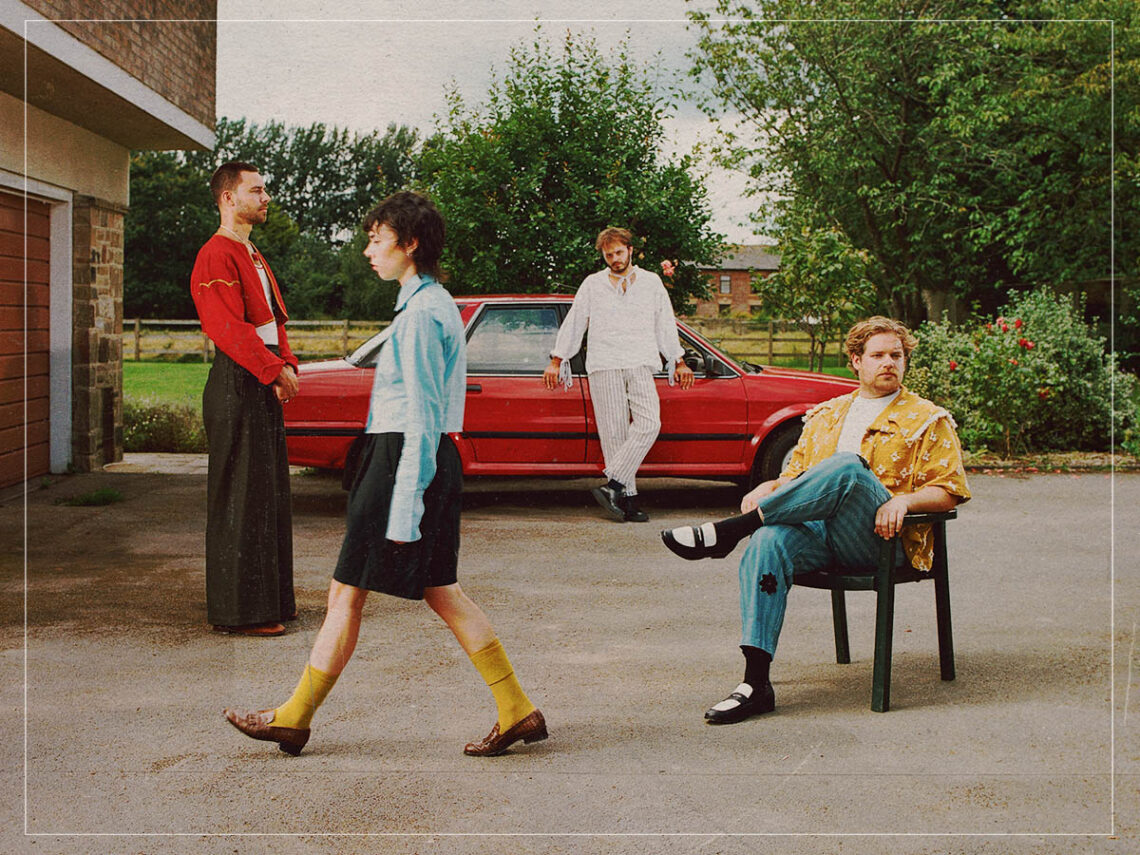
Nottingham outfit Divorce only have one full-length album to their name, but their bright, indie-folk sound traverses so many genres with such lucid characterisation that it feels they’ve been around for a lot longer.
As with all up-and-coming alternative bands, they’ve had their sights set on the Green Man festival, a utopia nestled in the Brecon Beacons in Wales, for some time. I caught up with Felix Mackenzie-Barrow, the band’s co-vocalist and guitarist, not two weeks before the big weekend.
Green Man signals the near-end of a booming festival season for Divorce. Notably, they played two sets at Glastonbury Festival, one of which was televised. A proper pinch-me moment, though, for Felix, who doesn’t do well with huge crowds; it was intimidating, too.
“It was really cool,” he recalled, slowly spooning porridge over an early-morning Zoom call. “We had two shows, and the crowds were really lovely. And we did a TV thing, like a live acoustic session, which was really crazy, because you grow up watching Glastonbury on TV, and then we were in that set in real life. So that was really strange.”
Like many smaller artists, Mackenzie-Barrow had been orbiting around Green Man’s inevitable pull for some time now. With a smile, he recalled driving The Mary Wallopers there last year, acting as a chauffeur for the Irish folk group. But the band have never claimed one of their ten great stages as their own: until now.
While Worthy Farm is unfathomably big and sprawling, Green Man is knowable and welcoming, the ‘Antartica’ singer comments. “It’s the ideal size for a festival, I think,” Mackenzie-Barrow adds.
Curious about another key difference, the singer-songwriter thinks for a moment, before offering up, “It seems like the kind of crowd that ‘listens’.” He lets the word reverberate before adding, “I think that’s always nice to play for. I’ve seen a lot of stuff there that feels like it relies on people listening properly for it to be properly enjoyed. I’ve seen that happen, so I know that it’s possible. I’m looking forward to that aspect of it. There’s a lot of real music heads going, that’s always nice.”
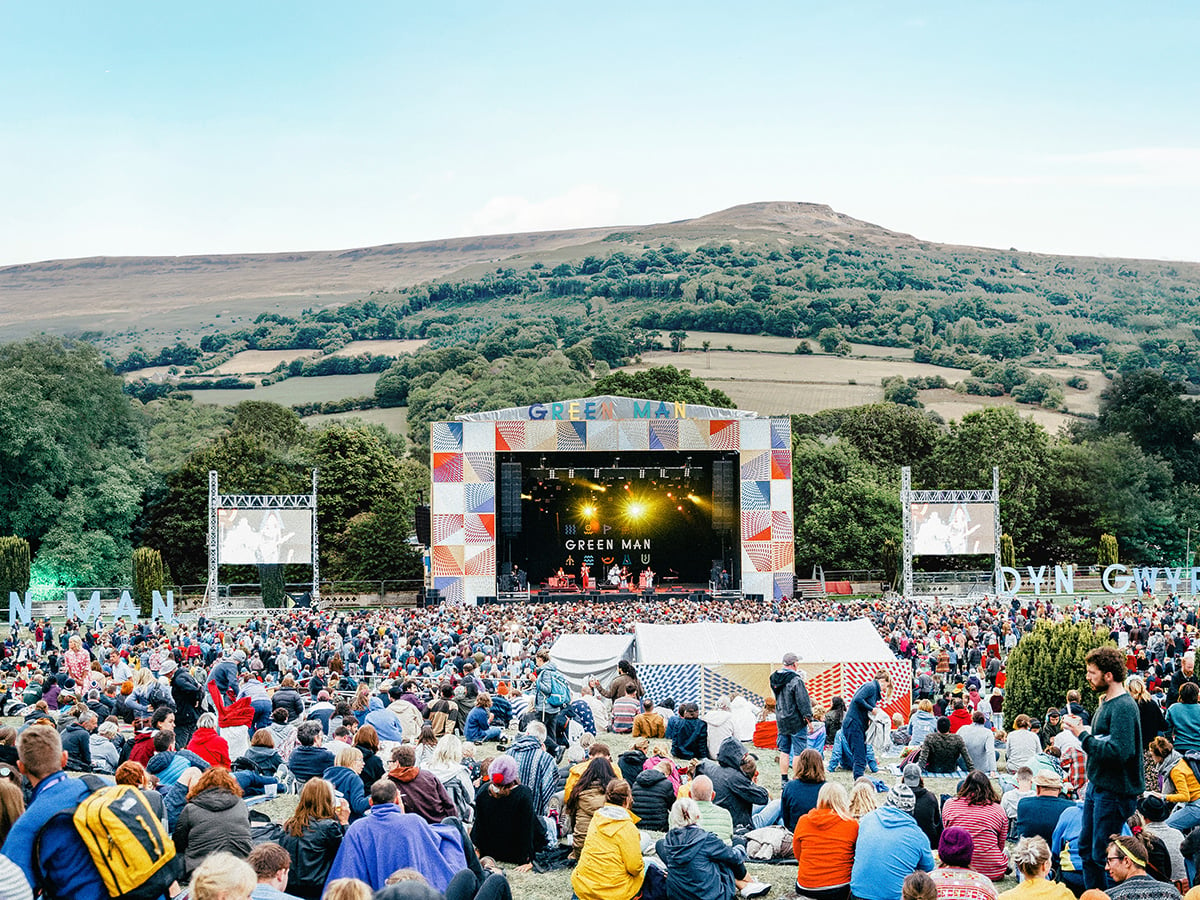
Glastonbury and other major festivals now feel like full-time advertising spaces. Though this may be a necessary evil to ensure the best acts play the country’s best festivals, sponsorship relationships require, to some extent, the quick shepherding of attendees from place to place, act to act. There’s a higher likelihood of buy-in with each opportunity sponsors get to manipulate the festival-goers’ psyche. However, Green Man is the first large British festival to refuse sponsorship. There’s a sense on the ground that no ulterior motive exists beyond music for music’s sake.
Felix adds, “I think festivals are sometimes incredibly catered towards the audience, instantly having everything they could want. This often means that the artists get very little time to sound tech, or they get very little opportunity to give a really good performance. If there were one thing I would change about festivals, it would probably be giving things a little bit more space and time.” Reality isn’t ever far from his thoughts: “But, you know, some people are just there to get fucked up and have a good time.”
This year, Divorce have played a festival almost every weekend, touching down in multiple European countries like Italy and the Netherlands. Green Man might be added to that list: “Compared to Europe, the UK is pretty bad at looking after its artists successfully. From my experience, Green Man is really good at that. It feels more like a European festival, because it feels more geared towards caring about the music, rather than the hedonism of it.”
Despite this, Divorce are not afraid to take inspiration from a culture of cunt-pop and unapologetic extravagance. You may be moved to tears from the likes of their latest acoustic single, ‘O, Calamity’, but know that Nottingham rockers were rapturously impressed by Charli XCX’s headline set at Worthy Farm.
When I asked if the group had any inspirations for their live sets, Mackenzie-Barrow shared, “One day I’d love to do something that’s a crossover of theatre, and maybe Charli XCX. There was so much to her [Glastonbury] show around the music; there’s a degree to which the show puts the audience into something immersive. We all feel, at some point, this could be good to do… It would require quite a big budget, though!”
Though the band might one day want canons and neon graphics to accompany their louder folk-meet-shoegaze offerings, Felix assured me that there’s always a sense that this is a band of the people, for the people: “the presence of a fourth wall represents this difficult thing for me. I always want to feel the audience is on the same page as us… It would feel disingenuous for our songs to dress things up too much right now.”
He continued, “I feel like something that’s really important to us as a band is that genuine connection with the crowd in that rawness.” As long as that line between the crowd and the music can stay “as open as possible,” Divorce would entertain anything.
Throughout our chat, Mackenzie-Barrow described his life as transient. Half the time, he is on tour, so it makes no sense to have a permanent residence. Their album, too, describes a half-state of existence: Drive to Goldenhammer is a journey whose road forever grows. Home, then, might take the shape of Welsh fields, 25,000 people coming together to listen, really listen, to what the next best band has to say. Glastonbury is a party; Green Man is a home.
