


Feuds, keyboards, and vomit: The disastrous end of Rainbow

Nothing lasts forever, particularly in the amphetamine-fueled realm of rock and roll, where fall-outs, feuds, and line-up changes have derailed some of the greatest groups to ever grace the airwaves. Back in the 1970s, for instance, Ritchie Blackmore’s Rainbow landed upon the perfect line-up, but it didn’t take long for the wheels to fall off.
Rainbow’s timeline was chaotic from the very beginning, forming in the wake of Blackmore’s departure from hard rock heroes Deep Purple – or, rather, his first departure from Deep Purple – in 1975. Rather than forming an entirely new outfit, though, the legendary guitarist simply borrowed the line-up of Cortland blues rockers Elf, including future Black Sabbath frontman Ronnie James Dio. It didn’t take long, however, for changes to be made.
Although that Elf-based line-up produced Rainbow’s self-titled debut in 1975, it is fair to say that Blackmore wasn’t satisfied with the results. Even aside from the fact that the record didn’t perform incredibly well in the charts, the performances encased within it weren’t overly inspiring and, to top it all off, the supporting tour was pretty lacklustre.
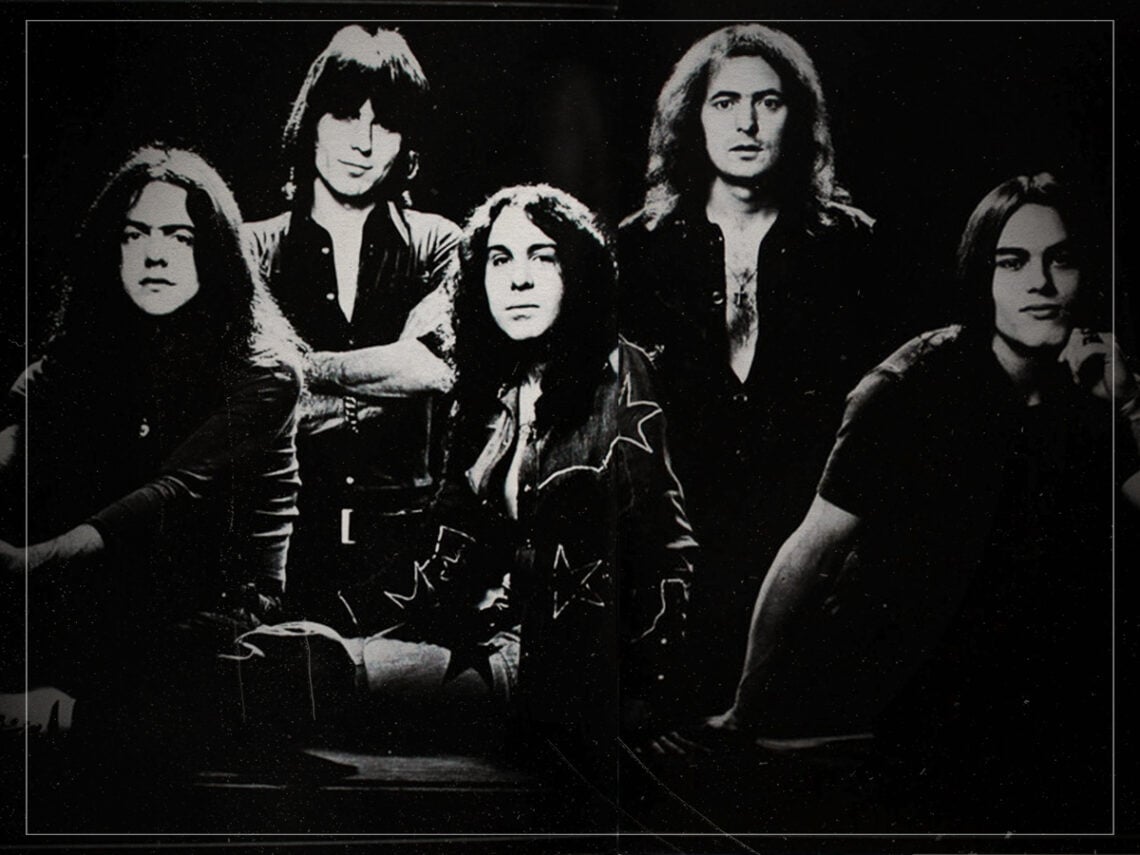
Since the guitarist had just severed himself from a group as legendary as Deep Purple, it is fair to say that he was yearning for something more, and that initial Rainbow line-up just didn’t cut it. So, Blackmore gutted the line-up, retaining only Dio, and filled out the empty space with keyboardist Tony Carey, Cozy Powell on percussion, and Jimmy Bain, rounding out the rhythm section on bass.
Thus, the ‘classic’ line-up of Rainbow was complete, but that is not to say that everything was smooth sailing from thereon.
For starters, the recruitment process had already been rather chaotic, with Bain recruited from his previous band, Harlot, after Blackmore and Dio witnessed him perform a set in New York, which involved the band’s drummer throwing up Guinness all over the stage and all over Bain.
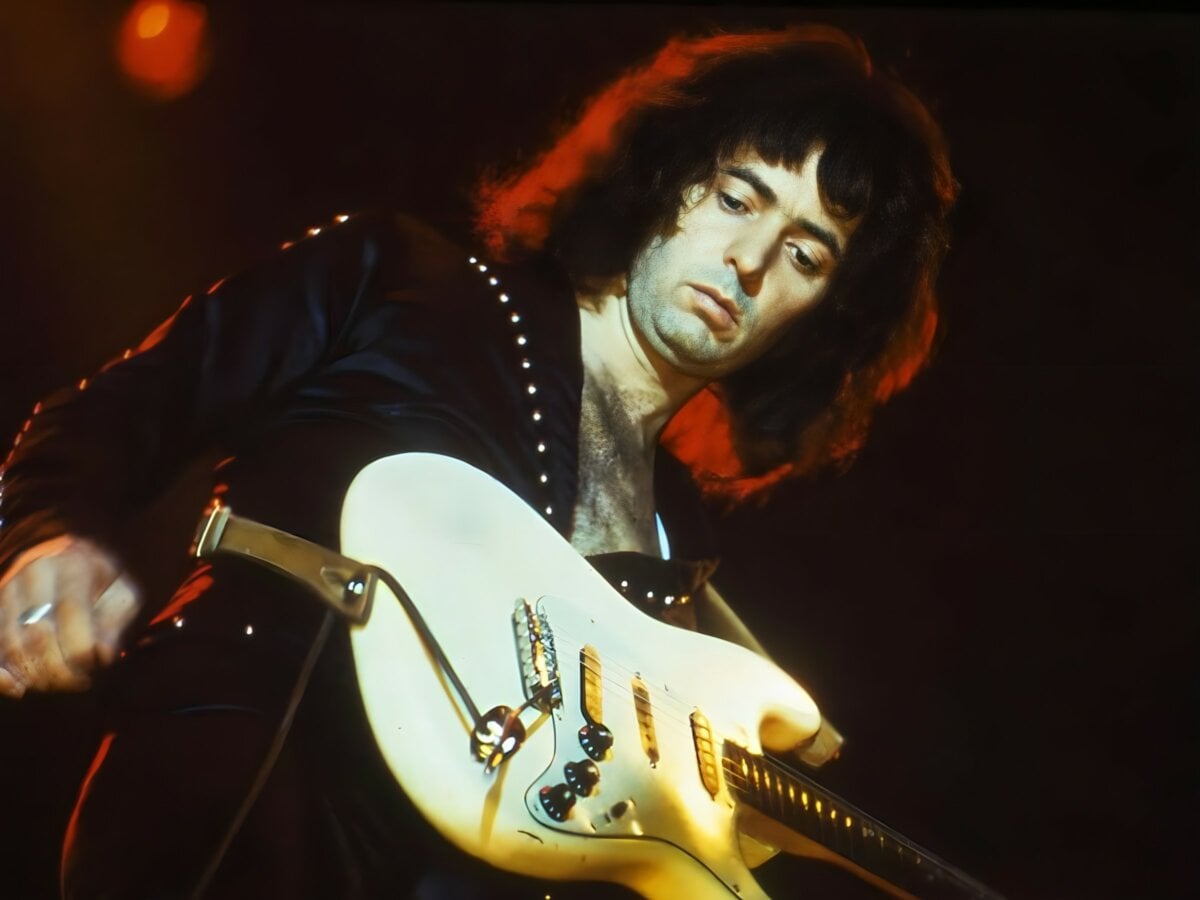
“I’m out front singing, playing bass and generally flying around the stage,” the bassist later recalled to Classic Rock. “I look round and there’s puke all over the place, on the floor toms, it’s all over me. And I thought: ‘Oh no. This is not going well.’” Nevertheless, the bassist was in, and while his time with Rainbow tended to involve less vomit, the chaos and confusion remained.
That newly established line-up recorded Rainbow’s magnum opus album, in the form of 1976’s Rising, which – in addition to being a landmark release in the lineage of heavy metal – was also a hit in the UK, peaking at number 11 on the album charts. Arguably, in fact, the record eclipsed the efforts of Deep Purple at that time, and it looked as if there was a new beacon for metal excellence on the scene.
Blackmore’s endless pursuit of musical perfection, coupled with the Spinal Tap-esque tour antics of the band, who typified the life of rock and roll hedonism, soon spelt the end of that legendary line-up, however. By the time the band came to record their next, distinctly more accessible, record, both Carey and Bain had been unceremoniously sacked by Blackmore, resulting from their fast-living lifestyle and Blackmore’s unending hatred of keyboardists.
Rainbow continued, of course, and managed to become even more commercially successful towards the end of the 1970s, having opted for a more mainstream approach to the hard rock sound. There was never any doubt, though, that they weren’t going to last forever. Dio left the group in 1979, unhappy with the musical direction; a decision which Blackmore lambasted in a Sounds interview, declaring, “If they were good enough, they’d still be in the band.”
It was in 1984, after going back to his old Deep Purple comrades, that Rainbow finally dissolved into the ether, but the band had already been a shadow of its former self for a number of years, having undergone more line-up changes than a struggling League Two football club.
There is no doubting that the Rising era of Rainbow was its defining sound, even if it wasn’t their most commercially successful. With that album and that incredible group of musicians, Blackmore was able not only to eclipse Deep Purple but to drive the realm of hard rock into entirely new directions. It is just a shame he couldn’t keep the group together for a little longer.
