


‘Dirty Old Town’: The Irish anthem that was actually born in Salford

If you’ve ever been in an Irish pub for long enough, or attended a Saint Patrick’s Day event in virtually any far-flung corner of the globe, the chances are you will have witnessed a Guinness-fuelled rendition of ‘Dirty Old Town’ at one point or another.
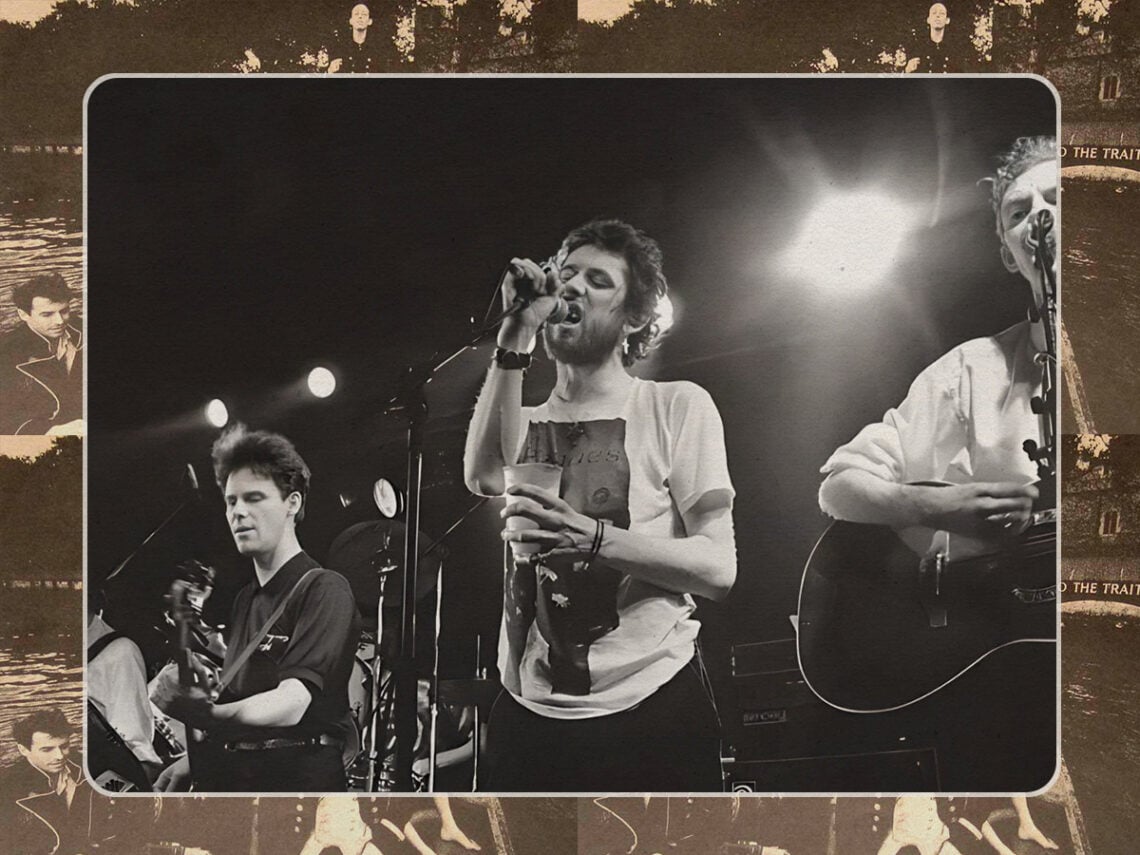
A tale of industrial romance and finding light within particularly depressing surroundings, the song simply feels right when rendered in Shane MacGowan’s endearingly coarse vocal style. Although The Pogues might have popularised the song with their 1985 rendition, taken from Rum Sodomy & the Lash, MacGowan was not the original composer of the track. In fact, the song in its original form had very little to do with the nation of Ireland at all.
It was the underappreciated hero of British folk, Ewan MacColl, who first wrote the song back in 1949, almost a decade before MacGowan was even born. Born in the industrial landscape of Salford to Scottish parents, MacColl’s upbringing was as fascinating as it was utterly heartbreaking. His parents were forced to move from Scotland, for instance, because they had been blacklisted from every iron foundry in the country due to their socialist, trade unionist beliefs.
What’s more, Ewan was the only surviving child of the MacColls, and during the great depression of the 1930s, the young songwriter was among the hordes of unemployed people struggling to make ends meet. Throughout it all, folk music was where MacColl found his solace, and today he remains one of the most utterly essential figures in the history of British folk, having inspired everybody from Simon and Garfunkel and The Dubliners to virtually every pub folk night since the 1940s.
In Salford, MacColl was flanked by chimney stacks and perpetual drizzle, living in a particularly depressing LS Lowry painting. Inevitably, then, those grey industrial surroundings soon bled over into his musical output. No song reflected that fact better than ‘Dirty Old Town’, which was explicitly written about Salford for the Joan Littlewood play Landscape with Chimneys.
Those gasworks, canals, and factory walls that the song details over the course of its utterly iconic verses might be applicable to virtually every industrial town and city across Scotland, Ireland, Wales, and the north of England, but it was Salford that MacColl was using for the crux of his songwriting inspiration.
Nevertheless, the song didn’t begin to amass its now legendary reputation until the 1960s, when the British folk revival saw ‘Dirty Old Town’ become something of a standard for pub performers. From there, of course, it found its way into the repertoire of Irish folk legends, The Dubliners, and The Pogues gave it a new life a few decades later.
Today, largely as a result of those admittedly incredible versions by the Dubliners and the Pogues, ‘Dirty Old Town’ is forever tied to a sense of Irish identity and pride, but it hasn’t lost its roots in Salford, either.
To their credit, in fact, the Dubliners routinely introduced the song by mentioning its roots in the north of England, and, in more recent years, it has become the walk-out track for Salford City football club – though they tend to opt for The Pogues’ version, which is perhaps more rousing than the heartbreaking folk sound of Ewan MacColl’s original recording.
