


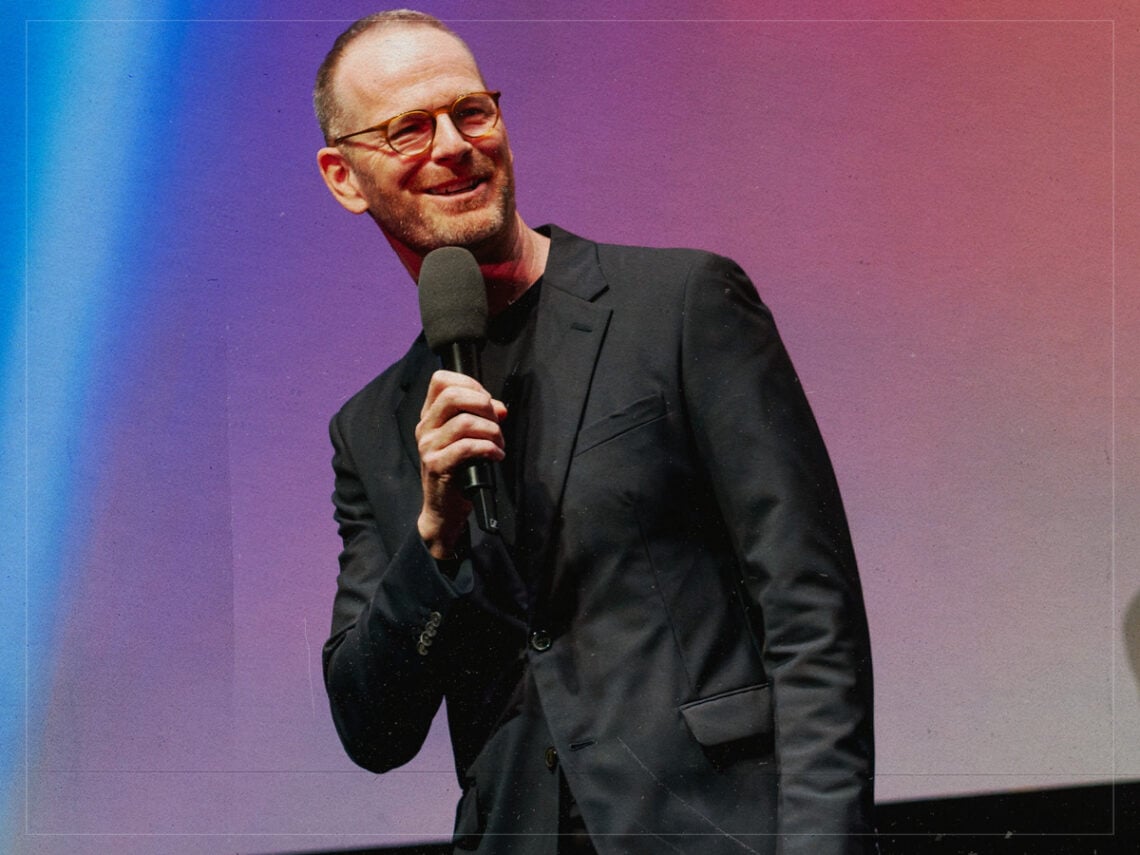
The director who “meant the world” to Joachim Trier: “I love those films”

Joachim Trier is the kind of director who makes Cannes juries swoon, and while that might make some cinema-goers run in the opposite goddamn direction, his work can appeal to just about anyone.
He makes films that hover over the most intimate of emotions, the transformational power of memory, and the small interactions that act as glue in troubled relationships. His latest film, Sentimental Value, may even win him his first Oscar if the Academy knows what’s good for it.
So, while you might assume that the Norwegian auteur would have been raised on the sorts of ponderous European movies that Hollywood sorts look down on, it turns out that it’s the opposite. In a 2016 interview centred on his English-language debut, Louder Than Bombs, Trier revealed that the films that meant the most to him growing up were peak 1980s Hollywood.
“John Hughes meant the world to me,” he told The Film Stage. “Ferris Bueller’s Day Off or The Breakfast Club took young people’s lives seriously, and I love those films.” His appreciation for Hughes’s work partly informed how he approached Louder Than Bombs, which follows, in part, a teenager reckoning with his mother’s death while enduring the agony and indignity of high school.
At one point, the boy’s older brother (played by Jesse Eisenberg) reassures him that it will get better, a tacit acknowledgement that, no matter what movies like Grease and Risky Business might have you believe, high school can be the low point, not the high point, in a person’s life.
Hughes’s movies are often comedic and joyful, but there is darkness underpinning most of them. The Breakfast Club is particularly bleak, depicting a group of vastly different teenagers who find themselves in detention and come to realise that they have much more in common than they thought. Even the It Girl and the jock are suffering silently in some way, and all of them are carrying real-life burdens.
Tellingly, when discussing how he managed to get the culture of American high school so right in Louder Than Bombs, Trier said, “I didn’t research; I went to high school.” And maybe this is the crux of why his films appeal to such a broad swatch of film-goers.
Some movies require research, but his films are so rooted in everyday experience that they really just require a knowledge of being a person. John Hughes’s movies tapped into the experiences of being an American teen, and although they haven’t always stood the test of time, the emotional heart of them still rings true today, just as it did for a future Palme d’Or nominee in Norway in the 1980s.
When Trier listed his favourite films of all time for La Cinetek, he included The Breakfast Club, as well as the morbid May-December rom-com Harold and Maude and Ingmar Bergman’s elusive masterpiece Persona. You’d be setting yourself up for failure if you were to recommend a Trier movie to a friend by telling them that it was just like a John Hughes movie, but if you name-checked this trio of films, you’d be pretty spot-on.
