


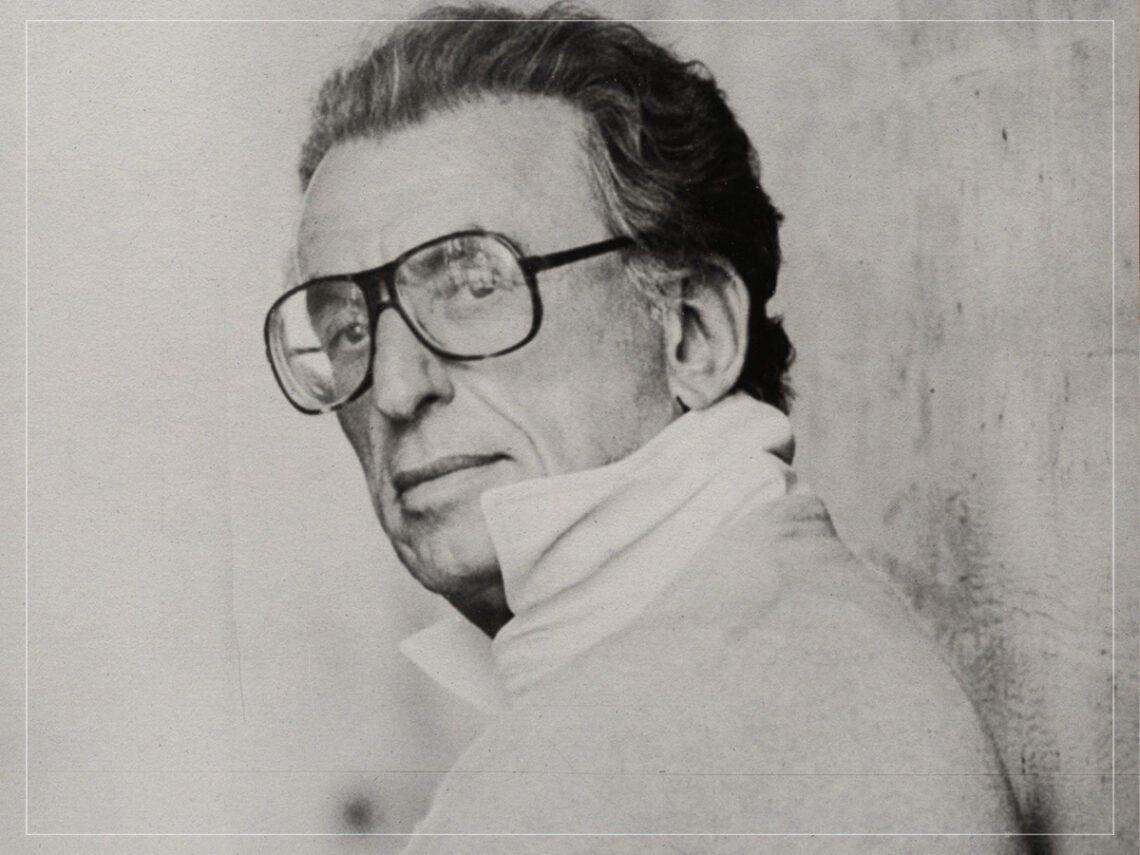
Herbert Ross: The director who “bonded” his entire cast in despising him

Being a director is a tough gig. It requires both an encyclopaedic understanding of the project you are undertaking and the uniquely positioned ability to cajole and comfort your cast. Not all Hollywood filmmakers are up to the task.
Imagine trying to keep a whole crew of people happy on set while still trying to deliver a singular vision of your art, all the while pleasing a studio and ensuring to make some money. Add in a few egos to the pot and you may have a stew that’s acrid and potentially damaging. However, some filmmakers can make such an unwelcome meal all by themselves.
Herbert Ross had built himself a reputation long before he took the reins of the 1989 Steel Magnolias. An actor and choreographer before he became a director specialising in musicals and comedies, Ross was unashamedly a proponent of the old school side of filmmaking.
A Broadway native, he was a pointedly tough director, rarely accepting anything less than absolute perfection. It was this kind of dedication that had gained him an Academy Award nomination in 1977 for Turning Point and helped him hit mainstream cinemas with a one-two step on 1984’s Footloose.
However, when he approached Steel Magnolias, he found a cast he deemed well below the watermark of what was necessary to make a major motion picture. Ross seemed a shoo-in for the director’s role, considering the script’s origin as a play, but the cast was just as hefty with fame; Sally Field, Dolly Parton, Shirley MacLaine, Daryl Hannah, Olympia Dukakis, and Julia Roberts were all given roles.
A real tearjerker, the movie relies on the famous names’ ability to deliver the charged emotion of the scenes, something the director felt they rarely achieved. For some directors, this would be a point of discussion, a teaching moment perhaps; however, for Ross, it was more simply a time to put down his cast, with a special charge for the newcomer Julia Roberts.
In a 1993 interview, he said that Roberts “looked bad and gave a very bad performance” in the movie, but it seemed as though the issues started on set. Sally Field remembered in 2013 how the hate from Ross didn’t hurt or divide them, but had the opposite effect: “My deepest memories of the film were how we bonded together after he told one of us or all of us we couldn’t act. He went after Julia with a vengeance. This was pretty much her first big film.”
Roberts didn’t take it lying down and later called him “mean and out of line” in a brutish response before following up: “If he thinks he can talk about me in such a condescending way and not have me say something about it, then he’s nuts”.
It was a common theme. Dolly Parton, not known for her acting but more for her stunning disposition, was equally unhappy with Ross, who repeatedly insulted her on set for her lack of performance: “I’m not an actress, I’m Dolly Parton. I’m a personality who has been hired to do this movie. You’re the director. It’s your job to make me look like I’m acting.”
Directing is definitely a tough job, and there’s a great deal of difficulty attached to seeing it through. One task for all filmmakers is to provide a unified set; however, you should usually try to avoid unifying everyone against you, like Herbert Ross did.
