


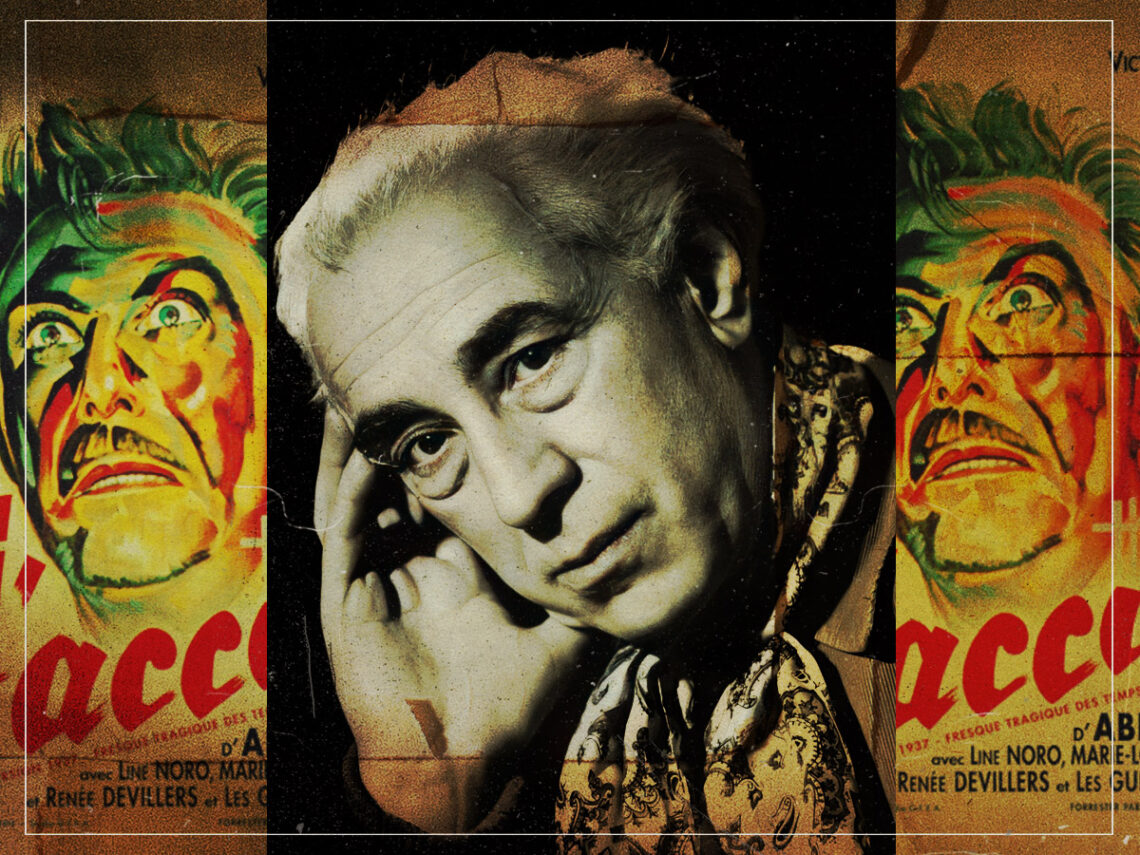
Abel Gance: the director who tricked the military into making an anti-war movie

A director can often go to extraordinary lengths to realise their creative vision, and as it applies to Abel Gance, the filmmaker managed to convince the French military that he wasn’t making an anti-war movie set in the heat of World War I when they granted him unfiltered access.
Gance had previously been drafted into the army, but after being discharged due to ill health, he began concocting a story for a feature influenced by the deaths on the frontlines of so many people he knew. Incredibly, much of J’accuse was shot on location, with the director installed on the battlefield to capture footage between August 1918 and March 1919, which was incorporated into the final cut.
A romantic drama at heart, the story focuses on two men who are in love with the same woman and cross baths in the trenches. Indebted to Gance being plunged into the thick of the action with slightly ulterior motives, the silent classic offers the dichotomy of a small-scale human story being set against the backdrop of a war that claimed millions of lives.
Continuing to remain coy about his true intentions, there’s a scene where thousands of dead soldiers rise from their resting place on the battlefield to return home. Shot with real infantrymen who’d come back from leave, in execution, it reflects on how the loss of so much life left so many bodies buried so far from home and impacted the country at large, something the French military would have never allowed were it aware of what J’accuse really was.
There were inevitable suspicions, of course, with Gance brushing off the attentions of a general who inquired as to why he was instructing soldiers to form the letters of the title so they could be filmed from above in an imaginative artistic flourish. The term ‘j’accuse’ had itself been co-opted as an anti-government sentiment after the casualties continued mounting up to sour the public on its involvement in the war, with Gance explaining it away as the film “accusing universal stupidity” as opposed to anything specific.
He maintained that even though he wasn’t interested in politics, he was staunchly against war. That’s hardly a revelatory opinion for anyone to hold, but the fact it came from a director who’d literally just been given approval by the military to take a camera crew into the battlefields of World War I while opting not to inform them of how the finished product would be leaning was a brazen move nonetheless.
Premiering just four months after the war ended in April 1919, J’accuse was rapturously received by those in attendance, who were in the same mind as Gance over the horrors of what had only very recently unfolded on the global stage. French distributors were not of the same mind, though, having determined that such overt pacifism in a movie shot in the heat of the action reflected poorly on the nation.
Taking it on the chin, Gance opted to take it internationally himself, with D.W. Griffith ultimately securing J’accuse a release in the United States after being blown away by its technical proficiency and thematic heft. Regarded as a classic of silent French cinema, the film is even more impressive knowing that its creator opted to obscure his agenda in order to execute it exactly as he envisioned.
