


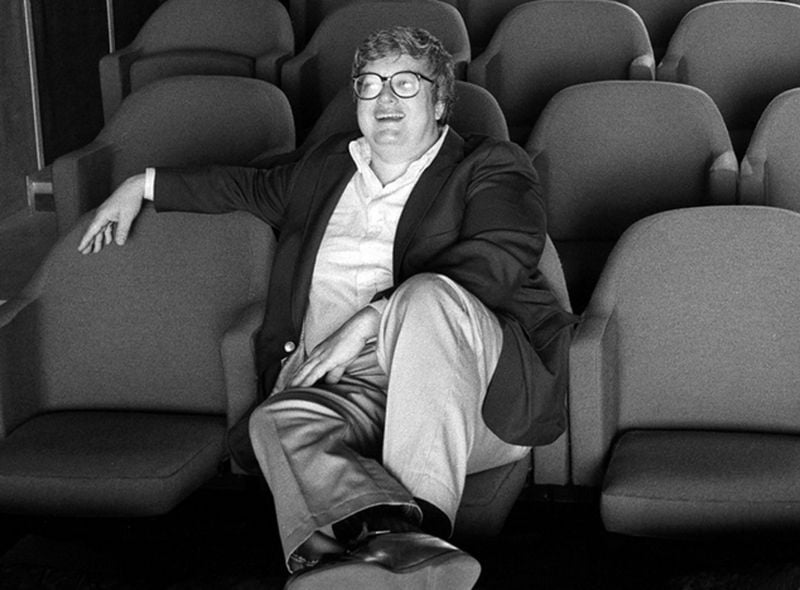
The iconic director that Roger Ebert called the “American Fellini”

Roger Ebert has gone down in history as one of the most renowned film critics of his time. Known for his excellent coverage of mainstream cinema as well as lesser-known cinematic masterpieces from around the world, the film reviews of Roger Ebert helped several younger audiences dive deeper into the magic of cinema.
While many claim that Ebert’s contribution to the public discourse around cinema is invaluable, others have insisted that the “thumbs up/thumbs down” approach to film criticism popularised by Ebert and Gene Siskel was detrimental to the art of criticism. Despite Ebert’s detractors, his writings on cinema remain vitally important and have been preserved perfectly on his website.
Although Ebert did have some missteps in his long career as a film critic, he was very good at recognising promising talent as well as works of art that are turning points. He proved that with his incredibly positive review of the 1967 gem Bonnie and Clyde which ended up sparking the New Hollywood movement in the country.
Ebert also praised the talent of one iconic filmmaker far before he became one of the most famous directors in the history of cinema. That person was none other than Martin Scorsese whose 1967 debut feature Who’s That Knocking at My Door was described by Ebert as “a great moment in American movies”.
He was certainly not wrong about that since Scorsese went on to make iconic films such as Mean Streets and Taxi Driver which perfectly captured what the New Hollywood auteurs were trying to say. In fact, when Ebert saw Mean Streets, he declared that Scorsese was the closest thing America had to Italian master Federico Fellini.
Recalling the hilarious details of the incident, Ebert wrote: “After Mean Streets was released, I wrote a review saying that Scorsese had a chance to become the American Fellini in ten years or so. The next time we met after the review appeared, Marty looked serious and concerned: ‘Do you really think it’s going to take ten years?'”
Scorsese remained an admirer of Ebert and grateful for his initial support and his faith in Scorsese’s vision. When Scorsese read Ebert’s review of The Departed, the acclaimed filmmaker claimed that Ebert’s observations were so insightful that it made him believe Ebert knew his artistic intentions better than himself.
While discussing Ebert’s review, Scorsese said: “When I saw he said that, I said, ‘Well, that’s what it’s all about.’ I mean, he may say, ‘Well, it’s not enough.’ I think it is, in terms of being a human being and saying, ‘I know it was wrong. But I had no choice, I couldn’t do otherwise.’ And it took me years to understand that that’s who I am. And Roger knew that.”
