


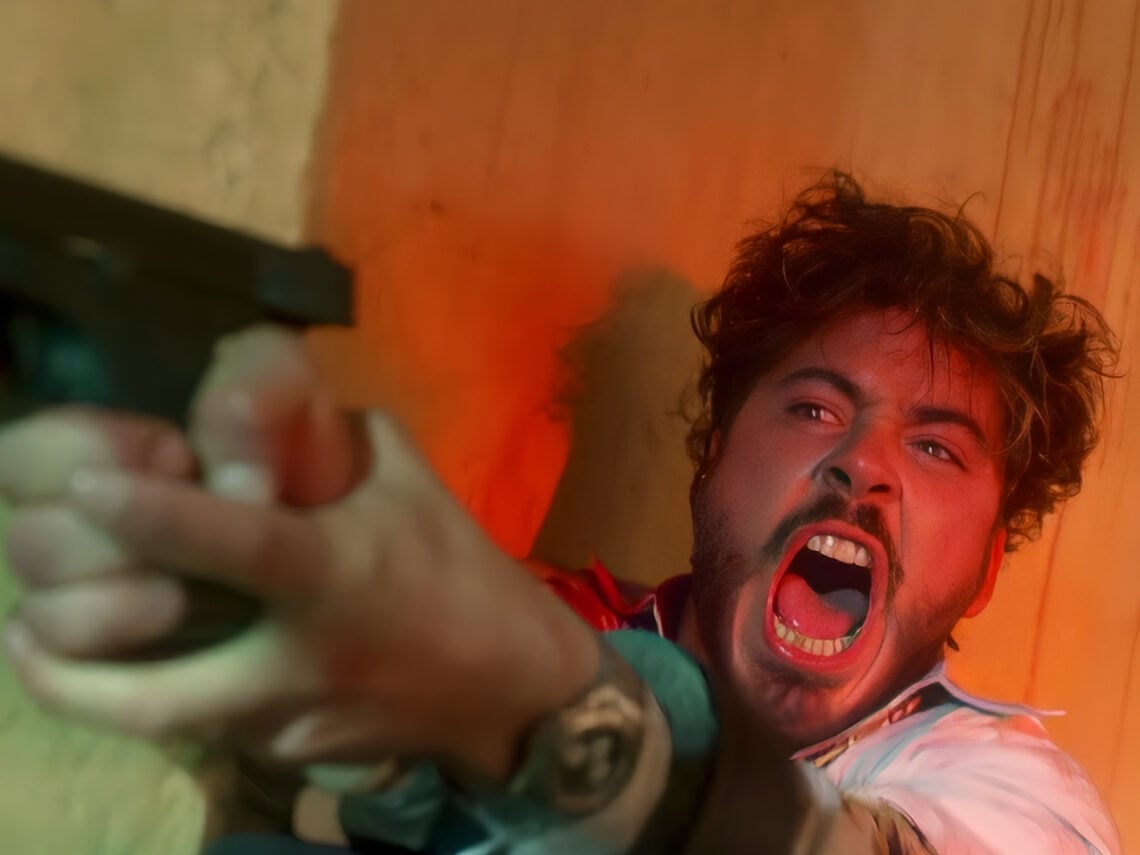
The director Robert Downey Jr was prepared to murder: “Several times I wanted to garrote him”

Filmmaking is an inherently collaborative medium. While a script can be shepherded from start to finish by one person, the number of people involved increases exponentially once it enters production. From producers to actors to crew members to post-production teams, everyone must work together to realise the director’s vision as thoroughly as possible. But what happens when that director routinely drives their cast insane by micromanaging every detail and demanding mind-boggling numbers of takes? Well, according to Robert Downey Jr, that’s a recipe for daydreams about strangulation and murder.
When Downey agreed to play real-life journalist Paul Avery in a mystery thriller about the hunt for a serial killer, he knew he would have his work cut out for him. On the one hand, he would have to do his best to honour the real man, but on the other hand, he also knew the production itself would be gruelling. That’s because 2007’s Zodiac was directed by David Fincher, Hollywood’s most notoriously particular director and a man known for driving actors to the point of madness with upwards of 70 takes of the same scene.
On top of this, Zodiac was as close to a personal project as Fincher had yet made in his career. He grew up in Marin County, San Francisco, and was seven years old when the Zodiac Killer began terrorising the city. The serial killer notched five official victims and wrote threatening letters to the press claiming to be responsible for many more. The mysterious killer also threatened to kill schoolchildren – something that Fincher’s matter-of-fact father, a Life magazine reporter, failed to sugarcoat for him.
When the young Fincher asked his dad why the highway patrol had been following his school bus for several weeks, his dad nonchalantly replied, “Oh yeah. There’s a serial killer who has killed four or five people, who calls himself Zodiac, who’s threatened to take a high-powered rifle and shoot out the tires of a school bus, and then shoot the children as they come off the bus.”
By the time Fincher wanted to turn his childhood boogeyman into a motion picture, though, he was determined that he wouldn’t use his usual bag of tricks. Gone would be the uniquely stylised editing, music, and cutting-edge CGI flourishes he included in Fight Club and Panic Room.
“It was like, cast the movie right, get the script right, shoot the scenes as simply as we can and get out of everyone’s way,” the director explained to The New York Times. This was a reaction to his process on Panic Room, which he had obsessively storyboarded and previsualized to the Nth degree. Ultimately, he felt that had hampered his actors, who had no room for discovery, and he resolved, “I needed to be more attentive to watching the actors.”
Unfortunately for the Zodiac cast, which included Jake Gyllenhaal and Mark Ruffalo alongside Downey, Fincher may have overcorrected. Perhaps unsurprisingly, his version of “watching the actors” played out as “watch the actors lose the will to live while filming the same takes ad nauseam”. He’s also such a straight shooter – not unlike his father – that he wouldn’t often consider his cast’s feelings. As Gyllenhaal claimed, “Sometimes we’d do a lot of takes, and he’d turn, and he would say, because he had a computer there, ‘Delete the last 10 takes.’ And as an actor, that’s very hard to hear.”
In the end, to get the most out of the experience, the actors had to alter their thinking about Fincher’s methods. Downey Jr, for example, admitted that Fincher was a disciplinarian, and sometimes it felt like there was little room for collaboration. However, he stressed, “Ultimately, filmmaking is a director’s medium.
“I just decided, aside from several times I wanted to garrote him, that I was going to give him what he wanted.”
robert downey jr
Naturally, Downey was being facetious here. He didn’t actually want to strange Fincher to death – but it speaks to how stressful moviemaking can be at times. The wry star then made an unexpectedly amusing reference to his past troubles with the law when he quipped, “I think I’m a perfect person to work for him because I understand gulags.”
Ruffalo adopted a similar approach to Downey, trying his best to attune to Fincher’s wavelength, which pushed and changed him in the process. He also felt it helped to take a big-picture look at the end result of all of Fincher’s occasionally aggravating perfectionism.
“He knows he’s taking a stab at eternity,” Ruffalo said. “He knows that this will outlive him. And he’s not going to settle for anything other than satisfaction; deep satisfaction.”
