


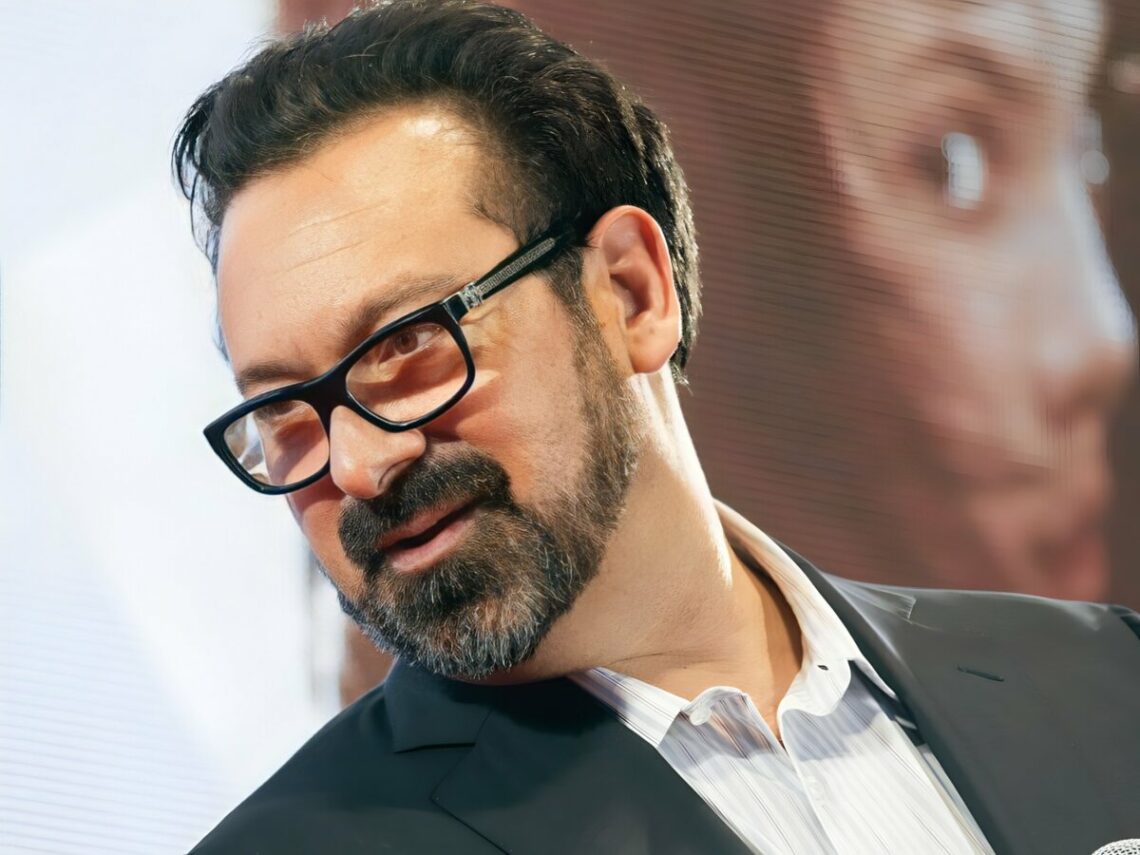
“A poet, humanitarian, stylist, innovator”: the director James Mangold called the world’s greatest

Although he’s far from being an auteur in the conventional sense, what he lacks in an unmistakable visual aesthetic James Mangold more than makes up for in his ability to draw incredible performances out of his actors.
It’s something he’s become increasingly renowned for the longer his career wears on, with the first hint he had a special knack for drawing incredible work from his cast members coming when he directed Sylvester Stallone to his best turn in decades after he played against type in 1997 thriller Cop Land.
He went one better in his next feature by steering Angelina Jolie to an Academy Award win for ‘Best Supporting Actress’ in Girl, Interrupted. Now, any Mangold film is nigh-on guaranteed to feature at least one performance pulled straight out of the top drawer.
Joaquin Phoenix was nominated for ‘Best Actor’ and Reese Witherspoon won ‘Best Actress’ for Walk the Line. Hugh Jackman snagged a Golden Globe nod for ‘Best Actor – Musical or Comedy’ in fluffy rom-com Kate & Leopold before doing his best Wolverine ever in Mangold’s Logan, while the smart money is on Timothée Chalamet carrying on in that rich vein when Bob Dylan biopic A Complete Unknown releases.
His twist-heavy serial killer thriller Identity, old-school western remake 3:10 to Yuma, Tom Cruise and Cameron Diaz’s globetrotting spy caper Knight and Day, his two X-Men flicks, and replacing Steven Spielberg at the helm of Indiana Jones and the Dial of Destiny have made him something of a genre guy. However, at the end of the day, it’s all about the people in front of the camera.
With that in mind, the filmmaker Mangold proudly declared as “the world’s greatest director film geeks have never heard of” was of a very similar mind. Japanese icon Yasujirō Ozu had an innate sense of merging intimate, character-driven stories with technical innovations to become one of the most influential auteurs of his generation, and his actor-friendly style was a massive inspiration.
“A poet, humanitarian, stylist, innovator, and a brilliant actors’ director,” Mangold said to the British Film Institute while waxing lyrical over 1959 masterpiece Floating Weeds being one of his favourite movies. “I would recommend the film to anyone with a heart who knows direction is about more than camera moves.”
An aching and elegiac drama unfolding in a small coastal town, Floating Weeds is just one of the gifts that Ozu gave to cinema. Spotlighting the trials and tribulations of everyday life, his films like Late Spring, Tokyo Story, and An Autumn Afternoon have all stood the test of time as complex, immersive stories that deftly balance the intimate with the expansive.
Mangold may have found his greatest successes in overseeing a huge jacked man with mutton chops and metal claws, saving the world, but thanks to Ozu’s influence, he’ll always consider himself an actors’ director first and foremost.
