


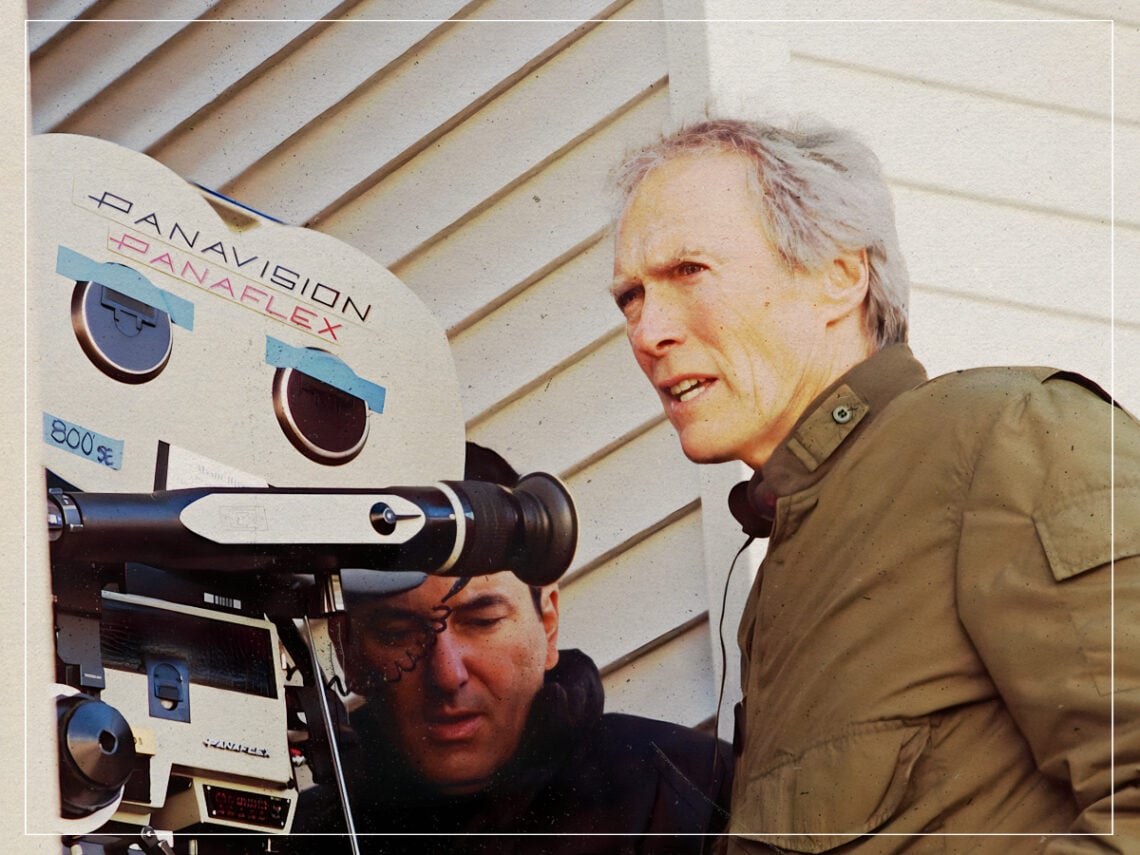
The director who handed Clint Eastwood a billion dollars at the box office: “Why’d you bail out of this thing?”

Having spent more than 50 years as one of Hollywood’s most efficient filmmakers and even longer as one of its most iconic stars, it’s reasonable to assume that Clint Eastwood is responsible for his own success.
While that’s undeniably true to a certain extent, with his work on either side of the camera winning him four Academy Awards and transforming him into one of the industry’s most monolithic figures, fate has conspired to ensure that one of his friends and contemporaries has gained a habit of doing him a solid.
For the most part, Eastwood has been an immensely profitable filmmaker. It’s not often that one of his directorial efforts bombs at the box office, but nor is it the case that they explode to become commercial smash hits. He’s helmed 40 features, and only four of them have earned more than $200million globally.
That’s nothing to be sniffed at, but when those four films are responsible for almost half of his entire career total as a director, it becomes clear that Eastwood isn’t making pictures designed to resonate and thrive with the largest possible audience. Beyond that, nearly a billion of the $3.4billion he’s hauled in from his directorial vehicles came about because the same guy didn’t want to direct them himself.
Not to put a disturbing mental image into anyone’s head by mentioning ‘Clint Eastwood’ and ‘sloppy seconds’ in the same sentence, but that’s his filmic relationship with Steven Spielberg in a nutshell. When the latter passes on a movie, there’s a high chance it’ll end up in the former’s hands, and it’s happened too often for it to be nothing more than a passing coincidence.
Spielberg bought the rights to Robert James Waller’s The Bridges of Madison County as his first post-Schindler’s List film, but he handed it off to Eastwood instead. A decade later, he purchased the rights to James Bradley and Ron Powers’ Flags of Our Fathers, and again handed it off to Eastwood, which he burnished with Letters from Iwo Jima to make it a two-part affair.
He was also the first director to commit to making Peter Morgan’s screenplay for Hereafter, but after deciding he didn’t want to do it, there are no prizes for guessing where it wound up. Unlike the others, though, the supernatural drama was terrible, highlighting that Spielberg’s sloppy seconds aren’t always in Eastwood’s best interests.
They definitely were for American Sniper, though, with Spielberg once again announced as the director of a movie that ended up being directed by Eastwood, leading the legend to ask a very pertinent question: “I called Spielberg and said, ‘Steven, I’m always doing your leftovers,’” he realised. “Why’d you bail out of this thing?”
Nonetheless, American Sniper – sans Spielberg – became the biggest hit of Eastwood’s entire career as either an actor or a filmmaker, which helped soften the blow of Hereafter being so dire. He’s gotten five features out of the deal, and it’s fair to say it’s worked out in everyone’s best interests.
Combined, The Bridges of Madison County, Flags of Our Fathers, Letters from Iwo Jima, Hereafter, and American Sniper hauled in close to a billion dollars in ticket sales and won two Oscars from 13 nominations, which isn’t bad going for a quintet of cast-offs.

Never Miss A Tale
The Far Out Clint Eastwood Newsletter
All the latest stories about Clint Eastwood from the independent voice of culture.
Straight to your inbox.