


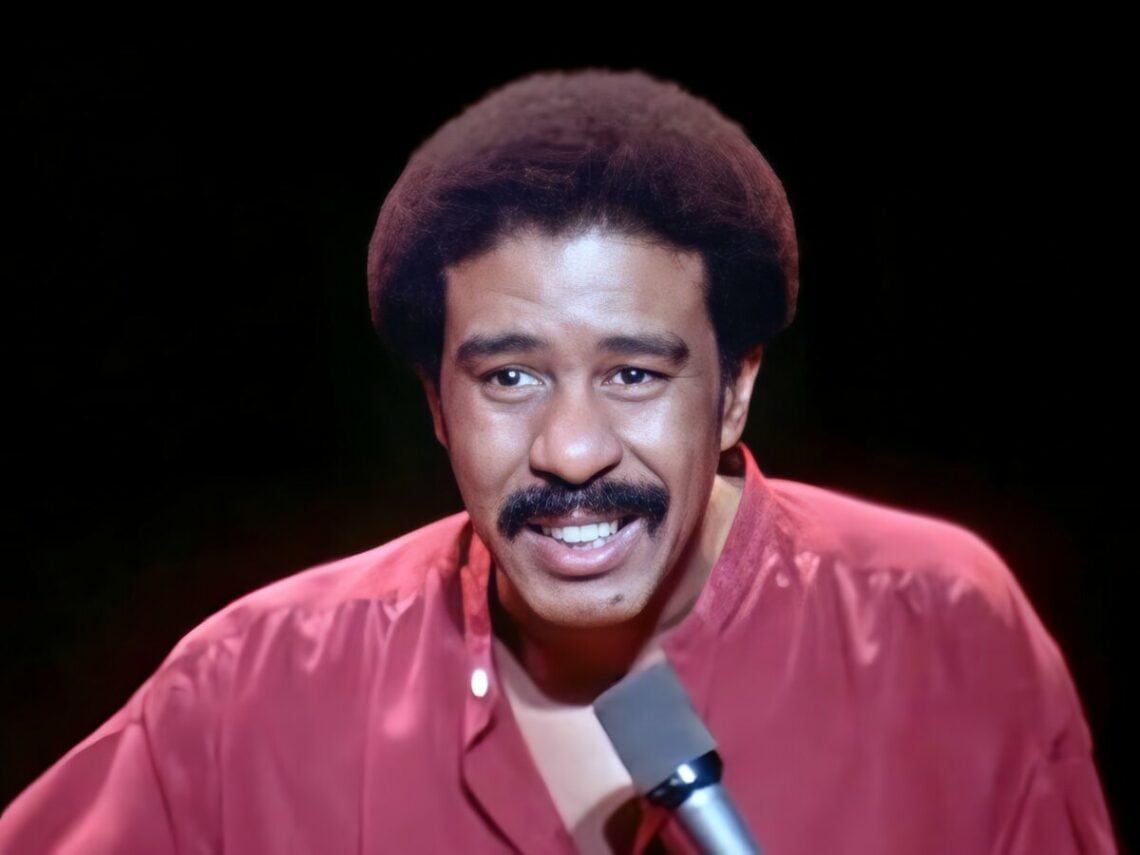
The “horrible dilemma” at the heart of Richard Pryor’s acting career

It is forgone that if you’re funny onstage, you’ll also be funny onscreen. Richard Pryor, luckily, was one of the most successful stand-ups of all time, but he also enjoyed success within the film industry. In fact, having previously been a folk musician, hobnobbing around Greenwich Village with the likes of Bob Dylan, it seems his natural charisma flourished anywhere.
In his filmmaking days, Pryor took on larger-than-life roles in titles such as Brewster’s Millions and contributed to the writing of Mel Brooks’ 1974 classic Blazing Saddles. Pryor’s style may have been initially based on the work of the now-disgraced Bill Cosby, but he soon introduced an edgier feel to his comedy that took full advantage of his life stories. Pryor’s bold and often vulnerable storytelling style proved immensely popular, catapulting his career and ultimately leading him to movies.
Sadly, much of Pryor’s life and career was riddled with drug abuse. The comedian’s unfortunate love of freebasing cocaine not only bombarded his physical and mental well-being but drove his wife at the time, Jennifer Lee, out of their marital home. This eventually culminated in Pryor setting himself alight while drenched in rum, a horrifying event that seemed, by stark contrast, to set Pryor on an optimistic path.
After setting himself on fire in 1980, Pryor spent the rest of the 1980s making a variety of comedy movies and even appearing in 1983’s Superman 3. After a stable period following the sobering incident with rum, in 1985, Pryor was allowed to work with legendary director Walter Hill on another comedy, the aforementioned Brewster’s Millions.
During an interview with Ian Winterton, Walter Hill spoke about Pryor and Brewster’s Millions, saying: “Richard Pryor wasn’t a terribly happy guy at that point, but I liked working with him.” Hill goes on to describe the problem that Pryor was facing with his previously drug-addled career, saying, “I think he was in a horrible dilemma – he felt that if he didn’t use drugs, he wasn’t funny, and if he did use drugs, he would die.”
With a life of drug abuse and a style that relied on his strange and often unhinged stories, it’s no surprise that Pryor felt dependent on drugs to be effective as a comedian. However, the severity of his incident in 1980 and the heart attack he’d already experienced in 1977 left Pryor with an understandable fear of taking them.
As Hill says, “That’s a hell of a position to find yourself in,” and it’s one that Pryor never quite seemed to recover from. The silver lining to it all, however, is that Pryor himself was happy with Brewster’s Millions and his performance, with Hill telling The Hollywood Reporter in 2019 that “Richard really liked the film and he specifically liked being a comedic actor rather than a full-blast comedian in it.”
Getting to flex his acting skills rather than perform yet another routine and coming out of the experience happy with the performance he gave shines a little light on an otherwise dark story. Hill goes on to say that “over the years, he [Pryor] told me several times Brewster’s was his favourite.”
Unfortunately, Pryor’s health entered a steep decline shortly after Brewster’s Millions, thanks in no part to the fortune of cocaine that Pryor abused himself with. With the residual effects of a life of drug use and a tragic diagnosis of multiple sclerosis, Pryor’s health continued to decline until a third heart attack eventually killed him.
