


Hear Me Out: Digitally de-ageing actors needs to stop

Cinema has changed considerably since the last century, with technological innovations allowing a new dynamism to the moving image. Improvements in computer graphics in the early 2000s led to an influx of quality animated movies, whilst digital special effects gave a helping hand to action movies which wanted to go bigger, bolder and more bombastic. However, a technological leap doesn’t necessarily equate to success, with the recent trend of de-ageing actors proving to look consistently terrible.
The first major case of the curious technological trend came in 2006 with the superhero movie X-Men: The Last Stand, where Patrick Stewart and Ian McKellen appeared like plastic mannequins alongside one another in a needless flashback, and ever since then, the industry has gone inextricably mad for it. Filling in the gaps where a deceased actor cannot or providing a piece of arguably needless context to a story, de-ageing can be used in a number of pointless ways.
Just because de-ageing can be done doesn’t mean it should be done, especially as the technology has not developed the ability to walk yet, let alone run. The fact is, no matter how it is utilised, de-ageing almost always looks bad. It provides casting agents and directors with a lazy way of getting around a creative issue, resulting in an artificial and unnatural scene that ages with every year of cinematic innovation.
When it comes to recreating actors who have long passed away, the process of digitally recreating the actor is borderline disrespectful, refusing to let their legacy rest in peace. Quite how Disney’s Star Wars franchise didn’t realise this for the release of Rogue One in 2016, we’re not too sure, with director Gareth Edwards being pressured into re-creating Peter Cushing’s Wilhuff Tarkin with video-game-like accuracy.
This seems particularly shortsighted when, way back in 2001, The Sopranos attempted to paste together one final scene with Livia Soprano (Nancy Marchand) shortly after her death one year prior, with the curious moment sparking controversy amongst fans and critics. Largely cited as one of the worst and most cack-handed scenes of the entire six-series show, the moment tapped into the uncanny valley Twin Peaks-style and was seen as a last-minute fix rather than a moment of technological inspiration.
Ever since, instead of leaving the past to the imagination, filmmakers have constantly looked to de-ageing technology as the perfect tool to tell their story when, in actuality, the presence of the gimmick merely removes the viewer from the action. With endless examples, from Sylvester Stallone in the awful Samaritan to the terrifying enlarging of Dwayne Johnson and a young Jack Sparrow in Pirates of the Caribbean: On Stranger Tides, de-ageing almost never looks good.
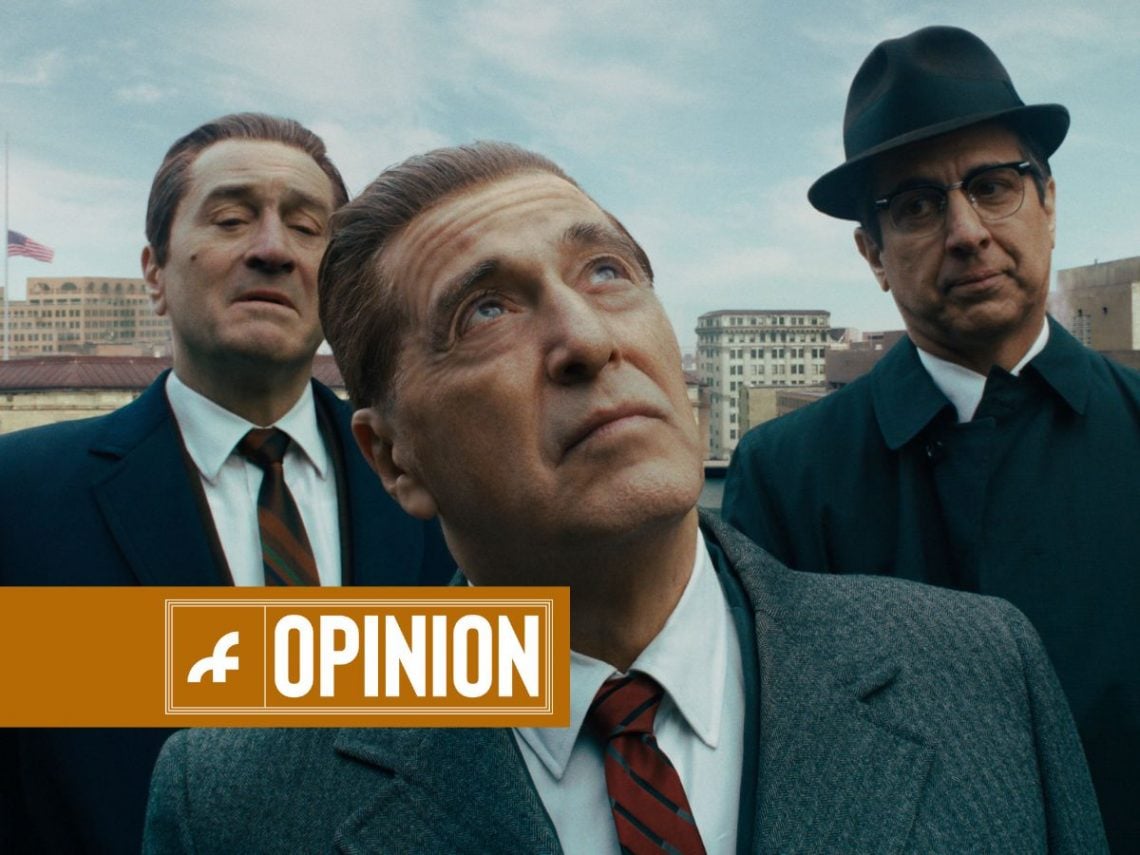
We say ‘almost’, as there have undeniably been moments when the tool has worked, with Martin Scorsese expertly utilising the technique for 2019’s The Irishman with Robert De Niro, Joe Pesci and Al Pacino. While the tool works for the most part, even here, in a film where de-ageing is a key part of the production, there are still moments of clunkiness that will undoubtedly show their age in a few years’ time — the robotic movement of the sprightly De Niro is one moment it’s hard to reverse within a laptop motherbaord.
The latest production to jump on the bandwagon is Indiana Jones 5, which has taken the unfortunate decision to feature a de-aged Harrison Ford in the film’s opening sequence, where he will be fighting Nazis in a 1940s castle. Still a keen dramatist, Ford is well past being an action hero, with this scene sure to feel janky and awkward. It begs the question, why use de-ageing technology when the opening of Indiana Jones and the Last Crusade featured a stellar performance from the late River Phoenix?
Indiana Jones has long been a pioneer of practical effects and grand Hollywood spectacle, yet choosing to use de-ageing technology suggests that it may have abandoned its morals in favour of an easy and nostalgic digital way out.
Just like the dawn of the 21st century when CGI was in its infancy, if de-ageing technology is to thrive, it needs decades to improve.
