


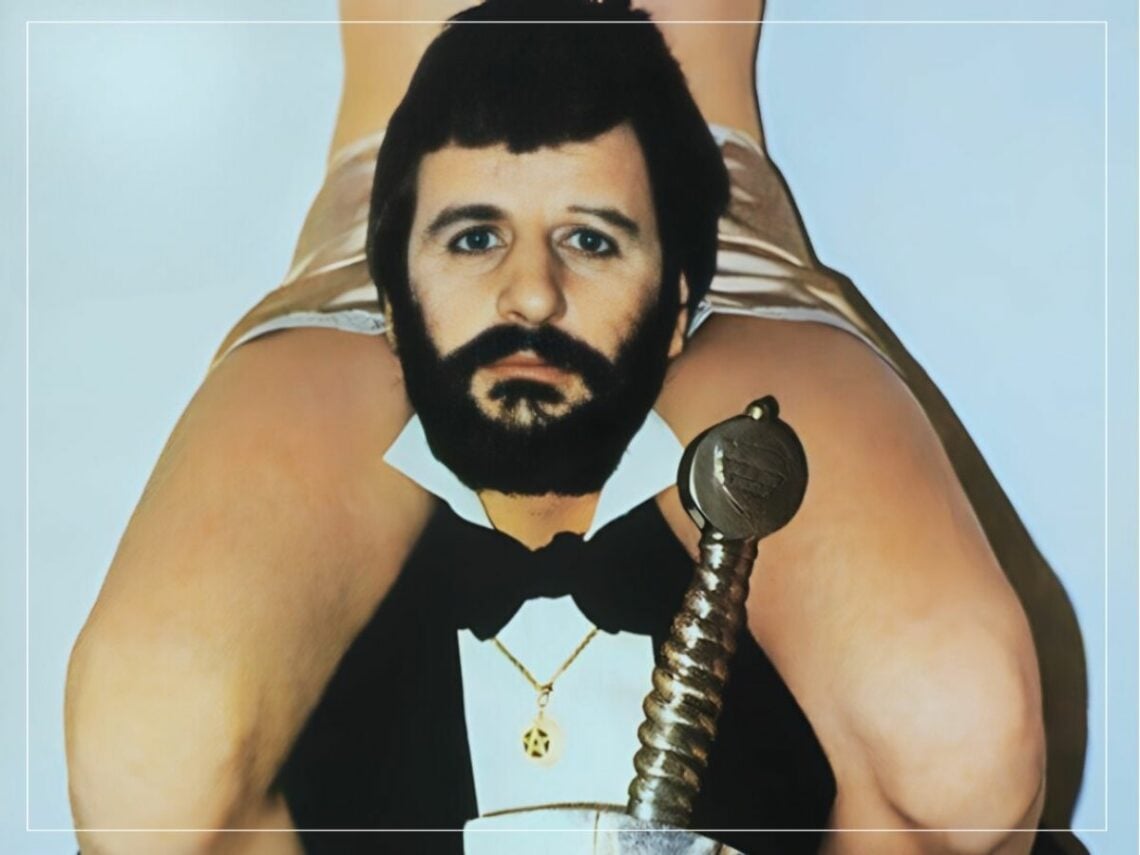
Did Ringo Starr write his own solo songs?

When The Beatles broke up, Ringo Starr was John Lennon’s only worry. “I’m pleased that everyone is doing well, I’m more pleased that Ringo is doing well and that he’s got himself a good niche because I knew Paul would be alright,” he reflected. He had confidence that George Harrison’s songwriting chops had flourished to a sustainable level, too, but he feared the Ringo might flounder.
“I don’t want Ringo to end up poor, having to play the northern nightclubs…because the worst thing in the world for an ex-pop star in England is to end up playing Bradford,“ he told Ray Connolly while in his plush Tittenhurst Park home, callously disrespecting the good folk in northern provincial towns. “They are really awful places … The people eating chips and scampi while you’re trying to be heard,” he continued. Thankfully, this is not the fate that befell the Beatles drummer.
In fact, Todd Rundgren claimed that he had the best of it when it came to the Fab Four after the split. “Ringo was the most approachable of all of the Beatles. I have met each of the band in turn,“ he told Louder Sound. “The only one who seemed to have recovered from any of the effects of that was Ringo. He did the music for fun. He didn’t feel that there was some burden to it, he just liked to play. Any opportunity to sing was fine, but I never saw him having any pretence that he was building some giant musical legacy,“ Rundgren mused
In essence, he almost got the impression that Ringo wouldn’t have minded serenading scampi-scranners all that much. This laissez-faire attitude suited him down to the ground, proving conducive to his signature style of rock ‘n’ roll, and in time, he was landing chart-topping hits long before Lennon himself. But were the songs off his own bat, or did he get by with a little help from his friends?
Did Ringo Starr write his own songs?
Well, during his time with The Beatles, he might have only mustered ‘Don’t Pass Me By’ and ‘Octopus’s Garden’ as a sole credited songwriter and ‘What Goes On’, ‘Flying’, ‘Dig It’ and ‘Maggie Mae’ as a contributor, but his solo career was a far different kettle of fish. After the Fab Four split, Ringo often wrote songs for his own records. However, he would often bring in famous friends to help finish them off.
In many ways, this outsourcing of additional support was simply the byproduct of how Ringo writes and lives his life rather than a need for technical assistance. “I usually get a first verse, and then I find it impossible to get anywhere else with the song,“ he told Alan Clayson. “I can’t say, ‘Now I’m going to write.’ I just have to be around a guitar or piano, and it just comes. Usually, what I do if I’m in the mood is put the tape on if I’ve got a tune, and then I play the same tune like a hundred times with different words. Then I take the tape off and get it all typed out, and then I pick the lines out that I’ll put together.“
Often, he claims he’d get a jolt of inspiration, pen a quick verse, then come unstuck at the chorus, at which point he would get distracted by one of his errant toddlers, a comedy on TV, or, simply, lunch. At this juncture, he would simply do what The Beatles always did: enter the studio and finish the whim off on the wing. The only difference is that instead of John, Paul and George, he’d be surrounded by pals like Marc Bolan, Vini Poncia and, occasionally, one of John, Paul or George.
Other solo hits like ‘Early 1970’ and ‘King of Broken Hearts’ were written exclusively by the drummer. Harrison may well have helped him get ahead with assistance on ‘It Don’t Come Easy’, but for the most part, the wide array of credits in Ringo’s solo back catalogue comes from his love of collaborating more so than any need to do so. As Rundgren said, he was a man without pretension, a drummer who played to the song, so if a solo effort required a bit of Bolan, he wasn’t too proud to share the pay cheque.

Never Miss A Beat
The Far Out Beatles Newsletter
All the latest stories about The Beatles from the independent voice of culture.
Straight to your inbox.