


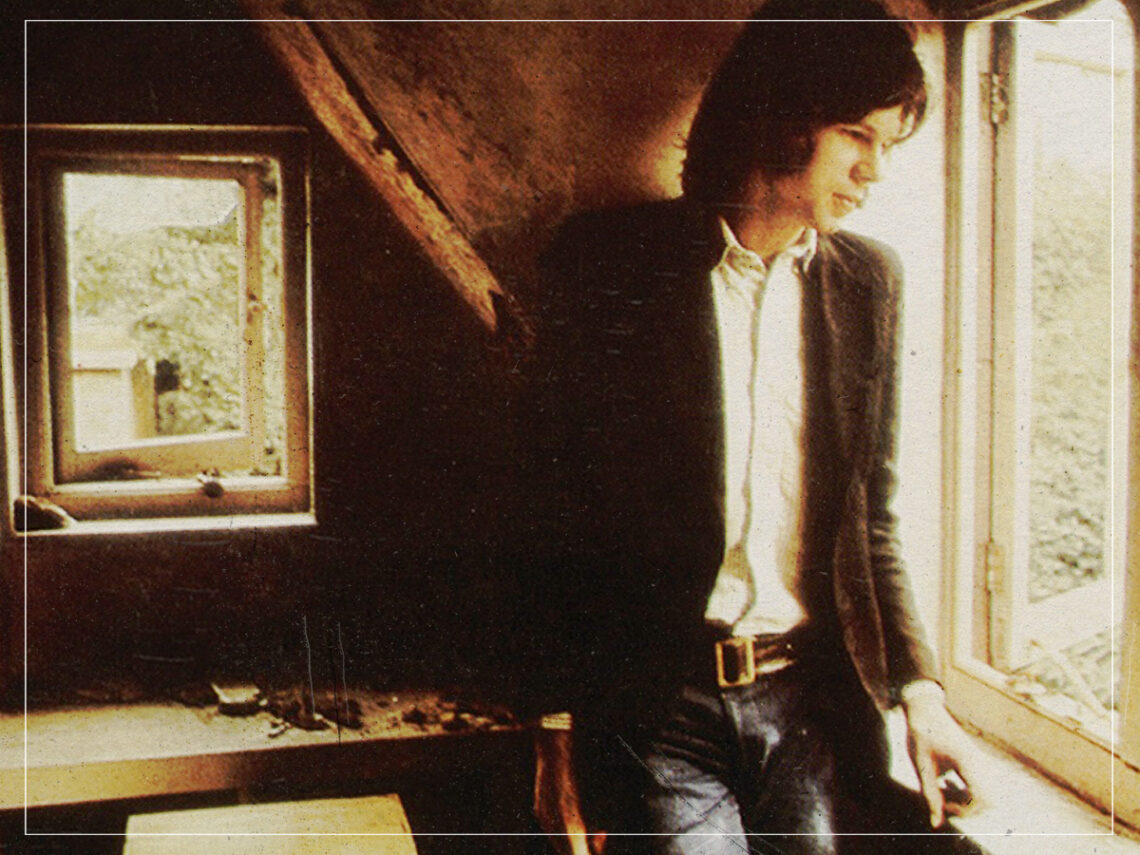
Did Nick Drake predict his own future on debut album ‘Five Leaves Left’?

When Nick Drake was a 19-year-old Cambridge University student, American folk music producer of Pink Floyd and Fairport Convention fame gave him some extraordinary news. With just a handful of short acoustic sets and demo recordings to his name, Drake had earned himself a record deal.
Boyd recalls that the young singer was slightly taken aback but didn’t offer the ecstatic response he expected. “Oh, OK,” Drake replied obliquely, and the two soon got to work with engineer John Wood in London’s Sound Techniques studio.
What was to follow would be an album of such extraordinary, timeless brilliance that it would inspire generations of landmark artists to come, from The Cure to Elliott Smith. Tragically, Nick Drake wouldn’t be alive to see the effect his music would have on the world. But some eerily prescient hints in the lyrics of his debut record suggested he knew what was coming.
Firstly, there’s its name. Five Leaves Left took its title from the number of rolling papers Drake happened to have left in a packet while he was finalising the album. It also cross-references the “falling leaves” mentioned in the lyrics of ‘River Man’, the record’s most imposing song.
Was Drake really aware of his destiny?
With that second image in mind, there is something darker to the title. The album was completed and released five years prior to Drake’s death, which was ruled a suicide by overdose of anti-depressants. Was Drake predicting how many leaves he had left on his own tree of life? How many pages did he have left to turn?
This suggestion seems far-fetched and unlikely until you look closer at the lyrics of another song on Five Leaves Left entitled ‘Fruit Tree’. The first verse of the song reads: “Fame is but a fruit tree So very unsound It can never flourish ‘Til its stock is in the ground So men of fame Can never find a way ‘Til time has flown Far from their dying day”.

It’s as though Drake was writing his own future. During his lifetime, he sold a few thousand records and never achieved fame or success with his music in any real sense. He became frustrated and hopeless at the trajectory of his career and died in a state of despair. That could easily have been the end of the story.
Yet, in the years that followed, his stock rose from the ground and began to flourish into the musical legacy that millions of fans worldwide appreciate today. The further we get from his dying day, the greater the fruits of Drake’s unique talents seem to become.
As Boyd later observed on the BBC Radio 2 documentary Lost Boy: In Search Of Nick Drake, “You can almost see him wilfully setting this whole thing up. God knows why.” Again, it is quite a jump to assume Drake was planning to die young as an artistic failure only to be celebrated posthumously as a wayward romantic hero of modern music.
But then again, Boyd does have a good point. “Why would a young man, 19, with [his] whole future ahead of him, write a song like ‘Fruit Tree’? It’s extraordinary.” It’s something only Drake could have accomplished and only Drake would have dared to do.
We can never know what exactly was going through Drake’s mind when he was writing the songs that would end up on his debut album. No one who spoke to him at the time seemed to know, either, as he gave very little away. What we can be sure of is that the fruit tree he left us stands apart in the history of pop and folk as a gift of incomparable beauty to music lovers everywhere.
