


“Who the hell needs you?”: did John Ford only cast James Stewart to spite Henry Fonda?

There was a time when John Ford and Henry Fonda were inseparable.
Ford, one of the greatest directors in Hollywood history, helmed Fonda, one of the greatest leading men in history, in eight movies, including How the West Was Won, My Darling Clementine, and Fort Apache. Then, he punched him in the face, and they never worked together again.
The unsavoury incident happened in September 1954, when Ford and Fonda were shooting Mister Roberts, a comedy based on a hugely successful stage musical. Ford fought the studio to cast Fonda in the movie, as it wanted a younger, sexier star like Marlon Brando to play the titular cargo officer on a Navy supply ship during World War II. He got his way in the end, but as soon as both men started work on the movie, it was obvious something was off.
For starters, Fonda didn’t like the script, which he felt was nowhere near as funny or complex as the musical. He also felt like his old friend was directing the film with an uncharacteristically unsure hand, favouring broad physical comedy over nuance, which wasn’t his usual style. The movie was being shot at a US Navy Base on Midway Island, and after a tense first day, a meeting was called for between Ford and Fonda in the Bachelor Officers’ Quarters.
If legend is to be believed, Fonda entered the room to find Ford relaxing with a drink in hand. He began explaining his concerns about the first day of shooting, but before he could finish, Ford supposedly leapt out of his chair and socked his longtime collaborator in the jaw. He was so shocked that he didn’t fight back, simply leaving the room in stunned silence. Then, 15 minutes later, a crying Ford went to Fonda’s quarters and offered an apology, which may or may not have included an admission over his longstanding alcoholism, which was worsening at that time.
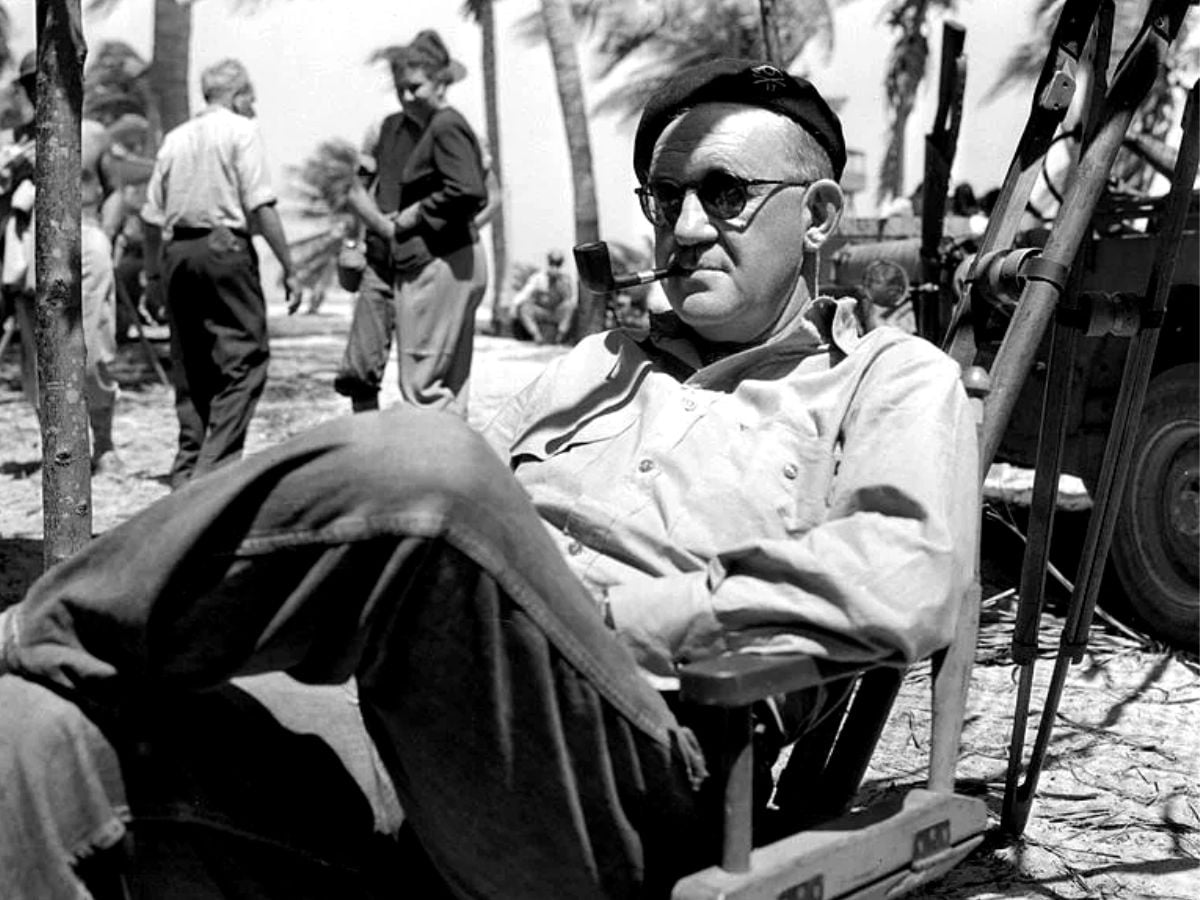
Several weeks later, Ford had to be rushed to the hospital for gall bladder surgery, and the studio took the opportunity to replace him with director Mervyn LeRoy, who finished the picture. It won three Oscars and raked in money at the box office, but Fonda vowed never to darken Ford’s directorial door again.
As the years went by, Fonda watched as Ford renewed his cinematic partnership with John ‘The Duke’ Wayne on 1956’s The Searchers, the movie credited with helping Ford stage a comeback after his health scare and alcohol problems. After that, he cast cinema’s favourite everyman, James Stewart, in the 1961 western Two Rode Together, following Stewart’s previous westerns with director Anthony Mann, including Winchester ’73 and The Man From Laramie.
Fonda, who had kept a keen eye on proceedings, had a unique take on Ford casting Stewart, claiming, “I knew what Ford was up to when he put Jim in Two Rode Together. Ford resented the success Jim had in the Mann westerns.” In this scenario, Ford cast Stewart to tempt him away from Mann, whom he was jealous of, and it worked, because Stewart returned for two more Ford westerns: The Man Who Shot Liberty Valance, which put Stewart and Wayne together onscreen, and Cheyenne Autumn.
However, Fonda believed Ford didn’t really want Stewart in the first place and that he only cast him in Two Rode Together because, “for some reason, Duke couldn’t do it”. In light of this, he supposedly told Stewart not to trust Ford, but it must have fallen on deaf ears.
Finally, in the pages of Michael Munn’s Jimmy Stewart: The Truth Behind the Legend, Fonda let slip his ultimate conspiracy theory regarding Two Rode Together. This time, he claimed Ford didn’t want Wayne or Stewart at all. Instead, the entire thing was all about him. “I know Ford would have cast me in Two Rode Together if we’d still been talking, but we weren’t, so he didn’t,” Fonda argued, with no small amount of ego.
Then, for the pièce de résistance, he claimed Ford told him something on his deathbed which rocked him to his core. “Who the hell needs you when I’ve got Jimmy Stewart?” he alleged the dying director and former friend seethed. That didn’t sit well with Fonda, who mused, “I thought that was mean, not just to me, but to Jim”.
