


Did Emily Dickinson inspire a Simon and Garfunkel song?

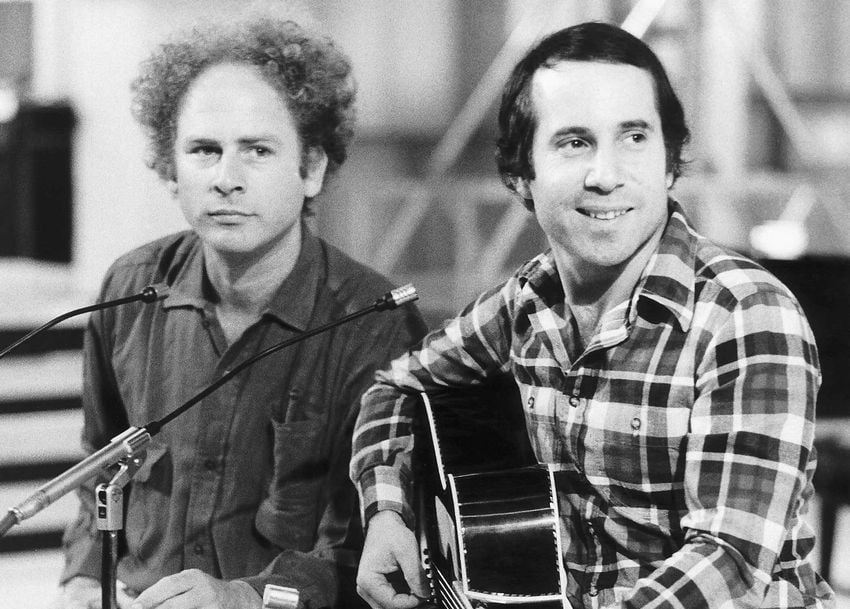
During the 1960s, Simon and Garfunkel were one of the best-selling musical acts, winning seven Grammys and scoring plenty of number-one hits. Although creative differences led the pair to part musical ways in 1970, the folk duo have shifted over 100 million records. Moreover, their final release Bridge Over Troubled Water, became one of the world’s best-selling albums.
Friends since elementary school, Paul Simon and Art Garfunkel initially struggled to find success upon the release of their debut album, Wednesday Morning, 3 A.M, in 1964. However, by 1966, a remixed version of their song ‘The Sound of Silence’ hit number one on the Billboard Hot 100, leading them to record their second album, Sounds of Silence, hoping to capitalise on the success. By October, the duo were onto their third album, Parsley, Sage, Rosemary and Thyme, which is widely regarded as one of their best efforts. Compared to the rushed production of their sophomore album, their third effort was much more refined, predominantly featuring acoustic pieces written by Simon whilst living in England.
Curiously, Parsley, Sage, Rosemary and Thyme contains several allusions to American poet Emily Dickinson, one of the most influential poets of all time. Born in 1830, the writer lived a largely reclusive life, with most of her writing going unpublished until after she died in 1886. Since the publication of her poetry, which utilised innovative techniques such as unconventional punctuation, capitalisation and slant rhyme, Dickinson’s work has been heralded.
Over the years, various musicians have referenced the poet or set her lines to music. Although Dickinson was known for focusing heavily on death, nature and spirituality within her work, she also frequently wrote about music. Thus, it is unsurprising that many musicians have gravitated towards the poet’s writing, with an estimated 275 composers setting her poem ‘Musicians wrestle everywhere’ to music, according to the BBC.
Musicians who have adapted Dickinson range from Aaron Copland, who composed 12 songs in remembrance of the poet, including an adaptation of ‘Because I could not stop for Death’, to Phoebe Bridgers, who worked alongside Andrew Bird to “reimagine” the poem ‘I Felt a Funeral, in My Brain’. On Parsley, Sage, Rosemary and Thyme, Simon and Garfunkel explicitly reference Dickinson in ‘The Danging Conversation’, singing, “And you read your Emily Dickinson/ And I my Robert Frost.” This marks a stark contrast between the two lovers in the song, as Frost’s conventional, traditional writing style sharply contrasts with Dickinson’s.
However, their song ‘For Emily, Whenever I May Find Her’ has widely been speculated to be a reference to the American poet. The track concerns a dream experienced by the speaker, in which a lover runs to him, “And when you ran to me/ Your cheeks flushed with the night/ We walked on frosted fields/ Of juniper and lamplight/ I held your hand.”
Although the name ‘Emily’ does not appear in the track, Simon has since stated that the song is not about a specific girl but the belief in love and beauty. The song’s lyrics heavily focus on nature, as did Dickinson’s poetry. Thus, he likely chose the name to continue the poetic theme from ‘The Danging Conversation’, highlighting his equally divine appreciation of love. While Dickinson undoubtedly inspired Simon, there isn’t a lot to confirm hat this particular track was directly drawn from her impressive life or work.
