


‘Dhuin’ Review: Achal Mishra and a specific Indian economic reality

Last year, Indian cinema received a lot of global attention due to the unprecedented success of RRR, which took the world by storm. However, the highly codified language of mainstream Indian cinema doesn’t represent the depth of independent filmmaking within the country. If you have been looking for the best film of 2022 from India, look no further. Dhuin, the latest work by burgeoning auteur Achal Mishra, is here to take you on an immersive and beautiful journey.
Mishra has been garnering critical attention and love from fans of Indian cinema ever since his stunning 2019 directorial debut Gamak Ghar. Through the change of seasons and aspect ratios, Mishra captures the ageing of an Indian house and how architecture can absorb the flow of time in tragically profound ways. Those who have had the privilege of experiencing Gamak Ghar already know that Mishra is capable of reaching great artistic heights.
Dhuin is another fascinating addition to the director’s growing filmography, following a struggling actor named Pankaj (brilliantly played by Abhinav Jha) from Darbhanga who harbours dreams of moving to Mumbai and making it big. Contextualised by the stark economic conditions following the catastrophic consequences of the pandemic, the cinematic realism of Dhuin is deeply informed by the current sociopolitical climate in India.
During a conversation with Scroll, Mishra explained that the production process had an improvisational flow: “I wrote a five-page script, and we decided to play with it. Everything flowed from there – we would shoot, re-shoot, improvise. The length was never figured out. We thought it would be a short film. But when writing the father-son story. I found the world of theatre very interesting, so we kept on including more of that aspect.”
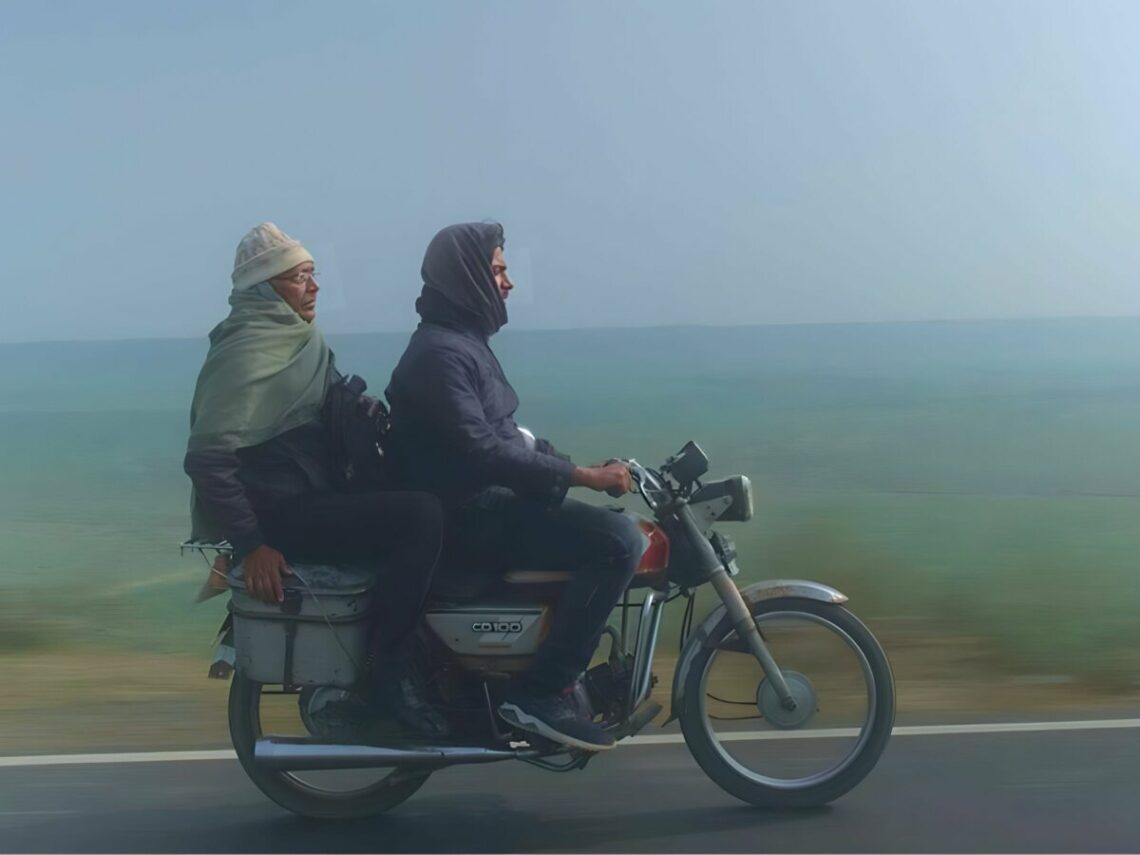
While the description might make it sound like Dhuin is a deconstruction of the Indian analogue of the Hollywood dream, it is so much more than that. It’s an incisive critique of the lack of economic mobility and its association with the idea of migration within India. Mishra creates a subtextual interface for this thematic investigation through the recurring symbolic networks of transport, ranging from the accessible motorcycles and trains to the planes flying over Darbhanga that take on a mythological quality due to their inaccessibility.
Pankaj’s dreams of being an actor aren’t really understood at home since most Indian parents don’t view the arts as a viable source of financial stability. That’s why one of the most powerful scenes in Dhuin is when he sits down with three directors to discuss his craft. Although one would expect them to understand his plight, they constantly reinforce the dominance of their elitism and their cultural capital (they discuss the works of Abbas Kiarostami) to further alienate Pankaj.
Many critics have cited Dhuin as a tribute to Kiarostami, which it is in terms of visual style, but that particular scene featuring members of the Indian intelligentsia vapidly discussing the Iranian New Wave is symptomatic of the inherent problems in the discourse surrounding Indian cinema. Although awareness and appreciation for global cinema are crucial, it is even more important to establish our own cinematic identity, which will resonate with our people. Films like Dhuin have been doing just that.
