


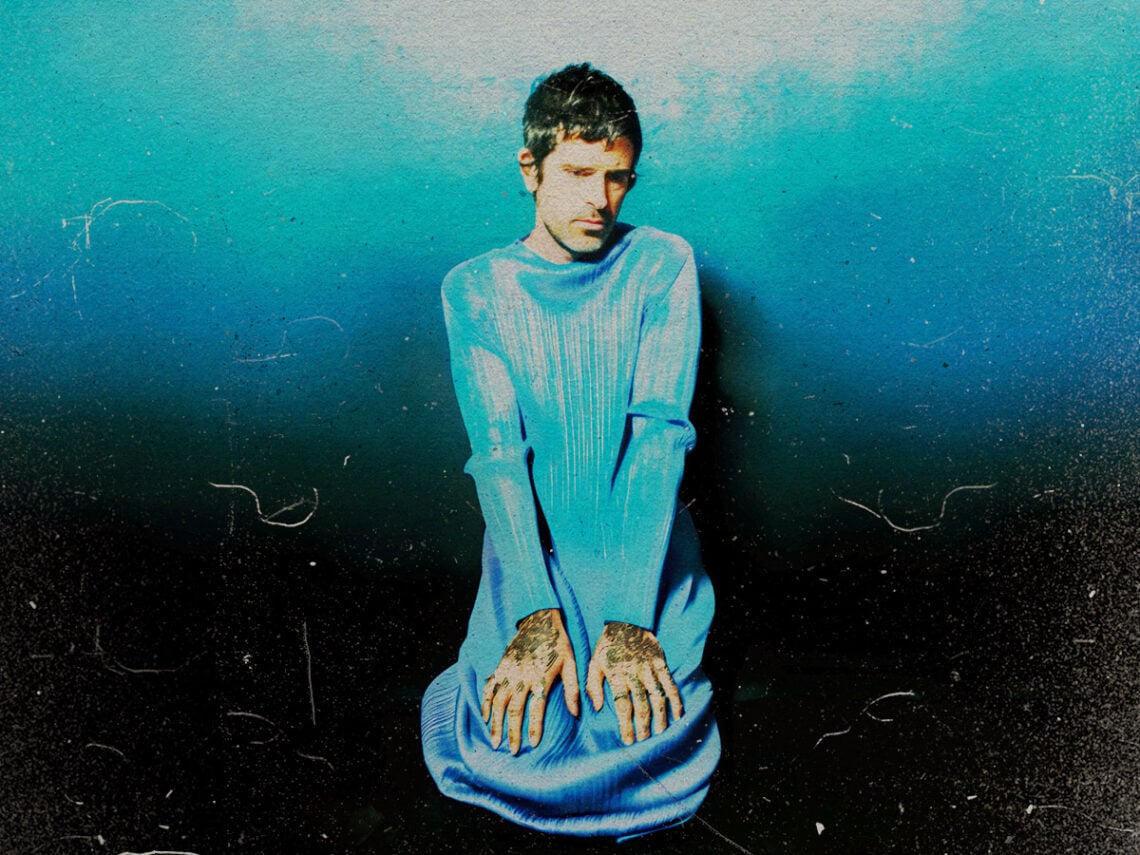
Devendra Banhart – ‘Flying Wig’ album review: another cosmic crawl

There’s a gentle nature to Devendra Banhart. He flitters around an array of styles, but whenever you happen upon his musical output, it is always tender and, ultimately, endearing. While there is the ever-present fear that his sweet, bouncing folk songs will crescendo with his listeners finding themselves in the middle of an inescapable cult ritual, his songs are permeated with a feather-like softness which, like the most charming of hotel pillows, is hard to avoid falling headfirst into. His latest release, Flying Wig, sees that gentleness turn oddly eerie.
The songsmith’s 11th studio album speaks volumes of his ability to captivate an audience. Starting out life as a uniquely spiritual purveyor of folk music, Banhart has grown into his own mythic beast. Rarely diverting into the mainstream, instead preferring to soak himself in the outer pools of experimentation and residual fan adoration, the musician has cultivated a niche that is hard to break free from. If, in fact, he ever intended to do so.
Flying Wig is another instalment of Banhart’s familiar story. There is an unstoppable wooziness to the record that can sometimes transcend the airwaves and float you downriver to pastures more befitting the murkier sides of Glastonbury Festival. Down-tempo and deliberately pared back, Flying Wig is still certainly luscious enough to encourage repeat listens, but it rarely escapes the wilderness in which it was created.
Written while staying in a cabin formerly owned by Neil Young, the sense of isolation and loss is palpable. However, lyrically, the LP is as impenetrable as Banhart has ever been — choosing metaphor and poetry can be illuminating, but these songs left us a little in the dark outside of the beguiling production from Cate Le Bon.
That’s not to say there aren’t bright moments. ‘The Party’, the album’s closer, pushes far enough into the underworld of Banhart’s musings that it feels purposefully morose, even when glittered with synths and the sprinkling of Le Bon’s flourishes. ‘Charger’ also bumps along with an energising vigour that leaves you feeling spiritually buoyed, like one might feel when leaving a particularly joyous sermon.
‘Twin’ also provides a more forthright feeling to latch on to. It thumps harder than any other song, and because of this steady rhythm, it feels the most accessible. It is easy to understand the direction of the record throughout this album, but outside of the desolate space Banhart seems so keen on exploring, it’s hard to find any meaning, no matter how hard we want to look for it.
The title track is also built out of a joyful moment, centred around an actual wig which stood in the middle of Banhart’s apartment, “Over time, it began to take on a playfully eerie presence,” explained the musician. “I started to imagine that while I was asleep the Wig would fly off into the night and hang out with all the other wigs and toupees that were flying around… It seemed like a lovely and haunting image, a symbol for freedom.”
Lovely and haunting are two words which rarely feel comfortable together, and, in essence, they capture the overall sentiment of the record. Flying Wig is both spooky, worrying, and as stark as a cauldron but also as warm, intoxicating and noxious as the potion gurgling within it. Sadly, these two motifs don’t easily tesselate to conjure something you’ll willingly gulp down.

Never Miss A Beat
The Far Out New Music Newsletter
All the latest New Music from the independent voice of culture.
Straight to your inbox.