


Girlhood on screen: the development of female coming of age cinema

Cinema has always been ostensibly male. Since the beginning of the medium’s creation, men have dominated filmmaking while female directors and writers have remained a minority. Even today, the large majority of female directors (which is still a small number) are white and well-off, with women who fall into other marginalised groups facing even less of a chance of succeeding.
There are plenty of societal and systemic reasons for this disparity, such as racism and sexism, yet this prevents a wide range of experiences and viewpoints from being depicted on screen. Cinema must reflect people from a diverse collection of backgrounds if it wants to accurately mirror the human experience. Representation is vital for two reasons – it allows us to understand others and the world around us better, and it gives us the chance to feel seen when we witness people like us represented on screen.
Coming-of-age cinema has often prioritised the stories of young boys, and only in the past few decades has it shifted its focus towards the stories of young girls and women. Surely, then, it is no coincidence that the representation of girlhood (including girls from all walks of life) has dramatically increased in recent years as female directors have been given greater opportunities to make films. This emphasises the importance of allowing people other than white men to tell stories – then, we really get to learn about the rest of the world.
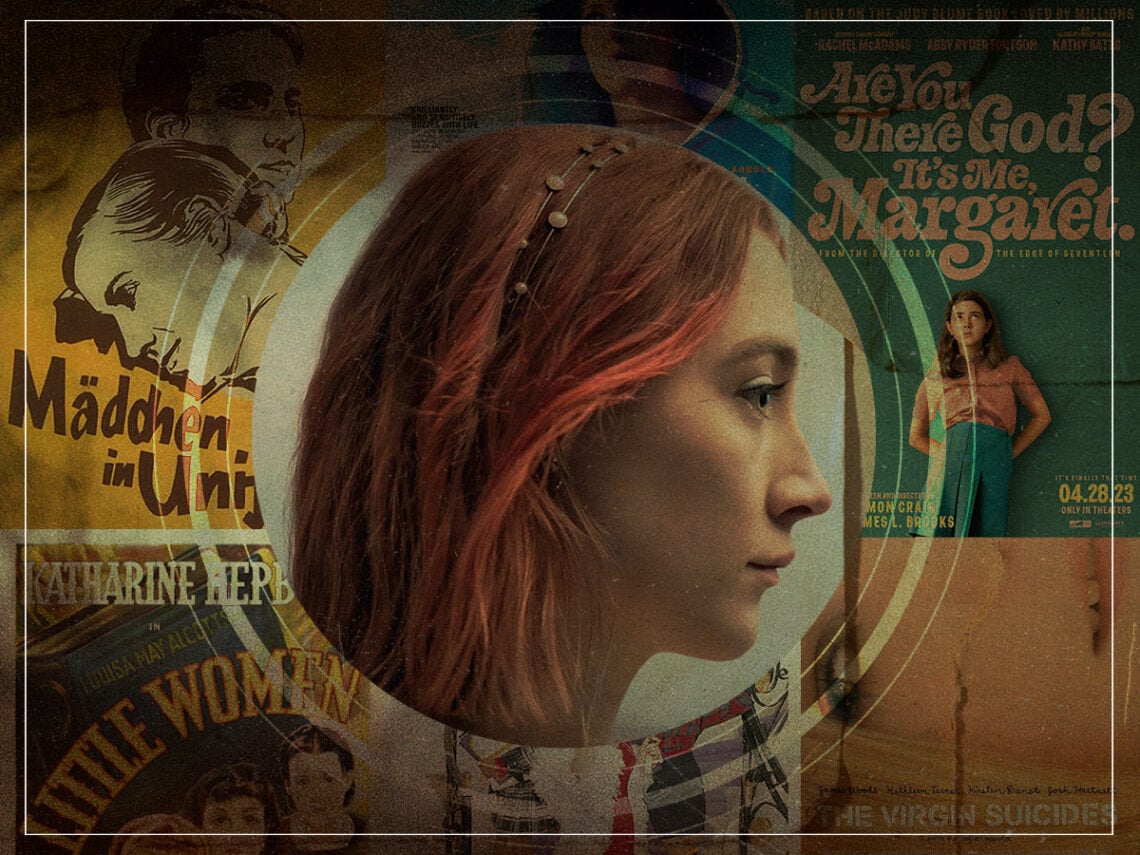
It wasn’t until the 1980s that coming-of-age cinema really took off with the rise of John Hughes’ teen dramas, such as Sixteen Candles and Pretty in Pink. However, these movies are often criticised today for their offensive material, such as blatant racism and sexism. Since then, teen movies and stories featuring adolescent female protagonists have become considerably more popular, with modern examples, such as Lady Bird and Are You There God? It’s Me, Margaret, receiving critical acclaim.
However, the history of girlhood/female coming-of-age cinema dates back to the silent era, slowly developing over the coming decades before morphing into a more widespread phenomenon. Silent star Mary Pickford starred in several films during the early days of cinema, which could be considered coming-of-age tales, such as The Poor Little Rich Girl and M’Liss. However, these weren’t exactly complex dissections of the female adolescent experience.

However, as the silent era came to an end, several key female coming-of-age stories were released, most notably 1931’s Mädchen in Uniform, directed by Leontine Sagan. The German film was actually revolutionary for its depiction of same-sex attraction among teenage girls, although it has routinely been banned throughout the years because of its taboo content.
The 1930s saw movies such as Little Women, The Little Princess, and The Wizard of Oz emerge, all of which follow young girls as they navigate dreams, desires and hardship. During this period, it was rare to find many original female coming-of-age stories that weren’t also musicals or adaptations of classic novels directed by men. One rare exception was Wanda Tuchock, who made several movies featuring young female leads, such as Finishing School and Ready for Love, during the ’30s.
The ’50s saw the release of the French-language film Olivia, directed by Jacqueline Audry, which detailed the titular character’s infatuation with her female teacher, much like Mädchen in Uniform. This was another rather revolutionary release for both the female coming-of-age genre and lesbian cinema. As the decade continued, less conventional depictions of girlhood continued to emerge, such as an adaptation of Françoise Sagan’s Bonjour Tristesse, starring Jean Seberg. The decade started to foster a shift towards youth culture, and teenagers started to pop up on screen considerably more than before.
This continued in the 1960s, with many British films depicting female stories about the transition from adolescence to adulthood, from Beat Girl and A Taste of Honey to Joanna and The Pleasure Girls. Most movies about young girls and women during this era were made by men, offering a pretty limited view of girlhood that was predominantly white and heterosexual. European films like I Am Curious (Yellow) and Daisies were a little more experimental and daring with their content, exploring themes such as sexuality and patriarchal oppression.

As censorship eased and feminist movements gathered pace, the ‘70s welcomed even more controversial depictions of girlhood through movies such as Catherine Brelliat’s sexually explicit A Real Young Girl and the creepy Czech New Wave classic Valerie and Her Week of Wonders. Most mainstream coming-of-age tales remained male-oriented, but there were exceptions, like Carrie and the original Freaky Friday.
However, the ‘80s and ‘90s finally welcomed a boom of female-oriented stories about coming-of-age, including Heathers, Rita, Sue and Bob Too, Wish You Were Here, Christiane F., Pauline at the Beach, Smooth Talk, and À nos amours. Many of these featured hard-hitting themes such as sexual assault, drug addiction, abuse or general struggle, reflecting the stories of many real girls across the world.
The rise of the ‘girly’ teen film began in the late 1990s and early 2000s, with titles like Clueless, 10 Things I Hate About You, Mean Girls and Bring It On emerging with high-school-age female characters, often dealing with more lighthearted or comedic issues revolving around friendships, romance and family. These movies have often been slated as nothing more than fluffy, shallow pieces of cinema. Still, in reality, many of these movies sum up girlhood perfectly, whether that be through their prioritising of female friendships or celebration of stereotypically feminine aesthetic choices, which are often ridiculed or shamed in wider society.
We’ve finally reached an era where a considerably more diverse range of stories are able to be told. As the cinematic landscape has shifted and more women are now able to make movies than ever before, we’ve received black female coming-of-age tales like Pariah (also a queer story), Girlhood and Jinn. Andrea Arnold’s Fish Tank is a fantastic coming-of-age story about a working-class British girl, while Persepolis explores rebellion and resistance against the backdrop of the Iranian Revolution.
On social media platforms such as TikTok and Tumblr, the popularity of female coming-of-age movies such as The Virgin Suicides, Girl, Interrupted, The Diary of a Teenage Girl, and But I’m A Cheerleader, among others, emphasises the need for real teenage girls to have media that reflects their experiences. These films help audiences process their lives and perhaps feel a little less alone, and we can only hope that more diverse coming-of-age tales continue to be made in the coming years.
