


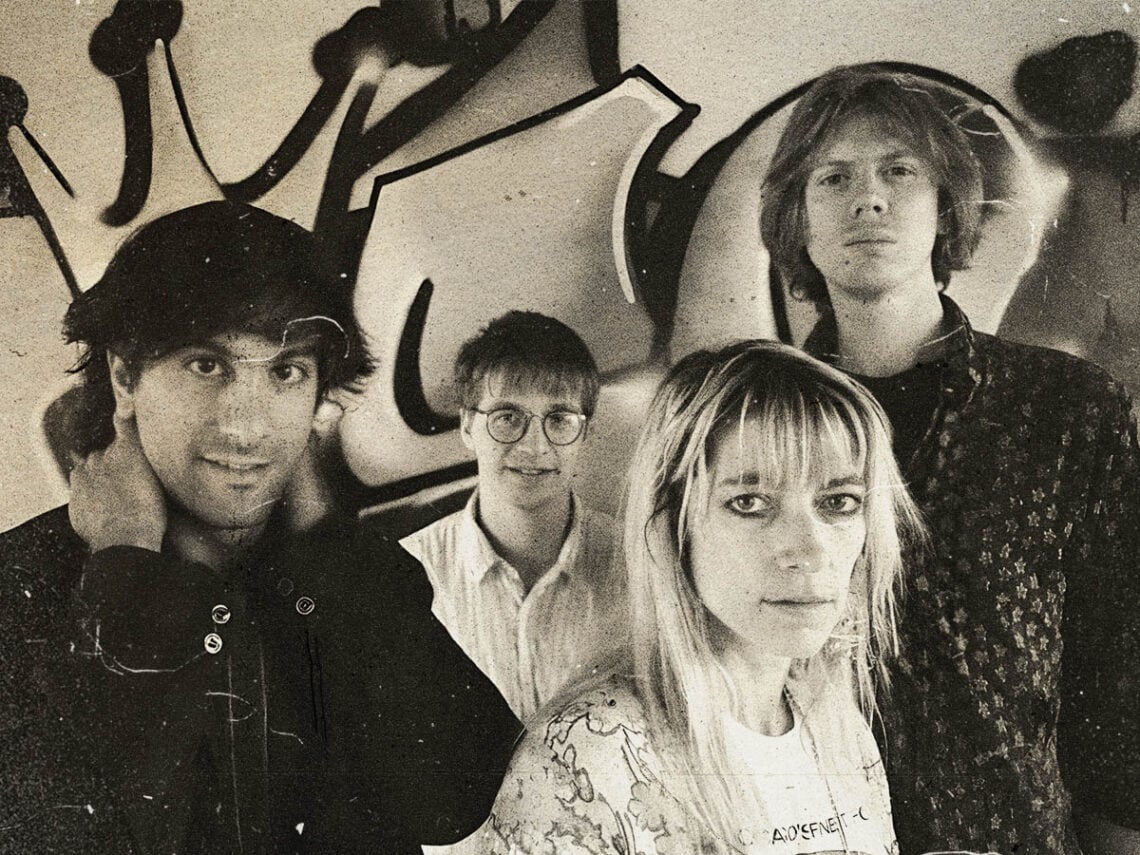
‘Death Valley ’69’: The Sonic Youth song that was deemed evil

Formed in 1981, Sonic Youth emerged as a seminal force in the music scene’s twilight years of the 20th century. Their groundbreaking strides in alternative rock throughout the 1980s laid the groundwork for the genre’s evolution in the 1990s. Esteemed artists such as Nirvana credited the New York-based group as a pivotal influence on their own musical trajectory.
The band sprang from the vibrant no-wave movement that flourished within New York’s bars and venues throughout the late 1970s and early 1980s. Originating alongside luminaries like Glenn Branca, The Contortions, and DNA, these artists delved into experimental sounds, embracing abrasion and dissonance, forging an entirely distinctive interpretation of rock music.
Sonic Youth’s experimentation included the incorporation of saxophones, trumpets, and synths, leaning heavily on non-rock influences to sculpt their unconventional sound. “When I came to New York, I’d go and see bands downtown playing no-wave music,” Kim Gordon told Elle. “It was expressionistic and it was also nihilistic. Punk rock was tongue-in-cheek, saying, ‘Yeah, we’re destroying rock.’ No-wave music is more like, ‘NO, we’re really destroying rock.’ It was very dissonant. I just felt like, Wow, this is really free. I could do that.”
The band’s pivotal moment arrived with the release of their evocative second album, Bad Moon Rising, in 1985. This album showcased the haunting track ‘Death Valley ’69’, enhanced by additional vocals courtesy of Lydia Lunch from Teenage Jesus and the Jerks. Lyrically, the song evokes a haunting narrative, alluding to the disturbing events surrounding the Manson family’s actions in Death Valley, California, in 1969.
The track comprises fragmented images, including a Chevy and a person named Sadie amid the setting of Death Valley. Due to including the word “death” and its musical tone, many interpret it as a sinister composition, yet Lunch disagrees. In a Songfacts interview, she remarked, “That’s a happy pop song,” adding, “Read into it what you will. Evil? I guess. I have far more malignant material than that. More terrifying, that’s for sure.”
Throughout their career, Sonic Youth would draw inspiration from various macabre sources to create innovative soundscapes. ‘JC’ and ‘100%’, for instance, derived from a tragic incident that deeply impacted them: the tragic murder of their close friend, Joe Cole.
As Gordon explained: “When Henry called to tell me about Joe, I burst into tears. I didn’t get over it for a couple of years, to be honest. The senseless, random act of violence against someone so full of life and innocence was mind-blowing, and I hated Los Angeles for a long time after that. I wrote the song ‘JC’ about Joe, while Thurston wrote ‘100%’. It was hard to sing without tearing up.”
