


David Lynch movie ‘The Elephant Man’ changed the Oscars forever

American auteur David Lynch is widely known as one of cinema’s master surrealists, as demonstrated by his debut feature Eraserhead, which used bizarre imagery to explore a man’s struggles with fatherhood, sex and urban isolation. Lynch possesses an incredible talent for tapping into human emotions, no matter how abstract the form his imagery takes. Although the majority of his films are deeply emotive, The Elephant Man, his second release, is arguably his most emotionally devastating and poignant.
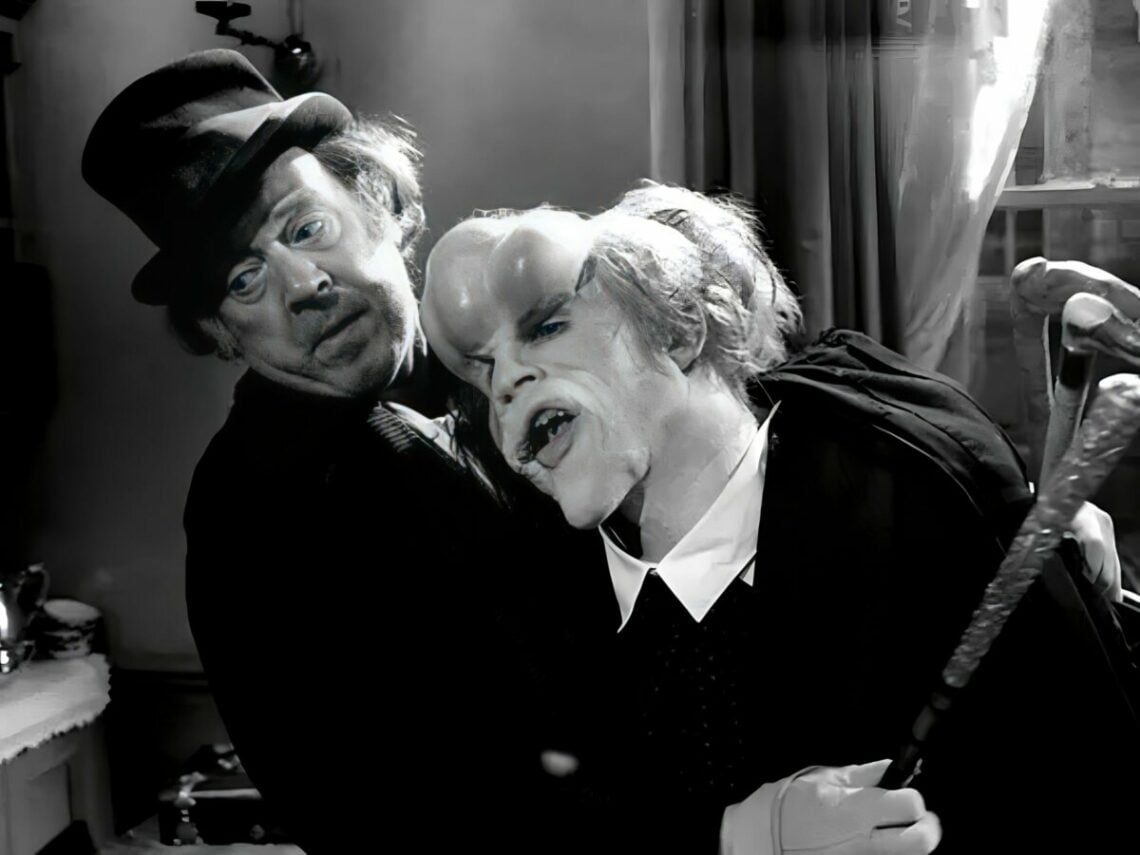
The film follows John Merrick, played by John Hurt, a severely deformed man who is exhibited in a Victorian freak show, his face concealed by a hood when he’s not being exploited by Mr Bytes. Frederick Treves, a surgeon, soon pays Bytes to examine the medical phenomenon, quickly realising that John is a lovely, misunderstood man. Inspired by the real story of Joseph Merrick, The Elephant Man is a moving tale that remains one of Lynch’s greatest outputs.
After producer Jonathan Sanger got hold of Christopher De Vore and Eric Bergren’s script, he showed it to Mel Brooks, who he had been working with on High Anxiety. The actor/filmmaker was impressed and decided to finance the project using his new company Brooksfilm. His personal assistant, Stuart Cornfeld, suggested Lynch, a relatively unknown name at the time, to direct, despite Eraserhead‘s lack of mainstream popularity.
However, despite his lack of experience, Sanger was impressed by Lynch and wanted him to direct the project. Shortly after, he set up a screening of Eraserhead for Brooks, who’d never heard of Lynch, at the offices of 20th Century Fox. Totally bowled over, Sanger loved the film idea and welcomed the young director to the project. With a budget of $5million, Lynch made his first studio film, which managed to gross $26million in the US alone. The proejct was a huge success and led to an offer from George Lucas to direct the third instalment in the Star Wars franchise, Return of the Jedi. Of course, Lynch turned down this offer, explaining that he had “next door to zero interest”.
At the Academy Awards that year, The Elephant Man was nominated for eight accolades. The film was in the running for awards such as ‘Best Picture’, ‘Best Director’, ‘Best Adapted Screenplay’ and ‘Best Actor’ for Hurt. However, there was widespread outrage when the intricate makeup effects, supervised by Christopher Tucker, were not recognised. The makeup was based on casts of the real Merrick’s body, which are kept in the Royal London Hospital’s private museum. Applying the effects was laborious, with Hurt arriving on set at 5am to get into costume, which took seven to eight hours to apply.
Once Hurt was ready, the crew would shoot between noon and 10pm, with the actor only working alternative days due to the strain of the makeup, which took two hours to remove. When Hurt wore the makeup for the first time, he declared, “I think they have finally managed to make me hate acting”. Luckily, Hurt persevered, and the results were astonishingly impressive. As a result, the Academy took the complaints on board and created a category dedicated to makeup, as they’d previously only honoured makeup artists with special achievement awards.
Sadly, because the Academy implemented the category the following year, The Elephant Man did not win any awards for its incredible makeup effects. Instead, the first film to win an Academy Award for ‘Best Makeup’ was John Landis’ 1981 comedy horror An American Werewolf in London.
