


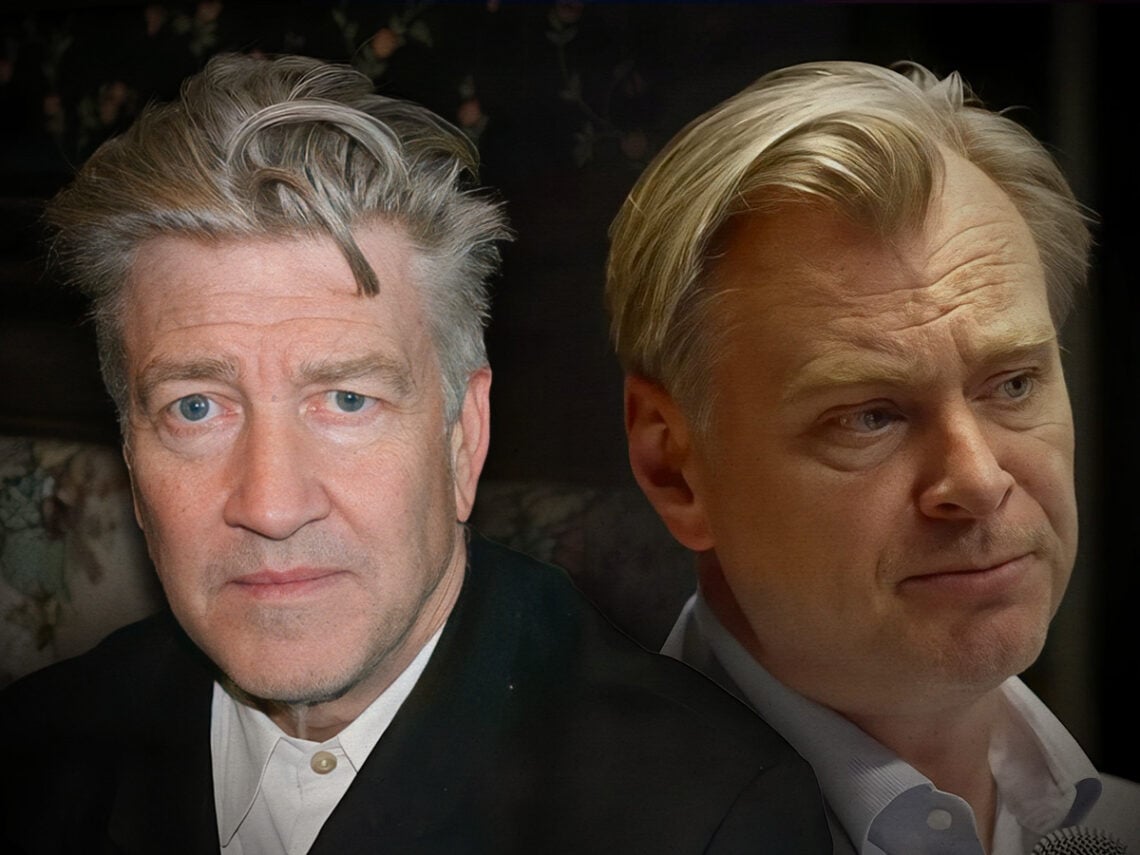
The David Lynch movie Christopher Nolan almost walked out of: “What the hell was that?”

As one of cinema’s most vocal supporters, the thought of Christopher Nolan starting a movie and then abandoning it before the end credits is about as unthinkable as it gets.
And yet, it almost happened. While you could maybe understand him doing so if he was watching one of his beloved Fast & Furious flicks, since they’ve become an increasing slog to get through, it was a film by David Lynch. David fucking Lynch, of all people, and Nolan almost jumped ship.
The Academy Award-winning auteur has always been a defender of the theatrical experience and the sanctity of shooting on celluloid, and these days, he’s the president of the Directors Guild of America, so ditching a Lynchian puzzle-box long before the screen faded to black would have been quite the skeleton in his closet.
Fortunately, he stayed the course, as any self-respecting cinephile should, and it even helped to inspire his breakout feature. While it’s not Lynchian in the strictest sense of the term, there are certain strands of DNA shared by the eccentric icon and Nolan’s Memento, and as it turned out, they weren’t accidental.
“One of the films I saw as I was writing it was David Lynch’s Lost Highway,” the Dark Knight trilogy and Inception orchestrator explained. “I’m a Lynch fan, but I was left, like, ‘What the hell was that?’ It felt too strange, too long. I almost didn’t finish watching it. And then, about a week later, I remembered the film as if I were remembering one of my own dreams.”
You can see where the inspiration, subconscious or not, came from, with Lynch’s surrealist 1997 noir telling two intersecting stories, which the Twin Peaks maestro described as a “psychogenic fugue,” a term used to describe a person who “creates in their mind a completely new identity, new friends, new home, new everything,” not entirely dissimilar to Memento‘s Leonard.
As for Nolan, seven days after he’d contemplated turning his back on Lost Highway, the pieces for Memento started falling into place, and a large part of that was down to the director’s vivid recollections of Lynch’s mind-bender beginning to inform his own thinking.
“I realised that Lynch had created the shape of a film that would project a shadow in my memory, assuming the shape of a dream,” he opined. “It’s like a hypercube: the shadow of a four-dimensional object in our three-dimensional world.” That’s a typically studious analysis, but again, applicable to his second effort from behind the camera, and the one that got him noticed in Hollywood.
Would Memento have turned out worse had Nolan opted to give Lost Highway the old heave-ho, and not have it infect his dreams a week down the line? Maybe, maybe not, but it’s fascinating to think about it nonetheless, since it can’t be discounted that one moment set the tone for everything that followed.
