


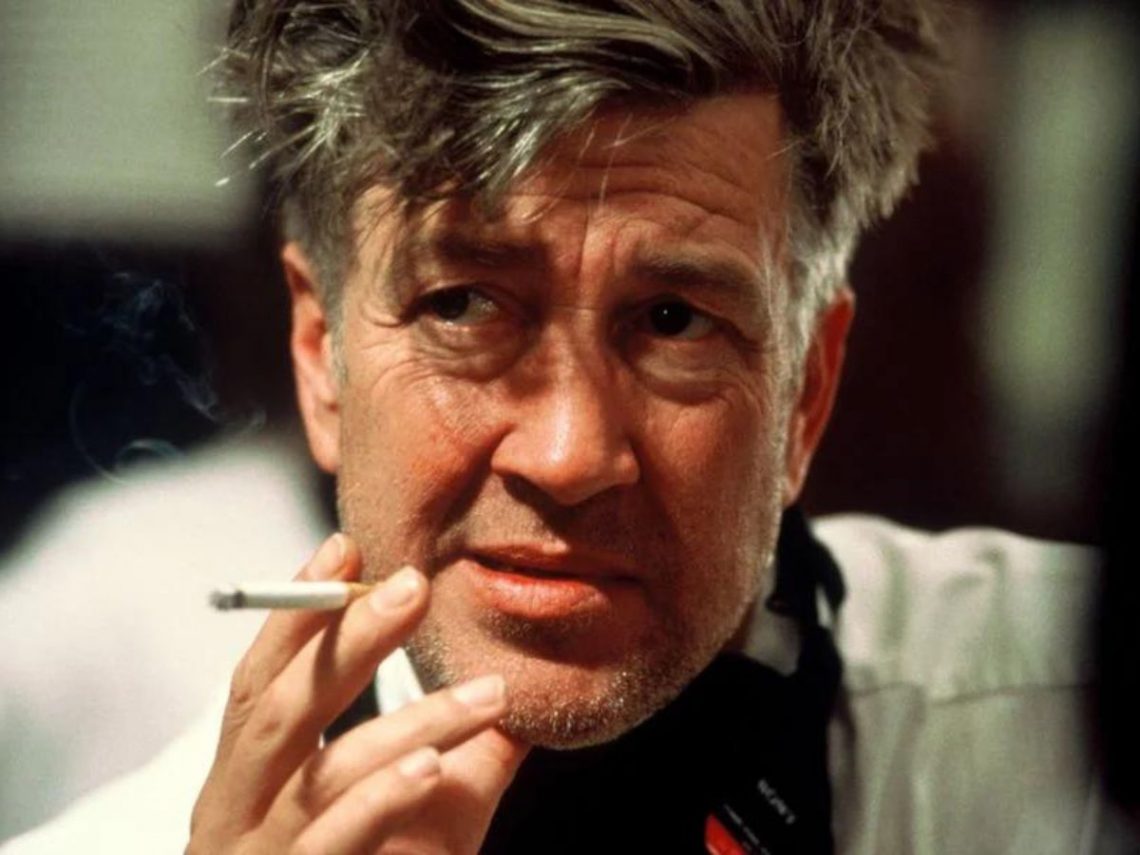
David Lynch’s five favourite directors of all time

Particular and idiosyncratic in nature, director David Lynch is one of the modern masters of cinema, responsible for some of the art form’s finest feats, from 1986s Blue Velvet to 2001s Mulholland Drive. As one of America’s great modern artists, Lynch’s name should be considered in the same breath as fellow filmmakers Steven Spielberg, Martin Scorsese, Quentin Tarantino and Jim Jarmusch.
Known for his dedication to surrealist imagery and unconventional storytelling techniques, Lynch often turned to music and art for inspiration, noting that when it came to Blue Velvet, it was the Roy Orbison song ‘In Dreams’ that would inspire him most. Speaking about the revelation, Lynch stated, “it was the song that sparked the movie…there was something mysterious about it. It made me think about things”.
The scene in Lynch’s seminal movie comes when the protagonist, Jeffrey (Kyle MacLachlan), is taken to a criminal named Ben (Dean Stockwell), who is insistent on performing a mimed rendition of Orbison’s song. Standing closely beside the performer is Frank Booth (Dennis Hopper), a curious criminal transfixed by the performer as if he were a statue of incredible beauty.
As well as Blue Velvet, which came out close to the start of his professional career, Lynch created the influential TV series Twin Peaks which engaged with complicated concepts of dreamworlds and lost innocence. To this very day, the series is considered one of the most innovative works in television history, introducing global audiences to a completely different kind of storytelling.
Engaging with worlds and stories that concern themselves with existential concepts and the ethereal dreamscape, Lynch creates a mysterious, creeping tone that seems to envelop every film he produces. Unconcerned with shallow, throwaway films, the director explores his own bodies of inspiration, commenting: “Ideas are like fish. If you want to catch little fish, you can stay in the shallow water. But if you want to catch the big fish, you’ve got to go deeper. Down deep, the fish are more powerful and more pure. They’re huge and abstract. And they’re very beautiful.”
When it comes to the inspiration of contemporary cinema, however, Lynch notes that “he’s not a film buff”, and also “rarely has the time to go [to the cinema]”. Despite this, the director’s eclectic taste comes from decades of film history, where five specific directors have helped impact the iconic experimental director.
David Lynch’s five favourite directors:
Stanley Kubrick
Filmmaking obsessive and cinematic genius, Stanley Kubrick is responsible for an eclectic mix of projects, from genre filmmaking in The Shining to his expansive visual epic 2001: A Space Odyssey.
“I can watch his movies over and over,” David Lynch explained when discussing the director in an old interview, though Kubrick also gave one of Lynch’s greatest ever encouragements during his production of The Elephant Man in 1980. When one of the film’s producers approached Lynch with some individuals that worked closely with Kubrick, they told him that they were invited back to the director’s home to “watch his favourite movie”.
Fatefully, Kubrick showed them Lynch’s Eraserhead, to which the flattered director responded, “Right then I could’ve passed away peaceful and happy, I like all of Kubrick’s films but my favourite may be Lollita I just like the world, I like the characters, I love the performances”.
Billy Wilder
Director during Hollywood’s Golden Age, Billy Wilder was an Austrian-American film director whose career would span over 50 years, leaving a legacy as one of the most versatile filmmakers in the country.
Famous for several classics including Some Like It Hot, Double Indemnity, The Apartment, and Sunset Boulevard, Lynch said of the iconic director: “I love Billy Wilder, Sunset Boulevard in particular and I’ve watched it over and over. I love the film, I love the world that Billy Wilder created”.
Continuing the director’s own obsession with dreams and fantasy, he also went on to comment the following about Sunset Boulevard: “The Hollywood he describes in the film probably never existed, but he makes us believe it did, and he immerses us in it, like a dream.”
Federico Fellini
Just like Billy Wilder’s chimeric Sunset Boulevard, Federico Fellini is also known for his ethereal, shifting stories, particularly 8½, which contains one of cinema’s most famous dream sequences in which a suited man flies high above a beach attached to a balloon.
Including La Dolce Vita, La Strada and Amarcord, Fellini’s filmography is impressively vast, with David Lynch admitting to watching each one “over and over”. Articulating his appreciation for 8½, Lynch stated he loves the film for “the way Federico Fellini manages to accomplish with film what mostly abstract painters do – namely, to communicate an emotion without ever saying or showing anything in a direct manner, without ever explaining anything, just by a sort of sheer magic.”
Jacques Tati
“If you want to see some great comedies, check out Jaques Tati’s Mr Hulot’s Holiday,” admiration indeed from David Lynch for the French director known for his ingenious physical comedy.
Known for Playtime and Traffic, Tati’s unique form of comedy merged with his stunning, colourful visual style make him one of the often overlooked greats of the 20th century. Showing his appreciation for Tati’s second film Mr Hulot’s Holiday, Lynch comments that he loves the film “for the amazing point of view that Jacques Tati casts at society through it. When you watch his films, you realise how much he knew about – and loved – human nature, and it can only be an inspiration to do the same”. With only five films in his filmography, every Tati film is an essential watch.
Alfred Hitchcock
Donned ‘The Master of Suspense’, Alfred Hitchcock often arises in conversations regarding history’s very best film directors, iconic for his deft ability to crank up the intensity of a film with an ingenious synthesis of sound and visuals. Look no further than Psycho’s shower scene.
Though David Lynch’s favourite Hitchcock film is instead his classic 1954 thriller Rear Window, in which a photographer becomes stuck in his apartment recovering from a broken leg only to discover some shocking secrets from beyond his window. When it comes to Rear Window, Lynch noted that it’s the “way in which Alfred Hitchcock manages to create – or rather, re-create – a whole world within confined parameters” that makes the film so effective. Continuing, Lynch noted, “In the film, Hitchcock manages to take something huge and condense it into something really small. And he achieves that through a complete control of film making technique.”
