


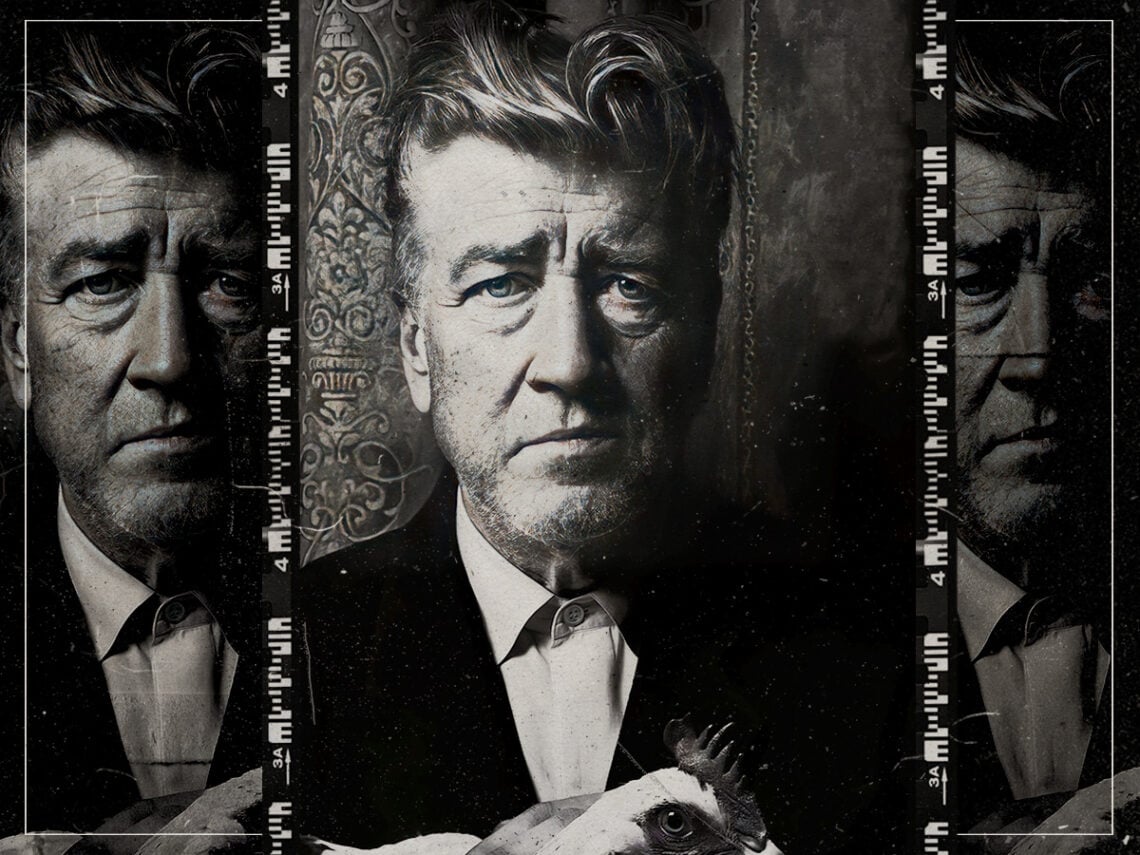
David Lynch: The life of an eccentric master of cinematic surrealism

“I hate slick and pretty things. I prefer mistakes and accidents. Which is why I like things like cuts and bruises – they’re like little flowers.” – David Lynch
David Lynch was a man of many talents. In addition to being one of the most influential filmmakers of the last century, he was a writer, painter, musician, sound designer, actor, singer, and photographer. Known for his challenging masterpieces like Eraserhead and Mulholland Drive, among others, Lynch’s brand of surrealism broke into the mainstream consciousness and led to him being called the “first popular surrealist” by Pauline Kael.
Even after all these years, Lynch’s filmography remains a vital part of cinematic history and is evidence of many claims that he was, in fact, the most important filmmaker of the current era. Upon the tragic news of the director’s passing, we take a look at the evolution of David Lynch’s artistic vision over the course of his eventful life as a tribute to one of the greatest filmmakers of all time.
Born in Montana on January 20th, 1946, Lynch was raised a Presbyterian and had a pretty privileged childhood. His father worked as a research scientist for the US Department of Agriculture (USDA) while his mother was an English language tutor. Because of his father’s position, the family moved around a lot, and Lynch adapted to the changing environments with relative ease. Although he had no problems making friends in school, Lynch remembers thinking that school was an unnecessary component of childhood, which urged students to conform rather than encouraging freedom of thought.
From a very early age, he was drawn towards things that would shape his artistic vision as an adult: “My childhood was elegant homes, tree-lined streets, the milkman, building backyard forts, droning aeroplanes, blue skies, picket fences, green grass, cherry trees. Middle America as it’s supposed to be,” he said. “But on the cherry tree there’s this pitch oozing out – some black, some yellow, and millions of red ants crawling all over it. I discovered that if one looks a little closer at this beautiful world, there are always red ants underneath. Because I grew up in a perfect world, other things were a contrast.”
The dark underbelly of the seemingly perfect world formed the driving force behind Lynch’s powerful investigations, which is evident in many of his films, such as the brilliant 1986 effort Blue Velvet. Lynch was never an exceptionally gifted student, but he found comfort in painting and wanted to pursue it as a career. He enrolled in an art school in Washington, DC, eventually transferring to the School of the Museum of Fine Arts, Boston, where he shared a room with musician Peter Wolf.
However, Lynch’s contempt for institutional knowledge contributed to his decision to drop out after a year and explore Europe for three years with Jack Fisk. They returned after two weeks because the Austrian expressionist painter, Oskar Kokoschka, under whom they had hoped they would be able to train, was not available to take them under his tutelage.

After returning to the US, Lynch enrolled for a course at the Pennsylvania Academy of Fine Arts. He felt that it was a much better place than his previous schools because the environment was conducive to creative endeavours. During this period, he met his first wife, Peggy Reavey, and lived with his family in a Philadelphia neighbourhood with a high crime rate. This period in his life would shape his artistic sensibilities more than any other, opening his eyes to the world’s violence and horror.
“We lived cheap, but the city was full of fear. A kid was shot to death down the street,” Lynch recalled. “We were robbed twice, had windows shot out and a car stolen. The house was first broken into only three days after we moved in. The feeling was so close to extreme danger, and the fear was so intense. There was violence and hate and filth. But the biggest influence in my whole life was that city.”
In order to support his family, Lynch worked as an engraving printer while working on his first short films at the Academy. He was initially attracted to the cinematic medium because he wanted to see his paintings in motion, hoping he would be able to realise this dream by working on animation projects.
When this didn’t materialise, Lynch bought the cheapest 16mm camera he could find and spent $150 of his own money to finance his first short film, Six Men Getting Sick (Six Times), in 1967. Describing it as “57 seconds of growth and fire, and three seconds of vomit,” the experimental short went on to win first prize (shared with another entry) at the Academy’s annual exhibit. The film left such an impression on his schoolmate, H Barton Wasserman, that he offered Lynch $1,000 to create a film installation in his home.
Although his initial attempt was unsuccessful, Lynch used the remaining funds to produce a four-minute short, The Alphabet (1968), which combined animation with live action. The project starred his wife in the role of a mysterious character who recited the alphabet to images of horses before haemorrhaging all over the bed. Lynch submitted The Alphabet to the newly established American Film Institute, requesting $7,200 to make another short film, The Grandmother. This new project would tell the story of a lonely boy who plants a seed from which a grandmother grows to care for him.
In 1971, the budding filmmaker moved to Los Angeles to study at the AFI Conservatory, where he began working on a project called Gardenback. However, the chaotic environment of the school left Lynch frustrated, and he even considered quitting. Encouraged by the dean, who believed Lynch was one of their finest students, he decided to stay and shifted his focus to a new project: Eraserhead.
This iconic masterpiece would become one of the crowning achievements of American independent cinema. Despite struggling with inadequate funds and personal challenges, Lynch persevered, financing the film by working as a paperboy and borrowing money from his father. Eraserhead envisioned a haunting industrial wasteland, bringing anxieties and fears to life in a visually stunning and enigmatic way.

Though it didn’t make an immediate impact, the film eventually gained recognition through the midnight movie circuit, where its artistic brilliance captivated audiences. Eraserhead stands as a powerful statement from an immensely talented filmmaker, announcing his arrival with a unique voice and vision that was unlike anything else in cinema.
After completing Eraserhead, Lynch hoped to work on his unfinished project, Ronnie Rocket. However, he recognised that taking on The Elephant Man would be a more lucrative and accessible option for producers. Many consider The Elephant Man to be Lynch’s greatest triumph—a historical drama that uses the concept of the grotesque to explore what it means to be human. The film tells the true story of John Merrick, a physically disfigured 19th-century Londoner (played by John Hurt), raising profound questions about prejudice and society’s fear of the “Uncanny Other”.
With a stellar cast including John Hurt, Anne Bancroft, and Anthony Hopkins, The Elephant Man was both a commercial and critical success, earning eight Academy Award nominations.
Riding the wave of success, Lynch attempted to carry the momentum into his biggest project to date with an adaptation of Frank Herbert’s sci-fi epic Dune, an undertaking that would become the biggest disappointment of his career. The film was a critical and box-office failure, recovering only $30million of its $40m budget and was widely panned by critics. Lynch later admitted that pressure from producers and contractual obligations left him creatively stifled: “I started selling out on Dune,” he said. “Looking back, it’s no one’s fault but my own. I probably shouldn’t have done that picture, but I saw tons and tons of possibilities for things I loved, and this was the structure to do them in.”
In what was an extremely oscillatory period, Lynch came back with one of the best films he has ever made. A surreal 1986 drama which asks philosophical questions about life and death through psychosexual themes, Blue Velvet is a stunning masterpiece, but it generated controversy when it was first released because of the violent treatment of Isabella Rossellini’s character.
However, it was this controversy that introduced the film to mainstream audiences, and later critical evaluations proved that Lynch was in the right all along. Blue Velvet became a cult classic and received several accolades from some of the foremost critics’ circles in the country. What followed was probably the most successful time in his career, a period where he created the finest example of cinematic surrealism on television: the iconic series Twin Peaks.
Lynch also released the crime romance Wild at Heart, starring Nicolas Cage and Laura Dern, which won the Palme d’Or at Cannes. Lynch’s subsequent films like Twin Peaks: Fire Walk With Me and Lost Highway would be met with mixed reviews and greater confusion as he travelled further and further into the core of surrealism, experimenting more fiercely with the normative conventions of storytelling. As if to answer the criticisms about his artistic vision, he worked on his most “normal” film in 1999 when he made a touching road film called The Straight Story, which was also a masterpiece but in a completely different way.

Staying faithful to his violent swings from one end of the spectrum to the other, Lynch followed up with his magnum opus: the 2001 surrealist erotic psychological thriller Mulholland Drive. Starring Naomi Watts in her breakthrough role, the disturbing Hollywood horror film is considered to be one of the best films of the 21st century – and for good reason. It creates a labyrinth of dark fears and desires for the viewers to wade through until they come face to face with their own individual insecurities.
“One night, I sat down, the ideas came in, and it was a most beautiful experience,” Lynch once commented on the film’s creation. “Everything was seen from a different angle … Now, looking back, I see that [the film] always wanted to be this way. It just took this strange beginning to cause it to be what it is.”
Churning out one non-linear film after another, Lynch worked on Inland Empire in 2006 while also working on short films which he released online. Towards the end of this period, he collaborated with Werner Herzog in Herzog’s 2009 film My Son, My Son, What Have Ye Done? and even tried making a documentary on the creator of Transcendental Meditation, Maharishi Mahesh Yogi, but the plans never saw the light of the day.
The most notable, relatively recent project that Lynch undertook was the 2015 return to Twin Peaks with a nine-episode season. A welcome addition for fans of the original series, many believed that this would be Lynch’s farewell to the world of cinema, but he did not give a definite answer: “I did not say I quit cinema, simply that nobody knows what the future holds.”
Lynch even mentioned the possibility of another season before his death, a sad realisation of what fans have lost. During the Covid-19 pandemic, Lynch came back and delighted audiences with his eccentric weather reports and two new series: What is David Lynch Working on Today? and Today’s Number is…, where he chooses random numbers from a jar, offering yet more wonderful insight into the weird world of David Lynch.
On January 16th, 2025, following several health issues over the past few years, the news was released that Lynch had passed away at the age of 78.
“It is with deep regret that we, his family, announce the passing of the man and the artist, David Lynch,” his family confirmed. “There’s a big hole in the world now that he’s no longer with us. But, as he would say, ‘Keep your eye on the donut and not on the hole.’ It’s a beautiful day with golden sunshine and blue skies all the way.”
…and there’s no better way to say goodbye.
