


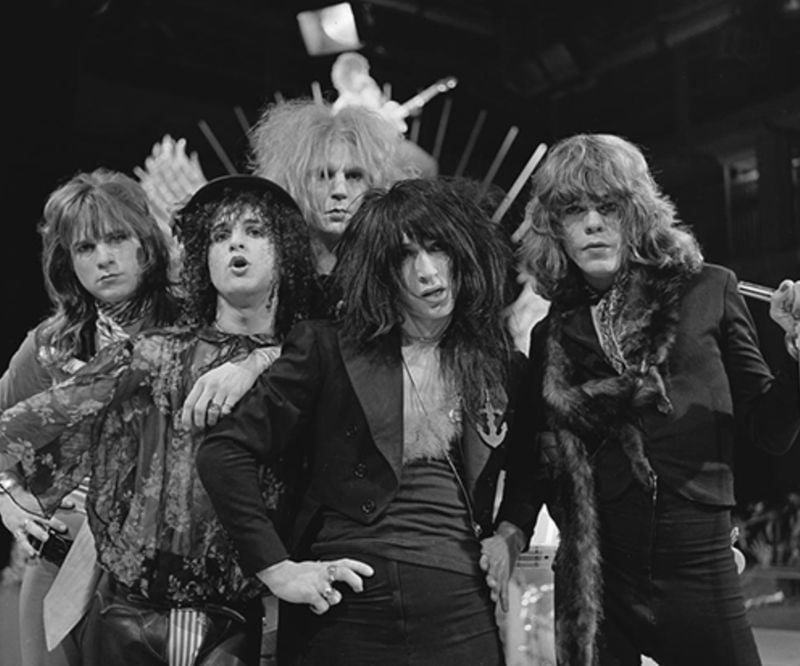
David Johansen remembers how Sylvain Sylvain helped New York Dolls launch punk

No band was more instrumental to the New York punk scene of the mid-late 1970s than the New York Dolls. A diverse gang of gunslingers who fused the proto-punk of The Stooges with the contemporary penchant for glam, the quintet’s music was perfect for their time. After their arrival, the floodgates were open, and music was never to be the same again.
The work drew on the seedy nocturnal underbelly of their native city, which the band members were closely in touch with, whilst also providing listeners with a way out of the mire of the daytime, with broken economics and squalid living conditions commonplace. The Dolls’ music was anarchic, and with the city sliding into something akin to the ungovernable state of nature, it was a perfect rallying call for those who wanted something more than the bleak landscape so accurately depicted in movies such as Taxi Driver later in the decade.
The Dolls were the galvanising force that brought the artists and the hipsters of New York together, and it was around them that the scene coalesced and became so game-changing for the city and the world.
Whilst the Dolls had various lineups, the most famous iteration formed after the death of original drummer Billy Murcia in 1972. This featured frontman David Johansen, guitarists Johnny Thunders and Sylvain Sylvain, bassist Arthur Kane and drummer Jerry Nolan. Together they crafted the band’s first two records, 1973’s New York Dolls and 1974’s Too Much Too Soon, which became instant classics. From Sex Pistols to Johnny Marr, their influence is wide-reaching.
The discussion of the New York Dolls largely centres around Johansen or Thunders, with the latter one of the most highly mythologised figures in rock, due to his undoubted ability, personality and untimely death. However, Sylvain Sylvain was incredibly vital to the group, both musically and as a brand. He might not have been the most flashy, but the band we now know as the New York Dolls would have been very different without his presence.
After Sylvain’s death in January 2021, Johansen sat down with Rolling Stone and remembered how important his late friend was to the band. Looking back on his first memory of meeting the Egyptian guitarist, he said: “I remember it pretty vividly. We were getting the band going and we just had rehearsal a couple of times. The guy who was playing guitar didn’t show up. All of a sudden, Syl came in the room with a carpetbag and guitar. He had just gotten off the plane after being, I think, deported from Amsterdam. [Laughs] He looked great, but then he started playing, and I thought, ‘Oh my God. We gotta have this guy. He’s great.'”
Johansen continued: “Little did I know, he and some of the other guys in the band had been in cahoots before he was in Europe. They were talking about making a band. He knew [drummer] Billy [Murcia] and [guitarist] John [Johnny Thunders]. I don’t know if he knew Arthur [Kane] or not. But I didn’t know that. I just knew ‘this guy is fantastic,’ and he was.”
Asked what role Sylvain played in the creation of New York Dolls’ famous glam look, Johansen replied: “I don’t know. I’ve read some stuff about him being very instrumental in that. I guess he was. I know we were all very what we considered “fashionable” at the time. But he was friends with [fashion designer] Betsey Johnson and he hooked up the shoot for the first album cover. I don’t think he dressed us since I can tell by looking at the picture that they were all clothes that we had.”
Recalling Sylvain’s family ties to tailoring, he added: “But he came from a long line of tailors. He was very into clothes and was a habitual shopper when we were on the road.”
Most importantly, the interviewer noted that the guitar sound that Sylvain and Thunders had as a duo was a “key” part of the New York Dolls’ operation. Acutely aware of this, Johansen opined: “Absolutely. Syl just fit in there. He knew what to do, especially in the beginning. I’m thinking about the early days. We have a long history. We wrote songs together then, but when we got back together, we wrote a ton of songs.”
