


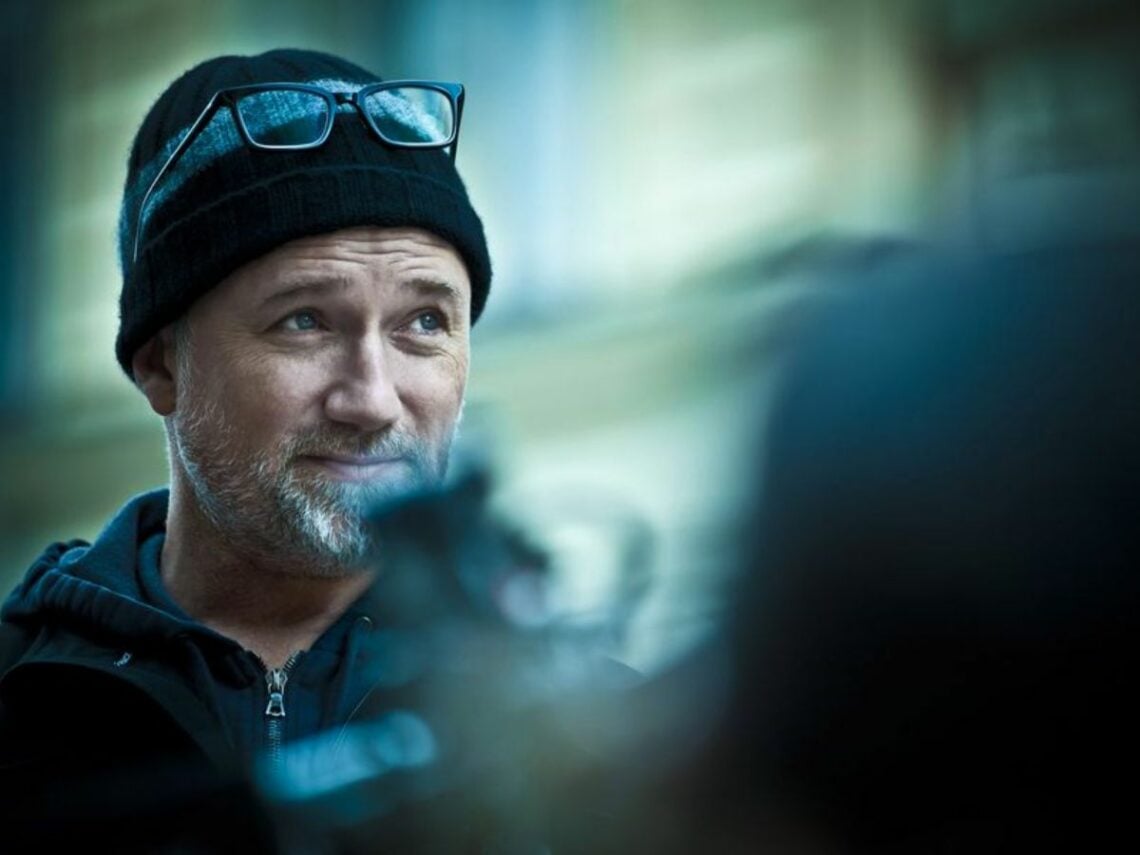
Ranking every David Fincher movie from worst to best

Modern-day cinematic auteurs don’t get any more beloved than David Fincher. As the master of brooding darkness, subterranean grime, and moral ambiguity, Fincher has carved out a distinctive style and personal philosophy all his own that has remained more or less consistent throughout his entire career in film.
Despite being heavily associated with the darker edges of the medium, Fincher also has a reputation for slick coolness. Chalk that up to a solid decade of music video experience, the likes of which deserve their own list someday: ‘Cradle of Love’ by Billy Idol, ‘Straight Up’ by Paula Abdul, ‘Janie’s Got a Gun’ by Aerosmith, ‘Freedom ’90’ by George Michael, ‘Love Is Strong’ by The Rolling Stones, and a whole host of legendary videos from Madonna, including ‘Express Yourself’ and ‘Vogue’.
Fincher’s career on the big screen got off on what could only be described as the wrong foot (more on that later). The experience made Fincher weary of major studios, and although he would continue to work within the Hollywood system, his films quickly took on a strictly independent. Fincher would stop at nothing to create his distinctive vision, and the results would be some of the moodiest, coldest, and most fascinating big-budget Hollywood films of the past 30 years.
Combining the intricate eye of a meticulous craftsman with the expansive range of a blockbuster director, Fincher is one of the last remaining film directors who refuses to bend to the in-flux world of cinema. When he decided to jump ship over to streaming, Fincher retained his freedom and singular style by creating some of the best shows that ever premiered on the platform, including House of Cards and Mindhunter.
Today, we’re focusing solely on Fincher’s silver screen work, ranking all of his efforts in order of greatness.
Every David Fincher movie ranked:
12. Alien 3 (1992)
Fincher’s first-ever feature film has most of the elements that would define him as a director: neo-noir atmosphere, industrial settings, and a palpable sense of dread and anxiety. He had to filter his singular vision through an established film franchise and a studio that wanted to control his final product. Fincher has only made one true “franchise” film, and he likely won’t ever go back.
Alien 3 isn’t actually as bad of a film as its reputation suggests. For one, Fincher’s vision and art direction make the film visually arresting at nearly every turn. The fact that it has a hamstrung plot that barely holds together isn’t necessarily Fincher’s fault, but even he couldn’t make a coherent story out of Ellen Ripley’s (intended) final chapter. Fincher has practically disowned the film, and it comfortably sits as his worst work.
11. Mank (2020)
Here are some things that David Fincher is arguably the best at in the film industry: psychological thrillers, gritty dramas, and literary adaptations. Strangely enough, biographical films also fit in there as well. When Fincher takes on real-life stories (or, at least, real-life adjacent stories), he tends to inject some of his most vital and engrossing ideas into those films.
That is not the case with Mank. Instead, Fincher takes the opportunity to coast on dissolving shots and old-school directorial techniques, making the Gary Oldman-led life story about the man who wrote Citizen Kane the most anonymous film of Fincher’s career. Far too lengthy and plodding for its own good, Mank is a perfectly OK film that doesn’t actually contain any elements that make Fincher one of the world’s greatest directors.
10. The Curious Case of Benjamin Button (2008)
Give Fincher this: when he takes swings, he goes big. The Curious Case of Benjamin Button was a conscious leap outside Fincher’s comfort zone, relying on CGI, movie star appeal, and even thick layers of optimism and nostalgia to work. It was the kind of production that a director like Steven Spielberg would typically take on, not the master of shadows David Fincher.
Benjamin Button isn’t exactly a failure, but it is wildly uneven for a master craftsman like Fincher. Unable to properly get a handle on the film’s tone, Fincher instead decides to simply let the passing of time and Brad Pitt do the heavy lifting throughout a story that barely makes any sense. Still, Benjamin Button could make a strong case for being Fincher’s most underrated and under-appreciated film, a deep cut that’s worth a revisit.
9. The Killer (2023)
The excitement was at a fever pitch when fans heard that David Fincher was teaming up with Michael Fassbender for a film that goes back to the director’s crime thriller roots, yet the final result is somewhat disappointing. Ponderous and laborious to watch, the film follows Fassbender as an assassin on a complex manhunt, with the likes of Tilda Swinton, Arliss Howard and Charles Parnell also appearing.
As stated in our full review of the movie: “There was a genuinely fascinating character study to be undertaken here, right there waiting in the crosshairs. Ultimately, the shot was never taken this time, and the oh-so-promising target got away”.
8. Panic Room (2002)
The fact that Panic Room is so low on this list only goes to prove how elite most of Fincher’s filmography truly is. A taut thriller in the same vein as classic Alred Hitchcock productions, Panic Room is compact, straightforward, and utterly captivating to return to.
Where else can you see Jodie Foster perfect the “badass parent” role that Liam Neeson perfected a decade later, an actually great child actor performance from none other than Kristen Stewart, a sympathetic villain turn from Forest Whitaker, and an icy all-time bad guy show from country star Dwight Yoakam? Bonus points for Jared Leto getting his shit rocked, which is always welcome in Fincher films.
7. The Game (1997)
For a while, David Fincher had the same baggage that followed M Night Shyamalan – he was seemingly reliant on twist endings. If Ripley’s death in Alien 3 counts, Fincher’s first four films all ended in shocking and unexpected ways, so much so that the director was beginning to get a bit of a reputation for pulling his audience in surprising directions.
The Game has a hell of an ending, so much so that it renders the rest of the film slightly moot on rewatches since all you can do is search for the clues. That wouldn’t be a problem with Fincher’s other twist-ending films, but The Game is still a captivating piece of pulp action and psychological trickery. It just doesn’t quite have the staying power of the rest of his more psychologically challenging films.
6. The Girl With The Dragon Tattoo (2011)
Fincher’s track record with established properties is astoundingly top-tier. If we ignore Alien 3, every other adaptation is a beloved part of Fincher’s filmography. The fact that The Girl With The Dragon Tattoo gets lost in the shuffle is only a testament to the incredible memorability of his other movies, but don’t sleep on Fincher’s adaptation of Stieg Larsson’s novel.
The Girl With The Dragon Tattoo could very well be Ficher’s most disturbing movie to date, and the torture scene remains one of the hardest to watch in Fincher’s entire filmography. He also gets one of the greatest performances of Rooney Mara’s career alongside a winding tale of murder and sexual deviancy. In other words, another day at the office for Fincher.
5. Gone Girl (2014)
Sometimes, source material and director just line up perfectly. When Fincher was announced as the director of Gillian Flynn’s best-selling thriller Gone Girl, it seemed like a match made in heaven. Then came the casting of the starring role: Ben Affleck, at the height of his turn towards acclaimed directing with The Town and Argo.
The real revelation of Gone Girl turned out to be Rosamund Pike, who crafted one of the most sinister leads of the past 20 years, but everything in Gone Girl feels impeccably on the money, from the pacing to the tone to the sterile art direction that heightens placid suburbia. It might be well within Fincher’s wheelhouse, but how could that be a bad thing?
4. Seven (1995)
David Fincher needed to prove himself with his second feature film. Alien 3 was stylish but underwhelming, and the director himself wanted to separate his work from the Hollywood system. That wasn’t possible, so he decided to make one of the most disturbing and psychologically scarring big-budget thrillers ever made.
Everything about Fincher’s signature style is in Seven, from the cynical philosophy to the intriguing plot turns to the anonymous American cities that are constantly being pelted with unrelenting rain. You remember the ending, but each new John Doe kill is a fascinating crime procedural in its own right, packing Seven to the brim with captivating and revolting entertainment.
3. Zodiac (2007)
There’s no better combination than David Fincher and a psychotic killer. From Seven to Panic Room to Gone Girl, some of Fincher’s most fascinating on-screen presences have a thirst for blood and chillingly ambiguous intentions. But in his greatest film to focus on a crazed murderer, Fincher elects to barely focus on the killer at all.
Instead, Zodiac is more concerned with how mass hysteria can unnerve ordinary people. Of all the films in his discography, Fincher seems most fascinated by the tale of the Zodiac and the desperate attempts at unravelling his mystery. Zodiac is filled with the greatest attention to detail of any Fincher film, making it an astoundingly entertaining ride from start to finish.
2. Fight Club (1999)
Few films have gone through the evaluation and re-evaluation stages like Fight Club. Based on whether you think the film is satirising or glorifying the angry white male psyche, Fight Club could very well be your favourite or least favourite Fincher film. Is it OK to like Fight Club even if you don’t want to be counted among those who like it?
The answer is “absolutely yes” because no film in Fincher’s discography is as purely rewatchable and downright entertaining as Fight Club is. That includes the captivating lead performances of Edward Norton and Brad Pitt to the highly-stylised sequences to (yes) the admittedly intriguing philosophy that can either be hackneyed, revelatory, or dangerous depending on how you interpret it. No matter where you land on it, it’s impossible to understate just how fascinating and weirdly prophetic Fight Club still is.
1. The Social Network (2010)
Although most comfortable with mystery and killers, David Fincher found his perfect lead character in none other than Mark Zuckerberg. The Social Network is the most enthralling film Fincher ever made, and with an Aaron Sorkin script that matches him beat for beat, Fincher finally found the perfect balance between intellectual curiosity and cinematic excitement.
Everything about The Social Network is perfect: the non-linear jumps, the lead performance from Jesse Eisenberg, the score from Nine Inch Nails, the prophet creepiness of Armie Hammer, and the smarminess of Justin Timberlake. But it took a single visionary to bring it all together, and when his career is officially finished, The Social Network will undoubtedly stand as David Fincher’s masterpiece.
