


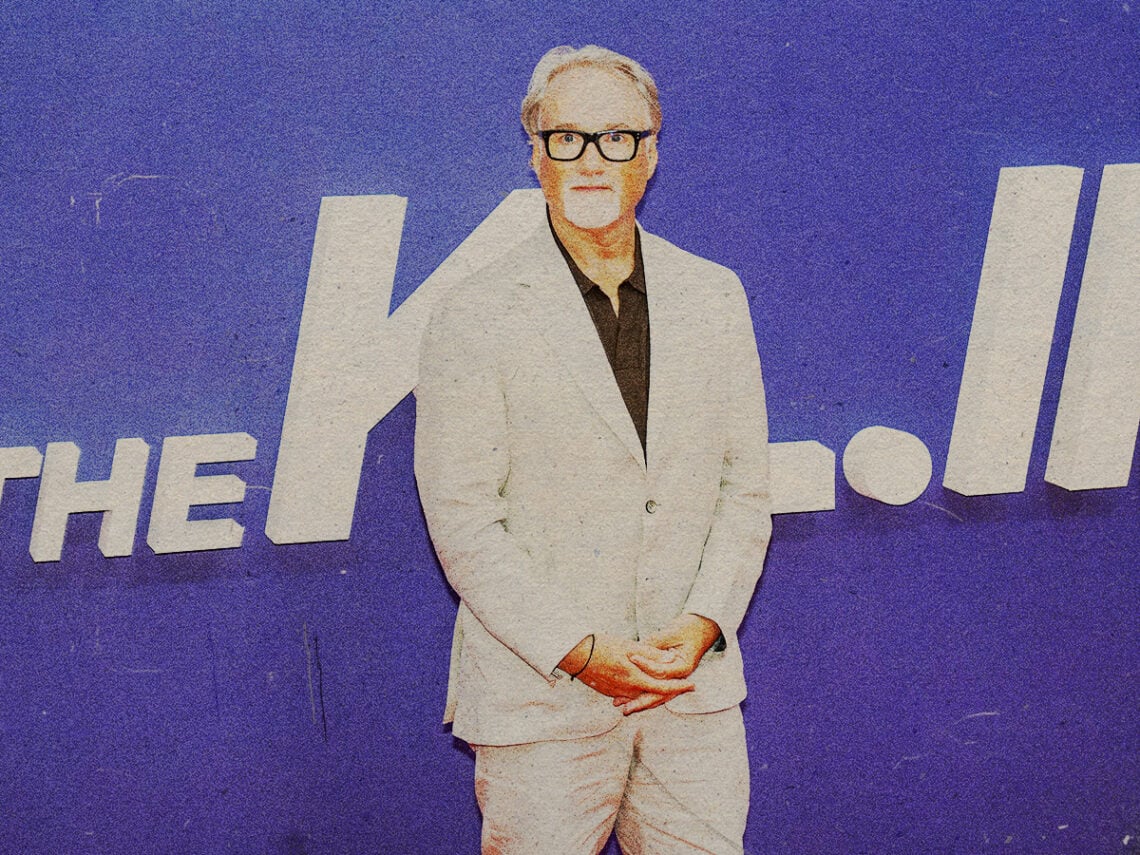
David Fincher’s favourite movie of all time

A true master of cinema’s most intense form, David Fincher has dined at the head of Hollywood’s table for several decades now. Even though his directorial debut, Alien 3, was something of a flop, he made his breakthrough with 1995’s Seven and then never looked back, continuing to deliver works of the finest order.
With the likes of Fight Club, The Girl with the Dragon Tattoo and Gone Girl to his name, it’s easy to see why Fincher’s name is held in such high regard, and he’s persistently proven his worth as one of the most significant American filmmakers of his generation.
Like any director worth their salt, Fincher has an impressive knowledge of the history of cinema and has frequently stated his admiration for many works by other filmmakers. At the top of the pile, though, seems to be one of the true classics of western cinema, a masterpiece from way back in 1969.
In a 2006 interview with Stephan Littger, Fincher opened up on how seeing Butch Cassidy and the Sundance Kid when he was just eight years old inspired him to become a filmmaker. “I remember watching that making-of documentary that was on network television that had director George Roy Hill talking about the process of making [it],” Fincher began.
“I remember watching this documentary and thinking… because it never occurred to me that movies weren’t made in real-time, you know,” he added. “If a movie took two hours, it maybe took a couple days to film because you had to go from one place to another—but it never occurred to me that it took months. I was eight then. I just thought: ‘This is fantastic, what a great gig. You get to build stuff and blow it up and hang out with Katharine Ross and travel around.'”
Butch Cassidy and the Sundance Kid was released in 1969, directed by George Roy Hill and starring Paul Newman and Robert Redford as the titular outlaws of the old wests’ ‘Wild Bunch’. Also starring Katharine Ross, the classic western sees Butch and the Sundance Kid flee to Bolivia when they are hunted down by a United States crack posse for a series of train robberies.
Eventually, Fincher’s parents allowed him to go and see the actual film rather than only watch the documentary, and the future director took the opportunity in both hands and saw the movie every weekend for the next five weeks. “I just loved it,” he said. “[And] also because I had sort of peeked behind the curtain – well, I sort of knew more about it. And I remember appreciating it because all of my ideas of how movies were made had been kind of dashed by this documentary. And suddenly, I saw this whole other discipline.”
Fincher’s dad also had the paperback screenplay of Butch Cassidy, which Fincher devoured over and over again. “I sort of started getting this idea that all that stuff was intended—like all these moments: they didn’t just happen,” he noted. “These words were given to these people, and these people were selected because of their chemistry and their abilities, and then they were sort of made part of this process that looked so much like it was happening for real. And this kind of did me in.”
