

A timeline of the ever-changing life of David Bowie
Read More


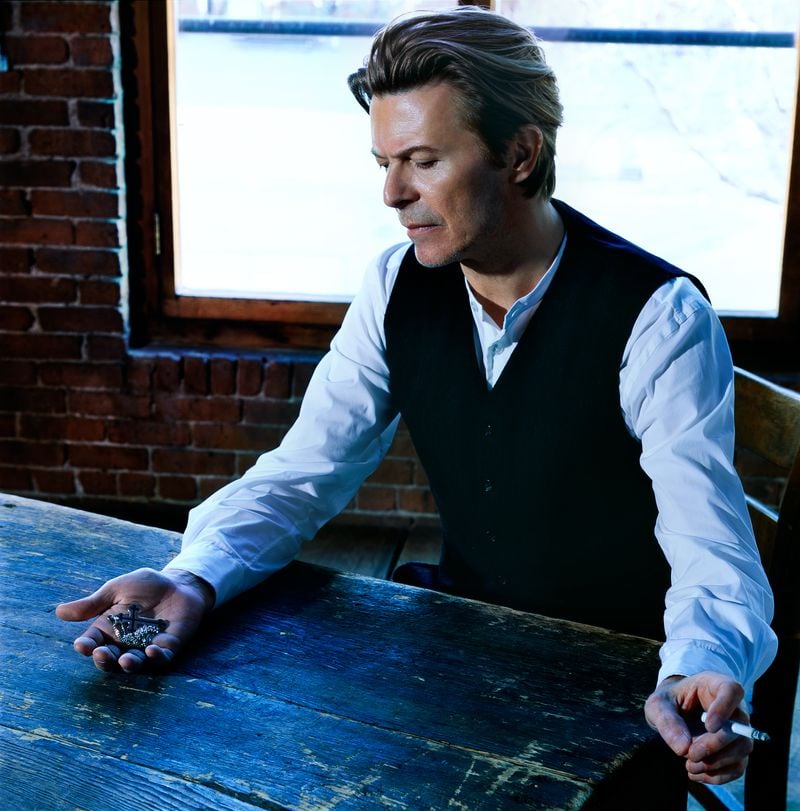
Few faces in history have proved more photographic than David Bowie’s. His androgynous otherworldly appearance has woven its way into the tapestry of pop culture. More so than most of the stars he fits alongside in the pantheon when you bring Bowie to mind, it usually conjures up still-life renderings of the star in one of his many guises. The photographer Markus Klinko captured the final years of his life, when the guises merged into one and he eyed down a legacy, like no other.
“I remember it very well, like it was yesterday,” Klinko recalled of their first meeting in a Vanity Fair interview. “I was surprised—I didn’t expect to meet him. Iman brought him along for a book editing session, I photographed her for the cover of her book, I am Iman, in 2001.” Klinko may well have had his fair share of celebrity encounters by this point, but Bowie, unsurprisingly, proved startling, nevertheless.
He continues: “He was very lively, friendly and super charismatic, as one would expect. I was giddy and excited that he was there. I wasn’t prepared. Once he looked at Iman’s edits, he seemed impressed. Then he asked me flat out: ‘Do you want to shoot my next album cover?’ It was a series of unexpected events. He was clearly polite, open, talkative, a very smart and nice guy.”
Following that impromptu proposal, the iconic cover of Heathen was born. The clouded eyes of a blind mind proved not only a stunning visual accompaniment for the record but a profound vignette of its content. As Klinko recalls: “It was his idea. What he tried to bring across with this artwork was a man who lost belief, a man who no longer believes in the rules of religion, politics, all of that. His blind eyes represent his loss of belief, no longer being on track with what you’re supposed to believe. For the actual album cover image, he has strong references based on Man Ray.”
It could also be said that Klinko’s images themselves, whether of Bowie or otherwise have always had a crisp Man Ray quality to them. Thus, it is indicative of Bowie’s keen artistic eye and appraisal of others, that he knew from a single meeting that Klinko might be the photographer who could bring his vision to life.
It is, without doubt, one of Bowie’s greatest attributes as an artist that he wasn’t unhinged by his own sense of individualism and was happy to celebrate the artistic vision of others. As Klinko explained himself: “It was the mechanics of the collaboration. I’ve never had a celebrity be so hands on as David, so personable about any of the collaborations, including the music video in 2013 [‘Valentine’s Day’ directed by Klinko].”
These collaborations were all the more considered in his later years when ill-dealt forced Bowie to focus on his legacy even further. This notion imbues images like ‘The Cross’, featured in Klinko’s latest exhibition and collection Markus Klinko – 21, with an almost religious sensibility. Bowie may well have once said, “Don’t expect to find the real me, the David Jones underneath all this,” but in these images, the vulnerability of a man considering mortality springs to the surface and much like Man Ray, hints at a welter beneath.
Celebrity photographer Klinko has included one of Bowie’s most legendary images in his limited-edition box set of 21 original portraits that includes photographs of many influential stars. The collection is available in galleries around the world such as Fotografiska New York and Proud Galleries in London. Taken over 21 years (2000-2021), the images comprise a chronological archive featuring some of Klinko’s work that defined some of the most significant moments in pop culture in the 2000s.
You can find out more about the stunning collection and purchase the unique images by clicking here.


