


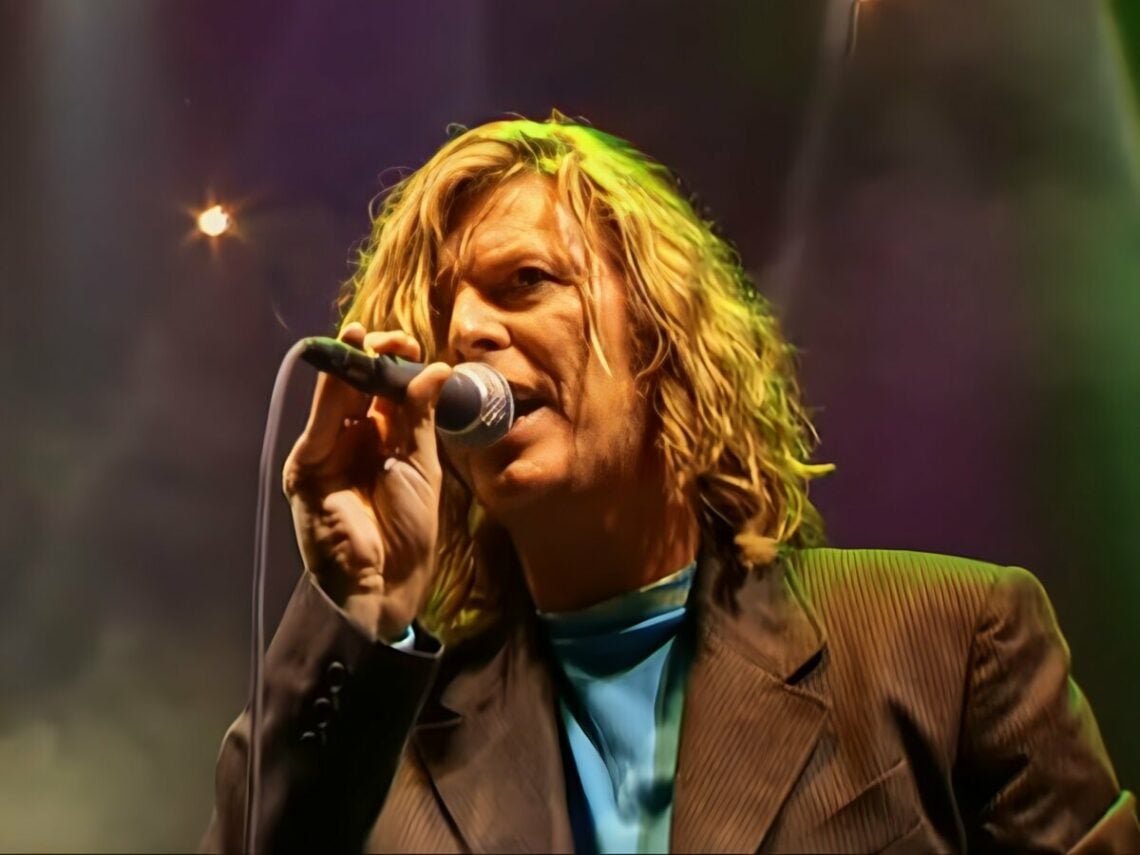
David Bowie once called Bryan Ferry to say, “I’ve just done an album like yours”

Upon Roxy Music’s initial emergence in 1972, the band’s musical and visual characteristics left many perplexed and uncertain about how to categorise them, and this elegantly attired collective defied easy classification. While undoubtedly sharing lineage with the burgeoning progressive rock movement, their allure, amplified by Bryan Ferry’s vocals, also hinted at the flourishing glam-rock trend epitomised by David Bowie and Marc Bolan.
While the prog-rock genre embarked on a trajectory of meticulous experimentation throughout the mid-1970s – a stark contrast to the punk movement – entities like Roxy Music and Bowie can be regarded as progenitors of punk, with subsequent acts like the Sex Pistols frequently attributing them as foundational influences.
After releasing Roxy Music’s For Your Pleasure in 1973, Ferry recalls feeling a strong urge to immediately get to work on new material. Heading into the studio, he thought the new album would end up sounding like Elvis Presley or Billie Holiday. The resulting These Foolish Things became a debut that departed from Roxy Music’s signature sound, consisting mainly of cover songs handpicked by Ferry.
According to Ferry, the album is a compilation of some of his favourite ever songs. “It’s a very catholic selection,” he said. “I’ve given up trying to please all of the people all of the time. Some will like it for one reason, some for another. And some will presumably dislike it for the wrong reasons though I hope the general point of it will be understood”.
After These Foolish Things was released, Ferry recalls Bowie calling him to discuss the work: “We must have done the [Finsbury Park] Rainbow show with him before that, and the Greyhound in Croydon, another show where Roxy supported Bowie. David rang me cheerfully one day and said, ‘Just to let you know, I’ve just done an album like yours’. But it wasn’t really, it was a covers LP, but all from the ’60s, whereas mine was a more comprehensive take on pop, just lots of different people who were interesting to me, writers like Goffin & King, Leiber & Stoller, The Rolling Stones, Smokey Robinson, of course, and Dylan. The most important of all was the title track – that was the most adventurous, being a 1930s song”.
Though releasing covers at the time wasn’t seen as that adventurous, it was a powerful way of introducing existing fans to a different side of a musician’s artistry. At the time, people had grown accustomed to Ferry only within the confines of Roxy Music, and so These Foolish Things demonstrated a new versatility with its exploration of various genres.
However, while Ferry acknowledges this, he’s also aware of the potential pitfalls of releasing something so different. “The downside of it, of course, is that some more snobbish music people don’t like you to do something that’s more mainstream”, he said, “people like you to be difficult and weird and underground”.
Still, the record performed well, peaking at number five on the UK Albums Chart. However, not all of Ferry’s favourites made it onto the record, like Holiday, who he often cites as one of his biggest influences who comes through in much of his songwriting. “Holiday is probably my favourite singer ever because she was so inventive, and soulful, and just so cool,” he said. “The album I listened to all the time was The Golden Years III. […] the band she had on this record was fantastic, especially Teddy Wilson, the piano player”.
