


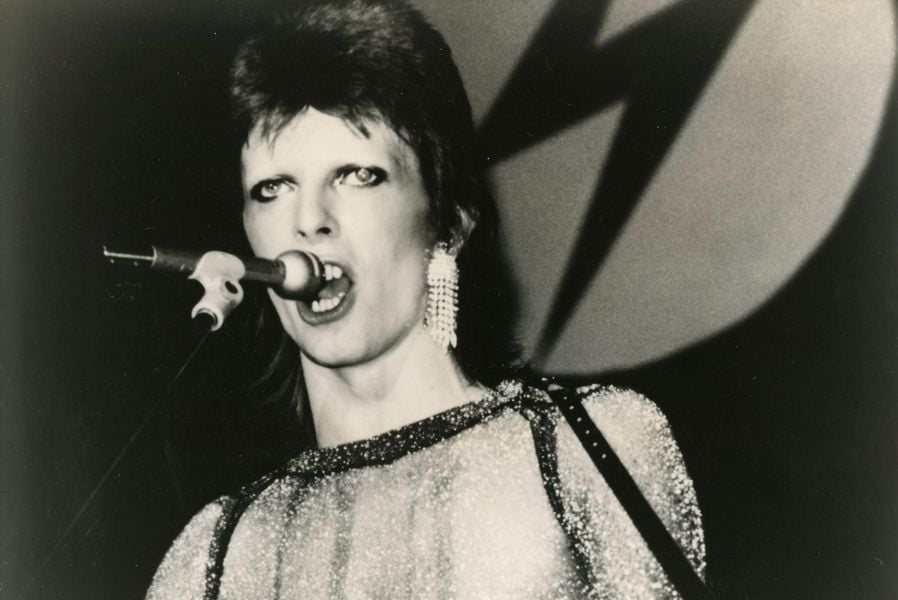
Revisiting David Bowie’s “bisexual anthem”

Not many musicians can claim to have made such an extensive and positive mark on the world as can the late David Bowie. Across his long career, Bowie invariably displayed not only artistic verve and – bar one brief dalliance with Nazism – the desire to improve the lives of everyone.
The story of Bowie is a well-known one. After a period of artistic exploration and defeats in the 1960s, things started to come together for him off the back of the 1969 single ‘Space Oddity’ and the album of the same name.
This led to a pair of more substantial albums, 1970’s The Man Who Sold the World and 1971’s Hunky Dory, which not only saw the Brixton native hone his craft but also form creative partnerships with Tony Visconti, Mick Ronson and Woody Woodmansey, who would go on to have defining impacts on his work moving forward.
Bowie then returned in 1972 with what is universally regarded as his masterpiece, The Rise and Fall of Ziggy Stardust and the Spiders from Mars. For the album, he formed the backing group The Spiders from Mars, who featured Ronson on guitar, Woodmansey on drums and Trevor Bolder on bass. It was an instant hit, an exciting, taboo-busting body of work, hailed as one of the pioneering moments in the form of glam rock.
A loose concept album and rock opera, it told the story of the titular, androgynous rocker sent to earth as its saviour. Discussing politics, sexuality, drug taking and the implications of fame, it was one of the most thematically complex albums the world had ever heard. Duly, it established Bowie as one of his generation’s foremost movers and shakers.
Because of the sexually awakened themes of Ziggy Stardust, Bowie became an LGBT icon helping push society into the future. This was something that Bowie actively endeavoured to do. After the release of the album’s treasured lead single, ‘Starman’, he dropped the standalone cut ‘John, I’m Only Dancing’, which he wrote with the intention of it becoming a bisexual anthem.
In Kevin Cann’s book Any Day Now, Bowie explained the origins of the dynamic track: “It was my attempt to do a bisexual anthem, and it was incredibly successful. I was amazed that the Beeb played it.”
Bowie’s decision to release ‘John, I’m Only Dancing’ as a standalone cut was interesting and displayed his genuine intention of advancing the LGBT cause to everyone. Standalone singles were a common feature of the era as artists sought to give fans value for money by not releasing numerous songs as singles from a singular album.
Indicative of just how troubling some elements of society were during this period, because of the homoerotic nature of the lyrics, Bowie’s label RCA chose not to release the song in America. Ultimately this didn’t matter, as he was at the top of his game during this period.
In Spider from Mars: My Life with Bowie, Woodmansey recalled: “RCA considered the song too risqué to release it in the US and Top of the Pops banned the video and refused to play it, the reason given that it wasn’t to the BBC’s taste… It was released on 1 September, and by the time we’d got to New York it had reached Number 30 in the singles charts. It eventually peaked at number 12 on 8 October. We were too busy in the US to think about the fact it wasn’t performing quite as well as ‘Starman’.”
Although some elements of the world weren’t ready for it at the time, others were, and since then, ‘John, I’m Only Dancing’ has rightly been hailed as one of David Bowie’s finest moments.
