


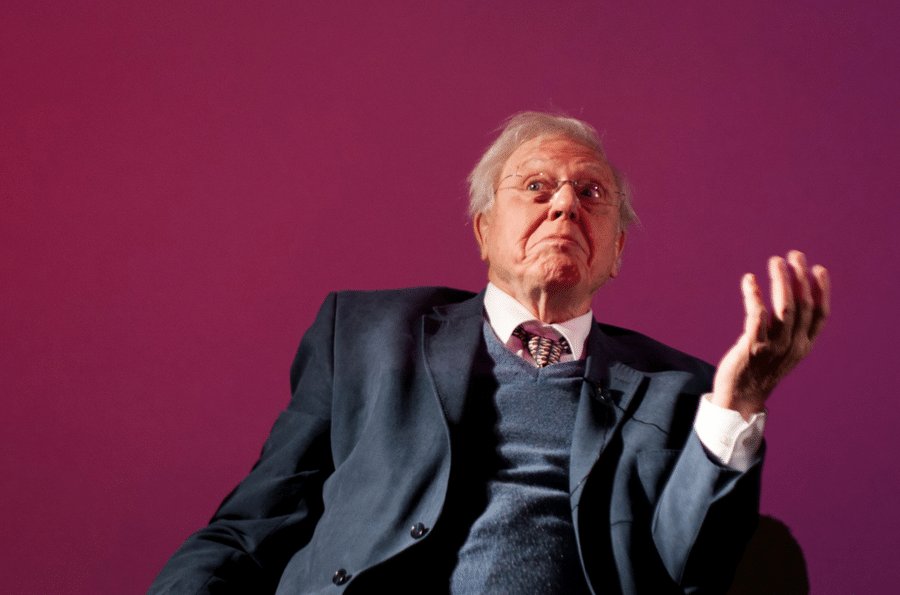
David Attenborough’s new documentary is likely to be his last shot on location

Long referred to as a national treasure, many fans of David Attenborough will be sad to hear that his newest series, Wild Isles, will likely be his last appearance shooting on location. Now 96, Attenborough has reportedly stopped travelling internationally, although a spokesperson claimed that he will not be retiring from work just yet.
The new series will be Attenborough’s first appearance in front of the camera in four years, following Green Planet. Moreover, it is the first time the documentarian will focus specifically on Britain and Ireland. Speaking to The Observer, producer Alastair Fothergill explained: “We felt he had a unique perspective because of his age, on how the British countryside has changed in his lifetime.”
Fothergill continued: “He introduces every episode and closes the opening and last episode with very powerful pieces about the fact that, as this is our home, it is our responsibility to try to restore nature.” According to Fothergill, Attenborough was thrilled to make new discoveries during filming, thanks to the crew’s use of thermal technology. “Starlings are famous for their murmurations as they prepare to roost for the night, but nobody knew exactly what happens when they settle down.” In Wild Isles, viewers can find out exactly what happens.
Fothergill also detailed Attenborough’s strong involvement in the production of the series, which will air on BBC One next week. He was actively involved in writing the script, with the producer calling him “an absolutely extraordinary writer” who “always makes very significant improvements”.
Another producer of the series, Nick Gates, described Attenborough as a “phenomenal barometer of change”. He shared: “If you look at the natural history of Britain and Ireland, it has changed enormously over his lifetime and so it’s very powerful when he talks about that”.
Gates also believes that Attenborough’s new program will increase interest in British natural tourism. “The nature that we have here in Britain and Ireland may be rare in places, it may be threatened in places, but we still have it and we should cherish it. And the more people engage with that and the more people make an effort to seek it out, the more likely it is to be protected for future generations.”

Never Miss A Scene
The Far Out Film Newsletter
All the latest film news from the independent voice of culture.
Straight to your inbox.