


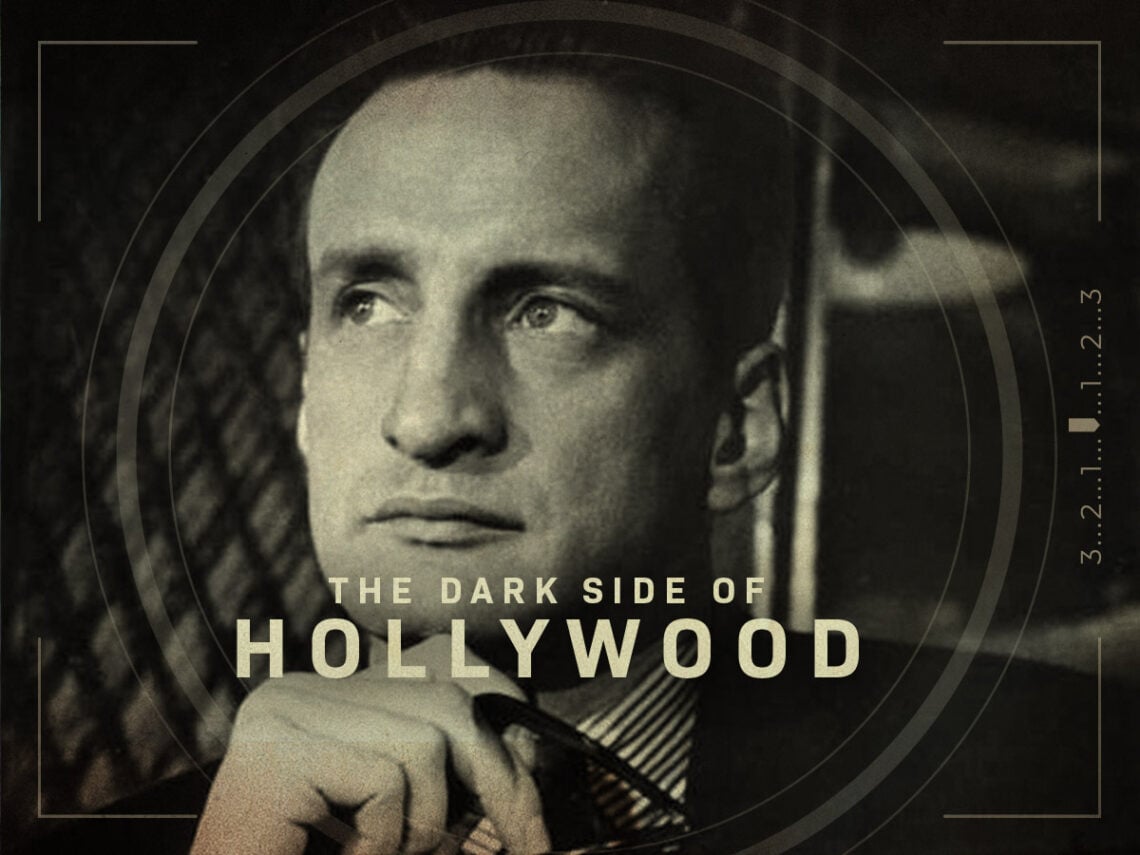
The dark side of Hollywood: George C Scott’s drunken, violent rages

In 1971, George C Scott became the first actor in history to refuse an Academy Award. He won ‘Best Actor’ at Hollywood’s most prestigious ceremony for his stunning portrayal of General George S Patton in Franklin J Schaffner’s World War II biopic Patton. However, he was a man of principle who felt acting performances shouldn’t be compared to each other and that the Oscars was little more than a “meat parade”.
In truth, Scott was known throughout his career for this staunch forthrightness and an unwavering belief in his own convictions. Unfortunately, he was also known as a drunk who scared his co-workers, would fight with his own shadow, and mercilessly beat those he was supposed to love.
Scott grew up in Michigan, the son of a disciplinarian father and a mother who tragically died when he was eight. His father remarried and started a new family, which Scott always said made him feel unwanted. When he turned 17, he ran away to join the Marines but saw no action and decided to pursue acting while at university. He wouldn’t experience any success until he was 30 years old, when he played Richard III on the New York stage. After that, his ascent to the top of Hollywood was meteoric.
Unfortunately, while Scott was enjoying every success imaginable as a movie star, the alcohol problem he’d developed as a young man grew worse and worse with every passing year. “I’ve drunk all my life,” a regretful Scott told The Tampa Bay Times in 1997. “Sometimes I’d quit, sometimes I was in AA. But I manage alcohol now at my stage of life. But there were times when I didn’t manage it very damn well.”
Scott admittedly wasn’t the only star of his era who enjoyed a tipple – in fact, Christopher Plummer once revealed that he, Scott, and Jason Robards had what they referred to as “a little drinking club”. However, while Plummer and Robards would mostly get steaming drunk and have fun, the late Knives Out star told the New York Post, “Scott always got in trouble at bars because he had that sinister face of his. He was always inviting people to step outside and have a fight, but he always lost!”
Indeed, Scott’s propensity for getting into scraps when he was drunk has gone down in Hollywood lore. Fuelled by sinking a quart of vodka and beer, he would reportedly pick physical fights with fellow drunks in bars, but also with people he worked alongside. As Plummer alluded to, he lost these altercations so often that it became a running joke how many times his nose was broken – something that could be easily spotted by any audience member gazing upon his distinctively misshapen hooter.
Alarmingly, Scott’s reputation in Hollywood was so pronounced that when one of his co-stars, Maureen Stapleton, told director Mike Nichols, “I don’t know what to do – I’m scared of him,” Nichols simply replied, “My dear, everyone is scared of George C Scott.”
Undoubtedly, Scott’s most horrifying act, though, came during what he described as “a couple of very ugly love affairs, which shall be nameless”. One of these affairs didn’t remain nameless, though, and instead was dragged out into the light by a damning memoir written by one of Old Hollywood’s most beloved icons.
You see, Scott allegedly brutalised Ava Gardner when the two were lovers. They met on the set of 1964’s The Bible and began seeing each other, and in her memoir Ava: My Story, Gardner admitted, “When George got drunk, he could go berserk in a way that was quite terrifying.” Gardner claimed that Scott once became so enraged during a drunken fight that he smashed two bottles to threaten her with the broken shards of glass.
“He was kneeling across me, waving the jagged edges of glass in front of my face with one hand and hitting me with the other,” Gardner claimed. “Telling me he loved me, and smashing a fist into my eye. ‘Marry me, do you hear what I’m saying?’ followed by another blow.”
It was a truly terrifying accusation, but a spokesperson for Scott simply sidestepped the claim by stating, “Mr Scott has not had an opportunity to read the book and thereby has no comment on its contents.” The fact he didn’t outright deny it, though, speaks volumes about a particularly vicious player in the dark side of Hollywood history.
