


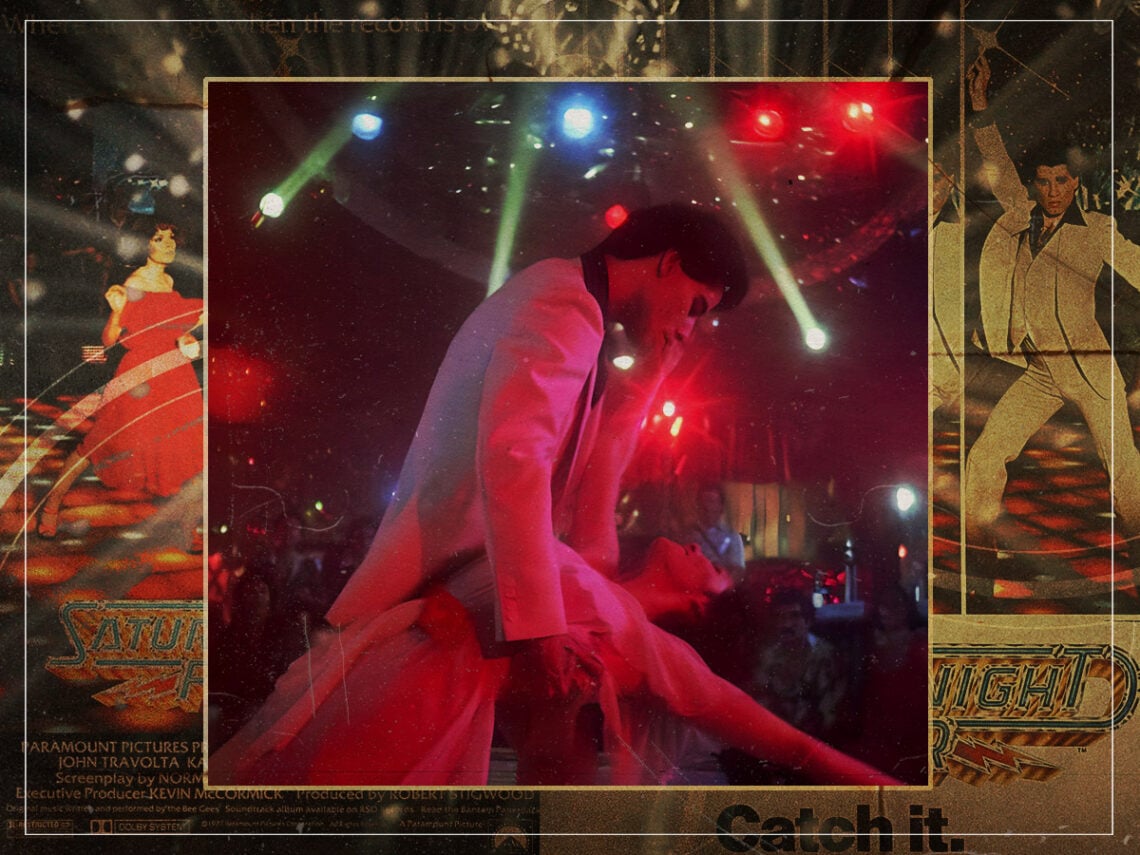
Beyond the dancefloor: Exploring the dark nature of ‘Saturday Night Fever’

Back in 1977, just a year before appearing as Danny Zuko in Grease, John Travolta made one of his breakthrough performances in John Badham’s dance drama film Saturday Night Fever. Travolta played Italian-American Tony Manero, a young man who loves to dance and drink on the weekends but who finds himself somewhat alienated from society as a result of his working classic Brooklyn upbringing.
Based on a fictional article by Nik Cohn called ‘Tribal Rites on the New Saturday Night’, Saturday Night Fever ended up becoming a huge commercial success, drew widespread critical acclaim, announced Travolta as a serious acting and dancing talent and helped to popularise the disco music genre to a wider audience.
On the surface, it’s easy to see Badham’s film as a lighthearted disco movie with its infectious Bee Gees soundtrack, but beyond the alluring glow of the dancefloor, the truth is that Saturday Night Fever is actually a dark film that explores the cruel realities of life in 1970s New York City, as Tony and many of his friends and lover sadly discover.
Tony sees the disco as a form of escapism from his mundane everyday life. While he might be popular at the club on the weekends, his daily grind as a paint shop clerk, through which he earns a paltry wage, shows the reality of his position, one which he can’t seem to truly escape from. In addition, Tony’s home life is one of sadness, too, and he is frequently compared to his former clergyman brother because of his parents’ disappointment.
Like Tony, his friends also seem to be in dead-end jobs, and as a result, they engage in self-destructive behaviour that frequently and violently taps into the darkest side of toxic masculinity. Annette, who is certainly taken with Tony’s dancing prowess and likeable charisma, finds herself the victim of sexual assault as a result of Tony’s friend’s misbehaviour in what is certainly the darkest scene of the film.
Tony’s love interest and eventual dance partner, Stephanie, represents the aspiration for a better life, having acquired a job in Manhattan. Badham uses the character to explore the theme of ambition. However, Stephanie and Tony’s narrative and relationship also show the difficulties and limitations of searching for a life beyond the confines of one’s background and upbringing.
In fact, suicide eventually also hangs over the group, in the instance of Bobby C, who finds himself in a state of crisis when his girlfriend gets pregnant. Without the money to properly support his family, Bobby believes that the only way out of the situation is to take his own life, which leaves a dark cloud over the narrative of the film and shows that even the dancefloor cannot provide the solace that the group wants to believe it can.
Saturday Night Fever unflinchingly addresses racism, sexism and violence, showing that it is far more than just a pretty and flashy dancing movie. As Tony’s friends use racial and sexist slurs, the audience is invited to consider whether living for the weekend is really worth the sacrifice of their ethical beliefs and conduct, with the answer being a resounding “no”.
So while the vibrant and fast-paced dance sequences might be the most memorable facets of Badham’s film and largely overshadow the more poignant sides of its narrative, the truth is that Saturday Night Fever is a dark drama that explores the problematic nature of identity and the alienating qualities of a working-class upbringing, as is an essential piece of 1970s cinema.
